

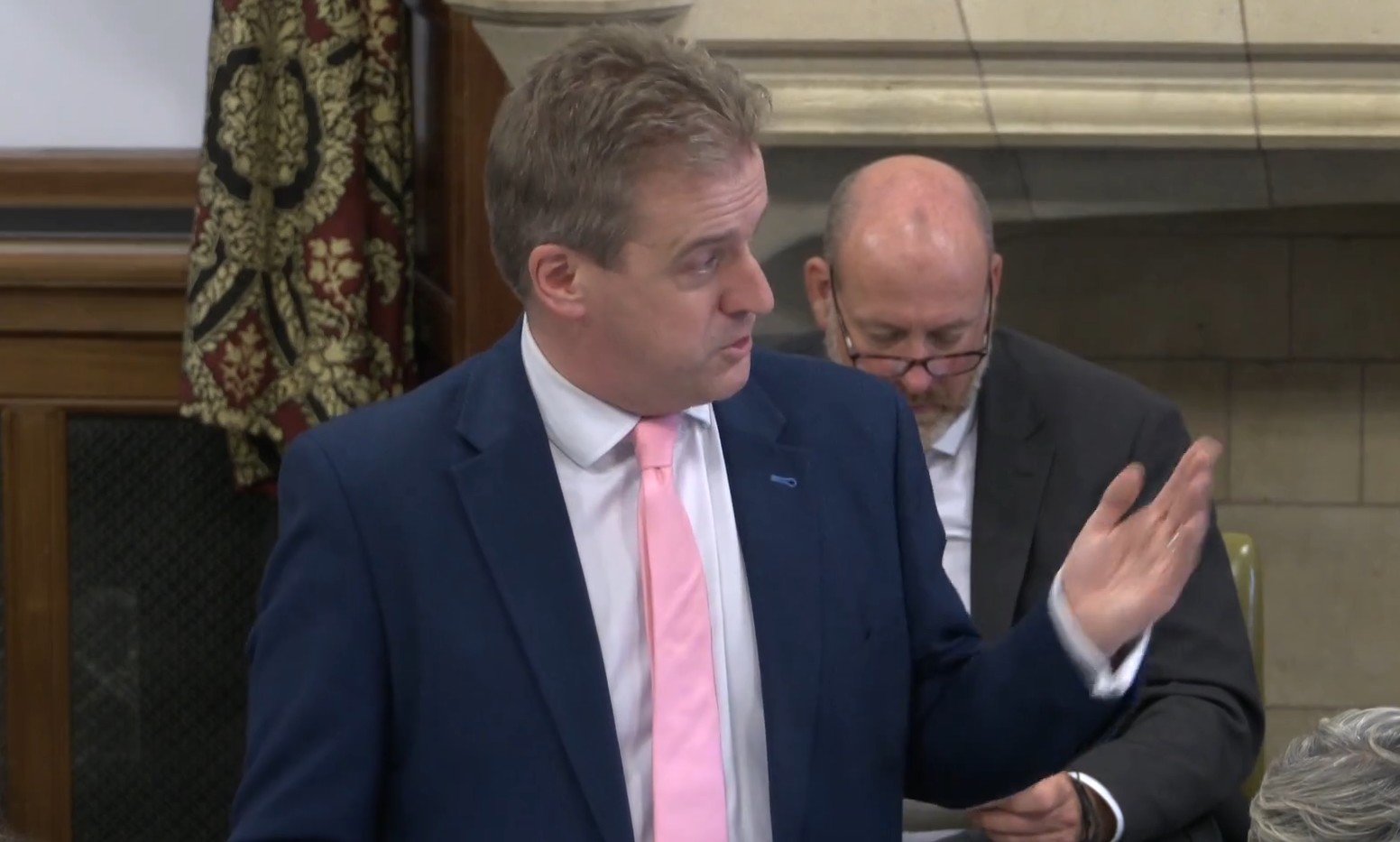
Labour MP Graeme Downie pressed Ministry of Defence chiefs on private finance, the delayed finance strategy, Annington Homes, nuclear cost overruns, secrecy and the welfare of deterrent crews at a Defence Committee hearing.
Downie asked whether the department had a target or expectation for how much private finance it could leverage over ten years. Permanent Secretary Jeremy Pocklington said there was no specific target and that the strategy was due to be published shortly, prompting Downie to say: “Which is running late, very late.” National Armaments Director Rupert Pearce said the strategy had been delayed “principally because the DIP got delayed” and would launch on 1 December, adding that he hoped to bring billions of pounds of private finance into the supply chain.
Downie replied: “I think again, if there’s ways you can be more specific about either percentage terms or specific programs that, or specific models you think can work, rather than just billions, because frankly, in defence, everything costs billions.” Asked how the delays had affected investors, Pearce said: “Non-material.”
Downie asked how lessons from previous private finance deals such as Annington Homes and AirTanker, criticised by the Public Accounts Committee and the National Audit Office, were being applied. Pocklington said the 1996 Annington deal “prioritized upfront costs, it didn’t properly look at whole life, the whole life costs and the long-term liabilities. And crucially, the department was giving up control of what is a quite an essential strategic asset for defence.” He added: “So of course we cannot repeat the mistakes that we made with that original 1996 deal.”
On nuclear, Downie said the Mensa warhead facility at AWE was five times over its original cost estimate and nearly a decade behind, and asked how the department would stop it soaking up a growing share of the budget. Pocklington offered a private briefing on the grounds that much of the information is held at secret. Downie said: “And my concern was at the first mention of the Mensa facility, the response was incredibly defensive immediately.”
Pocklington said the Defence Nuclear Enterprise was “about just under a quarter of the budget now” and that the department had set up a Defence Nuclear Board including non-executives. Downie cited reported delays to Astute, Dreadnought, Project Euston and the contingent docking facility at Rosyth in his constituency, and said: “I am concerned that you say the word nuclear, and everyone can retreat behind a shield immediately and not have that open.” Pocklington said the department supported the creation of a new select committee on nuclear spending, which he expected “in the next few months.”
Downie asked about a Royal Navy support contract with Babcock that he said expires next week. Pocklington said: “You will hear more about this in the coming days. I have every confidence.”
On the continuous at-sea deterrent, Downie said: “These are human beings that we are asking to do an incredible thing which defends our country.” He asked how the MoD was supporting crews after long patrols, recruiting people to serve and retaining them. Pocklington said he had been present for the return of HMS Vengeance after its 217-day patrol, adding: “And the first thing I want to say is, we really do owe them our thanks.” He said there may be more the department needs to do, and that an additional payment is made for patrols lasting more than about 100 days.
In September 2025, the government announced £340 million for Rosyth for submarine dismantling and contingency docking facilities for the Dreadnought class, which Downie welcomed as “a clear vote of confidence in our world-class workforce”, the UK Defence Journal reported.
In 2020, the National Audit Office found three nuclear infrastructure projects including Mensa had cost increases totalling £1.35 billion and delays of between 1.7 and 6.3 years, according to UK Defence Journal reporting.
In June, the Public Accounts Committee said the Defence Nuclear Enterprise took 18% of the defence budget in 2024-25 and that nine nuclear programmes each have whole-life costs above £10 billion, the UK Defence Journal reported.
In October, Luke Pollard, Minister for Defence Readiness and Industry, said the government intended “to establish the new Committee by the end of the year”, according to UK Defence Journal reporting. HMS Vengeance returned up the Clyde on 15 November after an estimated 217-day patrol, likely the longest on record, the UK Defence Journal reported, and last week peers raised the strain on deterrent crews, according to UK Defence Journal reporting.










It is odd that the answers to the big questions are being provided by two civvies. They have slowly but steadily usurped the role of the Defence Staff in MOD.
Pocklington cheerfully waves aside billions of overspend and years of delay on the DNE, and similar on past PFIs. No senior uniform would get away with being so blasé.
And still the civvies spin the line that DNE is increasing to 25% of the defence budget. The real question is, what percentage of the EQUIPMENT PROCUREMENT budget is it now consuming? At a time when we can barely fund a lot of the aircraft, army vehicles and ships on order, let alone buy the additional equipment we need, the fact that Defence Nuclear is now set to take 50% of the procurement budget is alarming. DNE really is quite out of control now.