

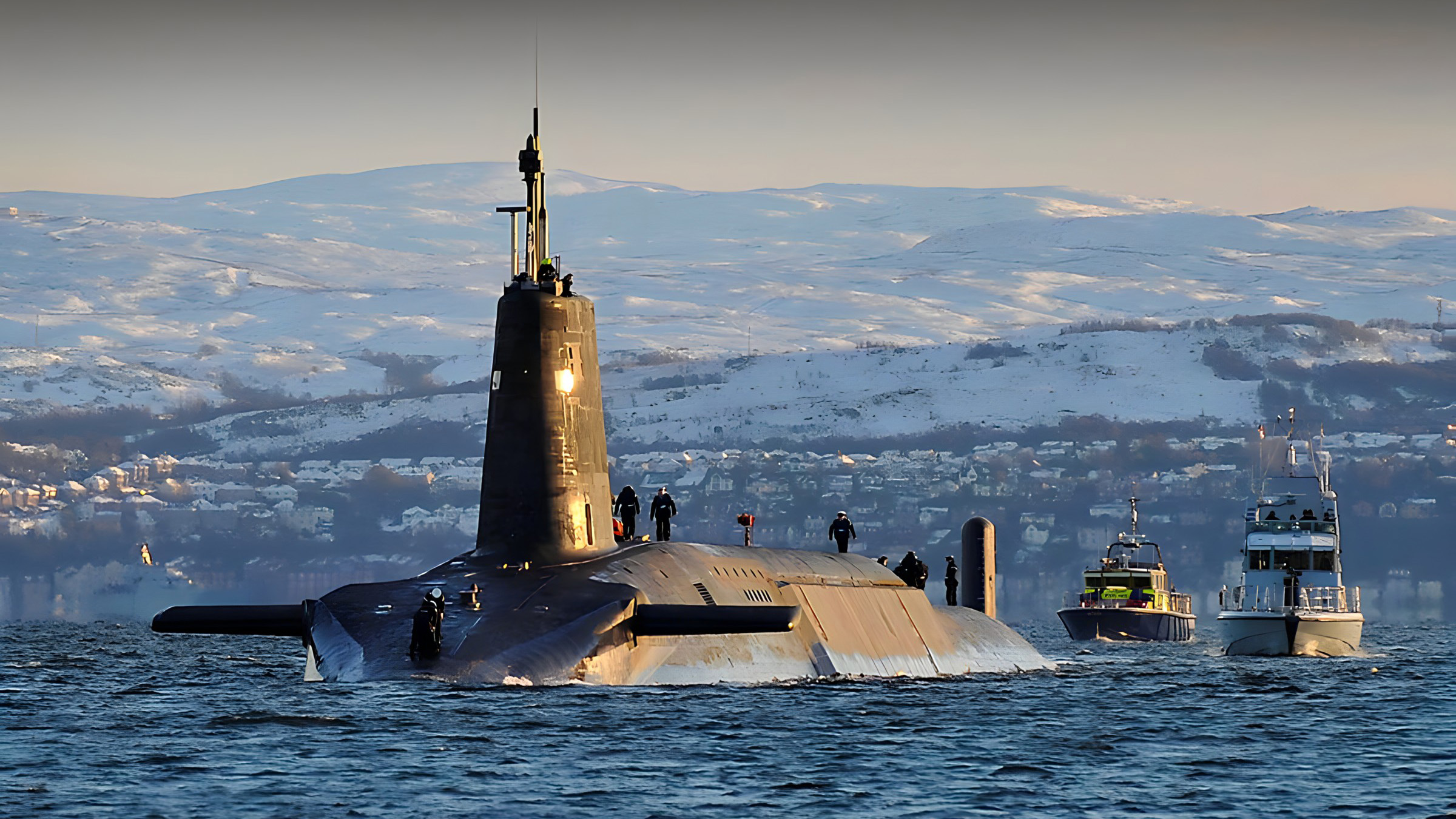
Parliament is not being given enough transparency over the Ministry of Defence’s fast-growing nuclear spending, the Public Accounts Committee has warned, calling for a new mechanism to allow proper scrutiny of programmes whose costs it says are currently too vague to challenge, the UK Defence Journal understands.
In its report on the department’s 2024-25 accounts, the committee said the department was “not currently providing Parliament with sufficient transparency over its ever-increasing nuclear expenditure”. The Defence Nuclear Enterprise accounted for 18 per cent of the defence budget, or £10.9 billion, in 2024-25, a figure expected to reach 20 per cent for 2025-26 once the accounts are finalised and to rise towards a quarter in the coming years. Nine of its programmes have whole-life costs of more than £10 billion each.
The committee said the department claimed the Dreadnought submarine programme, due to enter service in the early 2030s, remained within its £41 billion budget, a figure that includes a £10 billion contingency. But it said published information about other nuclear programmes was “too vague to allow Parliament to understand and challenge” the activities they cover, what they cost and how those costs had changed over time.
The 2025 Strategic Defence Review had identified the same gap in scrutiny and recommended that the government “develop mechanisms for enhanced Parliamentary scrutiny to provide confidence that taxpayer money is being spent wisely”. The committee said it understood the government had now agreed that a proper scrutiny mechanism would be established, and called on it “not to allow the current political uncertainty to delay this is essential parliamentary scrutiny”.
Sir Geoffrey Clifton-Brown, the committee’s chair, framed the issue in terms of long-standing concern. He pointed to “the ratchet effect of ever-increasing while opaque nuclear spending, about which both my and predecessor Committees have long warned”, and said a new sensitive scrutiny mechanism was to be welcomed. “Political uncertainty must not derail these arrangements, in order that the public may gain greater confidence that their money is being spent wisely,” he said.
In its recommendation, the committee said the Ministry of Defence “must set out how and when it will routinely provide Parliament with more detailed cost and performance information for the nuclear enterprise, so that Parliament can provide taxpayers with the confidence that the increasing DNE budget is being spent wisely”.


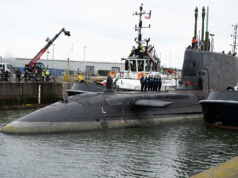
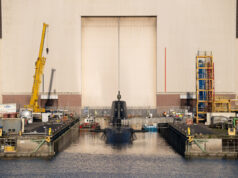


It would be far easier to justify the cost of the nuclear submarines if they were not broken and waiting maintenance. Looking at the current situation with the Astute class subs being in dock you have to ask if the cost is worth it? They maybe good boats on paper but we need them in the water protecting the UK. Scrapping these expensive assets must be under consideration. The money saved could be spent on other more reliable military assets.
Like up to 12 AUKUS Boats ?
Maybe they will be more reliable ?
I’ve gained $17,240 only within four weeks by comfortably working part-time from home. Immediately when I had lost my last business, I was very troubled and thankfully I’ve located this project now in this way I’m in a position to receive thousand USD directly from home. Each individual certainly can do this easy work & make more greenbacks online by visiting
following website—.,.,.,.,.—>>> JobatHome1.Com
Nothing wrong with the boats, so no.
Throwing away SSN capability simply because some dry docks haven’t been upgraded and a shiplift broke down is akin to giving up nukes and walking away.
Not happening.
And money saved? What would be saved short term apart from running cost?
Then there’s the SSN A’s. Billions already spent growing the supporting area, and the RN goes without while we build for Australia, and the UK loses the capability it had before just about anyone else save the USA and Russia!
It would make the UK an utter laughing stock, I’m surprised you even suggest it?
The rise in proportion of spending on nuclear compared to conventional defence significantly lowers the threshold of nuclear retaliation. A reducing number of conventional resources increases the likelihood of being overwhelmed. This applies as much to back office support like medical and resupply which have also been steadily reduced over the years. Who benefitted from cutting taxes? Ordinary people haven’t and have seen a reduction in their own spending power, with nothing else to give. Yet tax policies continue to demand more from those with least. This does not work. Those who have benefitted from these policies need to step up and pay more, they are the only ones with those spare resources. Our defence is also their defence.
The current level of unavailability of our SSNs is not entirely new. Back in 2000, only a single T class boat was operational. So whilst the broken lift has made matters worse, it is clear that the RN has failed to ensure their expensive subs can be used as required.
It is not unreasonable to question whether, for a similar construction budget, UK would be better off with a larger number of SSKs with improved readiness than a smaller fleet of SSNs whose availability has been consistently low. Japan normally has @ half of its 24 strong submarine fleet operational.
AUKUS is a long term project. But planning to increase the SSN fleet whilst we cannot get existing boats to sea is absurd. Until the maintenance problem is fixed, no money at all should be spent on AUKUS.
The SSK’s would be on the wall as well as just-in-time parts ordering and lack of skills expecting subcontractors to appear like genies out of bottles…does its magic.
Possibly, but SSK maintenance is inherently less complicated. Even the USN is struggling to keep its boats at sea..
As usual, aa mix/compromise is often the best solution. Instead of 12 AUKUS boats i could live with 7, plus 5 SSKs, indeed something like the Taigei for “localised work”; watching the north sea, med, western approaches type stuff.
KIT we can’t Afford to Man, Operate or Maintain…..!!
Mixed with a Service and Department that Could Never Run a Corner Shop.!