Royal Navy divers and hydrographic specialists have spent six weeks working with American and Australian counterparts on protecting critical undersea infrastructure, in the latest AUKUS Pillar 2 exercise.
Exercise Lanternfish was split between Virginia and Washington in the United States and waters off the south western coast of Australia, with the three navies running out remotely operated systems together to show, in the Royal Navy’s words, “how the three AUKUS allies could protect critical undersea infrastructure”.
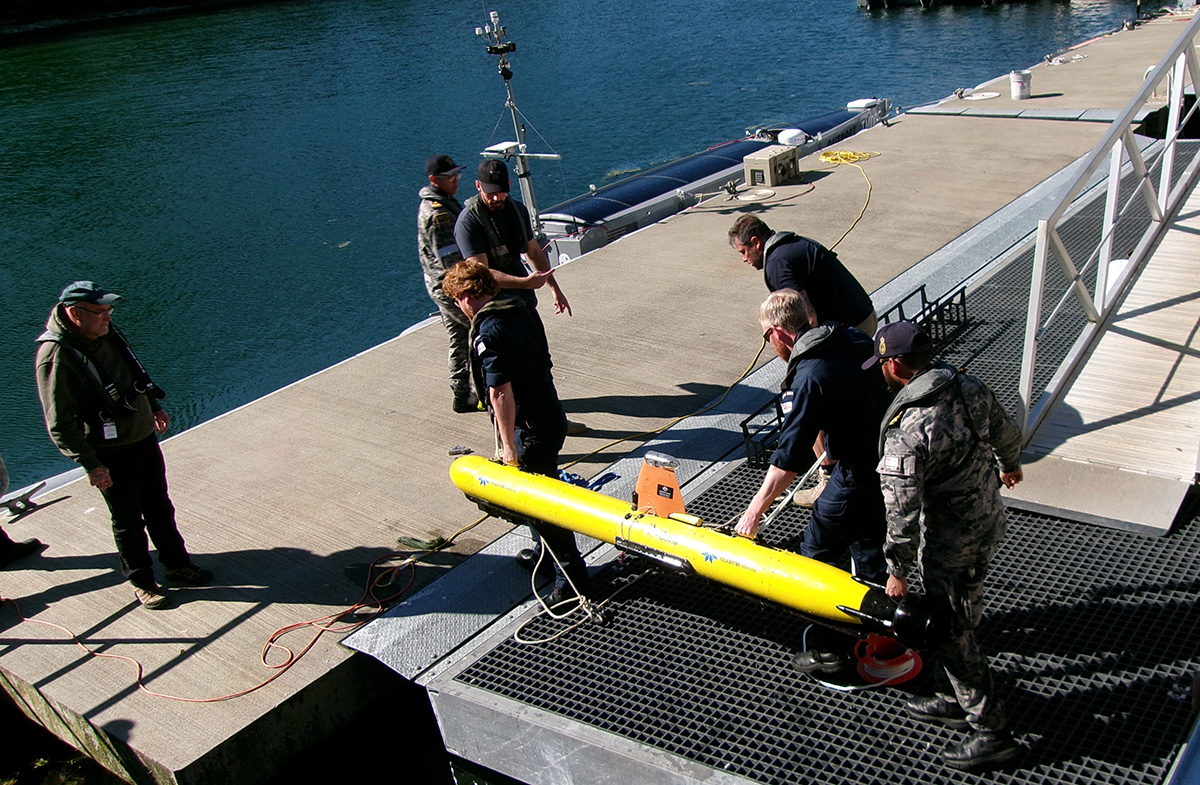
The team from the Diving and Threat Exploitation Group brought the VideoRay Defender, described as “a small remotely-operated submersible used to locate mines and underwater explosive devices”. Experts from the Hydrographic eXploitation Group at Devonport launched the Teledyne Gavia autonomous underwater system, which the Navy says can “carry out varied AUKUS missions depending on its sensor fit” thanks to its modular design.
Both were used for surveillance of critical undersea infrastructure and to rehearse responses to potential hostile activity, working as part of a wider “‘ecosystem’ of sensors and underwater vehicles” intended to build a fuller picture of the subsea environment. The stated aim was to improve how the three nations detect, monitor and respond to threats below the surface, and to develop common operating procedures.
Lieutenant Commander Mark Wilton of HXG said the Seabed Warfare team had worked closely with AUKUS partners, “demonstrating true integration through the seamless use of Royal Australian Navy equipment when required”. He added that the team completed a number of Gavia missions covering “acoustic calibration, night-time and independent, unaided” work, and that “the team really delivered”.
The Navy links the work directly to state threats, citing “the covert operations of a Russian submarine in and around the UK earlier this year” as among the reasons the UK and its allies need to detect and respond to activity around undersea infrastructure.
Lanternfish also, in the Navy’s framing, “reflected the Royal Navy’s transition towards a Hybrid Navy”, with crewed and uncrewed capabilities working alongside each other. Commodore Marcus Rose, Deputy Director Defence Underwater, said such events allow the Navy to “test our interoperability in a real world setting” and to “iterate our capabilities at pace”.
The exercise ran under AUKUS Pillar 2, the strand of the trilateral agreement covering accelerated development of advanced military capabilities as distinct from the submarine programme. Planning is already under way for the next Pillar 2 operational exercise, which is intended to cover maritime, air, cyber and space.