


Babcock Marine is planning an extension to an existing manufacturing building at Rosyth, providing additional industrial space as the company continues to develop its naval shipbuilding facilities in Fife, according to planning documents submitted to Fife Council.
The proposal concerns Building 164 on Watt Road, part of Babcock Marine’s manufacturing operations at Rosyth Business Park. The plans involve extending an existing production bay and making internal alterations to provide additional manufacturing space.
Submitted in July, the application remains under consideration. It follows several years of investment at Rosyth, where the company has expanded its industrial facilities, introduced automated production equipment and recruited additional workers to support naval construction.
The proposed extension is particularly relevant to Babcock Marine’s existing panel-line operations. The company has previously explored increasing manufacturing capacity in these facilities, although the latest planning documents do not explicitly identify the equipment that would occupy the additional space.
Panel lines are used to manufacture large sections of a ship’s steel structure before they are incorporated into larger assemblies. Steel plates are positioned and welded together to form panels, which are reinforced with structural components before being combined into larger sections of a vessel. These sections eventually form parts of a ship’s hull, decks and internal compartments. Modern production lines employ automated welding and material-handling equipment, allowing repetitive fabrication work to be carried out more efficiently.
Increasing panel-line capacity can allow a shipyard to manufacture more structural components simultaneously, particularly when several vessels are under construction. Overall production rates also depend on subsequent assembly stages, the availability of skilled workers and the volume of work passing through the yard.
At Rosyth, Babcock Marine has already invested in automated manufacturing equipment to support construction of five Inspiration-class Type 31 frigates for the Royal Navy.
Major assembly work takes place inside the purpose-built Venturer Building, where large sections of the vessels are brought together under cover. The facility forms the centrepiece of the company’s modern shipbuilding operation. The programme has required substantial recruitment, too. In October 2025, the UK Defence Journal reported that Babcock had recruited around 300 welders from the Philippines to address shortages of qualified labour.
The recruitment forms part of a wider effort to develop the skilled workforce required for naval construction at Rosyth. Welding and fabrication skills are needed throughout production, from manufacturing individual steel components to assembling completed ship sections. The company has also been expanding its apprenticeship and training activities to support future workforce requirements. The availability of further shipbuilding contracts will influence how much of that workforce can be sustained beyond the current Type 31 programme.
Giving evidence to the House of Commons Scottish Affairs Committee in April 2026, Babcock’s chief corporate affairs officer John Howie discussed the importance of securing long-term work to support recruitment and apprenticeships.
Howie told MPs: “It is really simple: the need for long-term contracts.” He added: “As a matter of policy, it is never a good thing to take someone on, put them through an apprenticeship but then not offer them a job at the end of it.” Referring specifically to Rosyth, Howie said: “If you look at the Rosyth example, theoretically by the time the fifth Type 31 is finished, the demand tails off.”
His comments, recorded in the committee’s published evidence, reflected the importance of maintaining a continuing programme of shipbuilding work. In a September 2025 report on Rosyth’s expansion prospects, I described the company’s plans to increase production capacity, including the possibility of growing its workforce from approximately 2,500 to 4,000 if additional contracts were secured.
Babcock has been pursuing further international orders for its Arrowhead family of frigate designs, with opportunities in several overseas markets. One such opportunity was Sweden’s Luleå-class frigate programme, for which Babcock partnered with Saab to offer its Arrowhead 120 design. Sweden subsequently selected France’s Naval Group for the requirement.
Denmark remains another prospective customer, Babcock has promoted its Arrowhead 140 design for Danish naval requirements, although any resulting manufacturing activity would depend on procurement decisions and the industrial arrangements agreed with the customer.
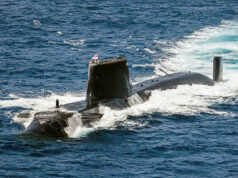
Rosyth is also developing manufacturing work associated with the United States Navy’s Virginia-class submarine programme through Babcock’s relationship with American shipbuilder HII. The company has been authorised to manufacture complex assemblies for Block VI submarines. In its May 2026 trading update, Babcock said a small initial engineering contract was underway.
Alongside the proposed extension to Building 164, Babcock Marine has secured planning permission for a second major shipbuilding assembly hall at Rosyth.
Approved by Fife Council in February 2026, the proposed facility would stand behind the existing Venturer Building and provide additional covered space for naval construction. The building would measure approximately 149 metres long, 65 metres wide and 48.5 metres high, incorporating overhead cranes and large access doors to accommodate substantial shipbuilding sections. The additional hall would increase the space available for major ship construction and potentially allow more vessels to be assembled simultaneously. Whether the company proceeds with construction will depend on its investment decisions and future requirements.
The manufacturing expansion is taking place alongside continuing work on the Royal Navy’s Type 31 programme, which has experienced delays and additional costs. In a report published by The Scotsman on 1 November, Babcock Marine chief executive Sir Nick Hine discussed efforts to contain delays to the five frigates under construction at Rosyth. Hine indicated that HMS Venturer, the first vessel, was expected to be delivered in 2028 and that delays across the wider programme could amount to as much as two years, although the company was seeking to limit their impact on subsequent ships.
Earlier this year, Babcock disclosed a further £140 million charge associated with higher-than-expected rework on the first two frigates, including difficulties arising from design changes and construction activities undertaken out of sequence.
Babcock has previously outlined ambitions to increase production towards one frigate annually, which would require a consistent flow of work through fabrication, assembly, outfitting and delivery. The longer-term scale of Rosyth’s expansion will depend on the volume of additional work secured after the current Type 31 programme. Babcock’s evidence to Parliament indicates that shipbuilding demand could decline without follow-on contracts, while export opportunities and submarine manufacturing provide potential sources of further activity.








Good news I guess. But Babcock’s hoping for export orders when they’re thee years late (and still slipping) in delivering very basic Type 31 frigates to the Royal Navy, seems rather optimistic.
Three years late when three years for the complete build wouldn’t be that aggressive. What a mess. Bae is no better.
Agreed, it’s not the best look but there are some mitigating factors. I would like to see what happens to their production output a little further down the line when they have had a steady drum beat of work. Very difficult to keep/develop the skills when your order book is up and down like a yoyo.
I suggest they are not planning everything on hopes for T31 orders built at Rosyth but rather looking towards the future ATS program and the CCV program. Babcock today says it wants to launch the first unarmed large warship alongside the first T31 in 2028.
Grinch,
Perhaps co-markering campaign w/ the Poles and/or Indonesians?
Both are apparently producing successful derivatives of T-31 on an expedited basis. Possible additional design and royalty payments for Babcock, if not actual construction revenue.
… co-marketing … 🙄
👍👍👍
The delays are mostly down to drip feed funding by the treasury.
👍👍👍
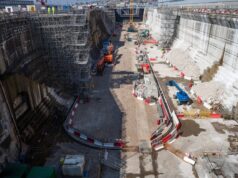
Rosyth needs more dry Docks.. its building, Maintenance and Submarine Decommissioning is Very Compressed..
Perhaps moving the Submarine Decommissioning to an Adjacent ( RD 57 ) area with New Dry Dock would be a good investment..?
I don’t think anyone has the budget to build dry docks at Rosyth. The US and Australia are currently building new dry docks at a cost of about $4 billion a pop. Much of the reason we are going for floating dry docks. The cost of heavy marine civil engineering has become insane.
There’s still the big arsed hole that was dug for the Vanguard class refits before they went down to GUZ for political reasons.
Yes I know but just because it’s a big arsed hole doesn’t mean it can be used to build a dry dock anymore.
It’s costing us £750 million to renovate one existing dry dock at Devonport.
Completing RD57 as a dry dock facility would cost billions.
Its a start though.
Sadly the optimistic expectation a few years ago of a flood of export orders for Arrowhead / T31 has started to turn to gloom. Babcock now seem to be relying on a MOD order for six CCVs based on the T31 design being a near certainty. Without that, it’s hard to see the business case for pouring more money in to developing its loss making shipbuilding capabilities, it would actually make more sense to try to find ways to cut costs and begin contingency planning for a partial or even full shutdown of the shipyard in the early 2030’s.
@RB
This is probably the single most cretinous comment I have read on ukdj in a long while … and there are a lot of contenders.
Are you a ‘useful idiot’ or a foreign bot/troll?,
Babcock International remains profitable as a whole. For the financial year, the group reported a statutory operating profit of £305.1 million on revenues exceeding £5.1 billion. Even with the £140 million Type 31 charge heavily denting that year’s figures, the company’s underlying operating profit was £293.3 million. Without that specific frigate penalty, group operating profits actually rose 19% to £433.3 million.
If you isolate and remove that specific £140 million Type 31 charge, the Babcock’s Marine sector’s underlying operating profit actually INCREASED by 14% to £110.2 million. Driven by excellent performance on liquid gas engineering orders and support operations.
The Type 31 program is a small subsection of Babcock’s Marine division, which posted a revenue of £1.68 billion with an organic growth rate of 8% and a solid underlying profit margin of 6.5%. The division handles highly lucrative, long-term naval support and infrastructure contracts. Babcock generated £261.8 million in free cash flow. They are so confident in their cash reserves that they increased their dividend by 15% and launched an aggressive £200 million share buyback programme. They are sitting on a massive £9.8 billion contract backlog of guaranteed future work. When a dumbass like yourself, claims Babcock’s shipyards are financially failing, they are mistaking a single localised, fixed-price surface contract hit for the financial state of the entire company, when in reality, Babcock is flush with cash, heavily backed by the US and UK gov’s, and expanding its physical yard footprint because it has the capital to do so.
Naval analysts estimate a 2:1 or 3:1 ratio of uncrewed support hulls per CCV. To support 6 CCVs, the Royal Navy will need a baseline fleet of 12 to 18 production-line LUSVs divided between the Type 91 Missile Carriers and Type 94 Radar Pickets. At 70 to 100 metres long with a weight/displacement projected to be between 2,000 and 3,000 tonnes – to put that into perspective, a 2,500-tonne, 100m ship is the size and weight of a World War II fleet destroyer or a modern Batch 2 River-class Offshore Patrol Vessel – They are effectively small, complex, crewless corvettes, NOT speedboats. Because the production-line Type 9Xs are the size of actual corvettes, Babcock’s heavily modernised Rosyth infrastructure is one of the only facilities in the UK with the physical space and capability to build them … that said, Babcock will have to share the workload as the likely compromise for the Type 9X fleet will be a consortium model; a primary designer, like Babcock or a BAE Systems alliance who will manage a distributed supply chain, where 2 or 3 select shipyards act as the physical builders of the hulls, ensuring the workload is shared without sacrificing production efficiency, and by spreading the Type 9X fleet manufacturing footprint across multiple regional yards, the MoD ensures strategic continuity, capacity and resilience.
HII and General Dynamics Electric Boat were just awarded a historic $76.6 billion US Navy contract to construct the next waves of Virginia and Columbia-class submarines and Babcock’s pipeline feeds directly into this guaranteed, multi-billion-dollar American engine. Even a tiny fraction of a $76 billion pie means secure, recurring revenue for Rosyth.
– Foreign adversarial actors, particularly state sponsored bot networks and troll farms actively target defense communities like the UKDJ and naval blogs. They don’t just spread fake news about weapons; they target national industrial confidence. By relentlessly pushing the narrative that British engineering is failing, that shipyards are “loss-making money pits,” and that the UK can no longer build a navy, they try to foster a sense of defeatism and declinism in the public psyche. If the public believes domestic shipbuilding is a lost cause, it places political pressure on governments to cut defense spending. – and of course they always have a ‘witty’ retort to reply … but nothing, NOTHING of substance to back up their claims.
People like you aren’t looking for a debate or to be ‘educated’ you’re looking for validation. You want other equally nescient users to reply with “Spot on, mate,” and reinforce their existing worldview that the United Kingdom and its remarkably stoic people are incapable of doing ANYTHING right. When presented with actual, unassailable data, like the fact that Babcock’s finances are solid, that its Nuclear division is highly profitable or that a second mega-hall has ALREADY been approved at Rosyth … it must cause substantial cognitive dissonance in the three puny, sorrowful and worthless brain cells that float around in your extremely vacuous head. Usual responses often include further ignorant / uneducated zingers or outright ignoring of the facts entirely.
Brandolini’s Law (also known as the Bullshit Asymmetry Principle) dictates that the amount of energy needed to refute a bullshit comment is an order of magnitude larger than is needed to produce it.
… thus long replies.
I agree with much of what you say, but you do yourself a disservice claiming someone with a different opinion than yourself is a bot or troll.
And denying that the Type 31 build program is a shambles is rather Walter Mitty.
@Luke.
You are right, very right regarding a difference of opinions.
Jumping in the deep end, the core objective of modern Russian agitprop and disinformation is not necessarily to make people believe a specific lie, but rather to induce cognitive fatigue, cynicism and polarisation making citizens question what is true altogether. At this point, all the negativity that envelops almost every single defence narrative posted by and on UKDJ presents a lot of pessimistic, antipathetic and deeply cynical comments about the incumbent Gov, Industry, MoD and the Royal Navy and much more besides.
Websites like UKDJ are frequented by active-duty military personnel, civil servants, dockyard engineers, and highly knowledgeable defense enthusiasts, which makes the comment sections incredibly valuable to hostile intelligence services for two reasons. 1/ An “agent” account will post a intentionally incorrect or slightly flawed technical claim about a platform like the T31 frigate or an upcoming radar system. They do this knowing that a proud, frustrated, or overly enthusiastic shipyard worker or engineer might reply to correct them, accidentally leaking sensitive, non-public operational data (OPSEC) just to win the online argument. 2/ Adversarial agencies use automated scrapers to monitor defense forums to gauge exactly how resilient or fatigued the British defense community feels about current procurement budgets, equipment shortages, or strategic overruns.
It is important to note that security agencies like the National Centre for Information Defence make a distinction between a literal foreign agent and an organic user. Often, a foreign agent’s job is simply to post a highly cynical or inflammatory narrative once, and then use a network of automated bots to artificially boost it. From there, genuine, frustrated local citizens take the bait, repeat the talking points, and do the rest of the destabilising work for free. I most probably fall into the frustrated local who ‘rails’ against inflammatory/cynical comments, though, only if I have the time and the inclination. My message isn’t just to RB though, it’s a wakeup call that everyone should lift their game and resist lazy comments.
A UK House of Commons Foreign Affairs Committee inquiry directly referenced UK Defence Journal reporting regarding automated bot networks. Specifically, the inquiry noted how coordinated bot activity linked to Iran dropped sharply in public discussions when internet shutdowns occurred inside Iran, demonstrating a clear geographical and state-backed origin for those accounts.
When people hear the term ‘foreign agent,’ they often picture a spy hacking a system … however, in public comment sections, the tactic is far simpler and is known as ‘reflexive control’ or coordinated comment seeding. Research from institutions like Cardiff University’s Crime and Security Research Institute has shown that pro-Kremlin trolls intentionally infiltrate the comment sections of UK media platforms. They post highly provocative, anti-Western, or defeatist comments. They claim British shipyards are collapsing, or that UK military aid is a waste of money, then Russian state owned media organisations screenshot or quote these specific comments in articles back in Russia, falsely claiming they represent the “real sentiment” of ordinary British citizens turning against their own government … cnts.
The challenge is how public political commentary is handled. Most of us understand that a healthy democracy requires the right to robustly criticise government policy, defence, procurement failures and strategic decisions. If citizens become too fearful to comment or critique public affairs out of dread that they will be mislabeled as “foreign agents” or “useful idiots,” the information warfare campaign has effectively succeeded by stifling democratic freedom from within. Rather than stopping people from writing or commenting, security experts and digital literacy campaigns emphasise “information hygiene.” This means encouraging the public to evaluate why an narrative is being pushed, verifying the origins of inflammatory claims before sharing them, and recognising when a public forum thread is being artificially amplified by bot networks to cause division.
The burden is increasingly being placed on regulatory frameworks like the Online Safety Act and social media platforms to identify and dismantle coordinated inauthentic behavior (CIB) and deepfake networks, rather than forcing everyday citizens to police their own lawful political opinions … In contrast, the public should be responsible and accountable for their comments.
The “weight” of a comment is crucial in today’s environment. In a standard internet forum from fifteen years ago, a reckless / unthinking comment was usually just seen as annoying noise. Today, in an era of heightened geopolitical friction and aggressive information gathering, those same comments carry a completely different risk profile. A single poorly thought out post might feel harmless to the person typing it, but when aggregated by modern scraping tools, thousands of those comments create a highly accurate map of a nation’s public friction points, anxieties, and vulnerabilities. When people post without thinking, they don’t just misrepresent themselves; they inadvertently warp the perceived consensus of the entire community, giving external observers a skewed view of public morale or determination.
Sometimes, a sharp, unvarnished demand for rationale is exactly what is needed to disrupt the endless cycle of low-effort, emotionally volatile posting.
Forcing an individual to move past empty rhetoric by directly asking, “What specific source or data is that claim based on?” shifts the burden of proof back onto them. Methodically breaking down a thread’s internal contradictions … if a comment claims a platform like the T-31 is simultaneously “an over-engineered waste of money” and “a cheap, useless hull,” pointing out that both cannot be true exposes the lack of core logic. A sharp reality check about the actual stakes of defense procurement or national security can force a casual commenter to re-evaluate their tone.
Ultimately, keeping public defense forums functional doesn’t require turning them into heavily sanitised, sterile spaces where people are afraid to speak. It requires an active and critical perspective from all participants, that refuses to let lazy or intentionally disruptive narratives slide by without a direct challenge.
Thus, to suggest “…contingency planning for a partial or even full shutdown of Babcock’s new shipyard in the early 2030’s…” falls mainly into two distinct camps; ignorance or foreign agent. There is always the possibility of naivety, conversely though, one doesn’t opine for the closure of one of the UK’s major industrial maritime industrial complexes on a whim. That has to be treated as borderline troll/bot language.
The road to conflict only becomes inevitable if one side believes the other is too weak, too fragmented (oh fsck!) or too industrially depleted to resist (oh fsckity fsck!). For Babcock, by expanding facilities like Rosyth, stepping up automation, and securing heavy manufacturing pipelines such as the US Navy’s Virginia-class submarine assemblies via HII, the Western industrial base is attempting to build a wall of deterrence. The goal is to make the economic and military cost of an attack completely unviable for Russia.
Advocating for Babcock to shut down Rosyth is preposterous! As Rosyth is one of Europe’s most modern, highly automated and digitally advanced shipbuilding facilities. Yes, the T-31 contract has suffered from severe financial overruns, but, they are/were not gov overruns, they are commercial overruns. The losses are largely tied to the tight, fixed price nature of the domestic contract, not the capability of the yard itself. Babcock’s £100 million+ modernisation programme over the last few years have completely overhauled the facility, transforming it from a traditional legacy shipyard into an advanced, data-driven manufacturing hub.
The “flood” was a media-driven description of a political and corporate dream that ultimately ran into the hard reality of modern defence procurement. Expecting foreign orders to actually build at Rosyth was always a non starter, besides, there are many, many reasons nations prefer to build warships in their own domestic shipyards rather than importing them from the UK … including high British labor rates and energy costs that push up the costs.
Telegraph page 1.
“Navy red tape delaying Britain’s war footing, warns Babcock
Two-year process of checks is too long and risks further delays, says defence giant”
Babcock starting to ramp up pressure on the govt?
Yes and no, mostly Babcock is trying to cover up for its own delays so it can try and win export orders and it’s setting up to blame the navy.
However the navy does appear to be under resourced to complete the mission of certification and it’s unwilling to attempt to shorten the process despite screaming at everyone who will listen that we are on a war footing and the we need to double the budget.
As Babcock point out the MoD gets £70 billion a year and tax payers are not seeing what they should for such a vast sum of money.
Basically Babcock, the navy and MoD are all full of shite selling their own agendas here and trying to cover their own asses while all at fault.
@Jim
Please point out where “Babcock point out the MoD gets £70 billion a year and tax payers are not seeing what they should for such a vast sum of money.” You can’t Because that it’s not true. Sir Nick Hine and representatives from Babcock never stated that the MoD receives £70 billion a year or that taxpayers are failing to see value for that sum.
The current “frigate gap” is the direct result of Conservative politicians in 2010 choosing a cheap, short-term budget fix, assuming they could just slap some paint on the Type 23s and make them last forever. Instead of a steady, continuous assembly line, they created a massive industrial gap. Now, the current gov. is stuck dealing with the inevitable structural collapse of the old fleet while frantically trying to force Babcock into double shifts to get the new ships into the water and signed off.
“Babcock is trying to cover up for its own delays so it can try and win export orders and it’s setting up to blame the navy.” … I think anyone with an interest in this subject knows it was Babcocks fault. In their scramble to meet the aggressive milestone dates, modules and hull sections were welded together on the assembly floor before the complex interior pipework, electrical wiring loops, and heavy machinery routings were properly laid out or verified inside those blocks. It all had to be undone and redone properly. Not the MoD’s fault, as much as you want to blame them.
The MoD does not manage day-to-day operations or dictate engineering floor protocols inside the Venturer Building. Babcock’s management made the active corporate decision to keep welding the outer steel hull blocks together to meet milestone deadlines, despite knowing that global supply chains had delayed the internal pipework and cabling. Choosing to build the outer “house” before the plumbing arrived, resulting in workers later having to tear through fresh steel to route basic cables, was an internal manufacturing strategy that failed spectacularly, costing them £140 million in reworks.
In a strictly commercial sense, the system worked … a private company took a risk, messed up, and paid the financial penalty without the taxpayer having to bail out the cost overruns. But in a sovereign security sense, it’s a f’n disaster, you cannot fight an adversarial submarine or defend a shipping lane with a corporate write-off statement. While Babcock is now financially healthy enough to move on, using their nuclear and land profits to cushion the blow, the Royal Navy is left physically exposed, running a fragile surface fleet down to the absolute rim while waiting for Babcock to fix its self-inflicted bottleneck.
Ouch!
Just how much does the Services see of that £70bn or So Defence Budget..???
With Numerous Add ons our once Clear ‘Defence budget’ is Sadly Greatly Diluted..!
So that is what they meant by ‘sequencing’ in their explanation for the delay and subsequent ‘redesign’. One has to wonder about who made the decisions and what internal advice, recommendations and or warnings were ignored by said decision makers. £140m write off and significant delay to a critical RN program… I hope they learnt a lesson or two.
Cheers CR
PS. I agree with Luke. Your posts are very good and to be honest would work better without the broadsides…
Is it Navy red tape or slow, thin funding from the treasury? The latter has been the main culprit.
I find magentas post the most straightfowardnd and therefore persuasive explanation.
Jeesh.
Just madness. We need English ship building expansion. If Scotland goes independent we are stuffed!!!
It is really good & quite urgent that expansion of shipbuilding for the RN or exports is happening. I hope we never, ever allow it to get so bad that we’re down to our last 11 or so escorts again. Even with UAV’s/drones we should never go below 25 even at the most peaceful of times.
I guess to are being slight ironic there as we are already down to 11 escorts and could possibly go down to 9 before the RN turns the corner..! 🙁
CR