

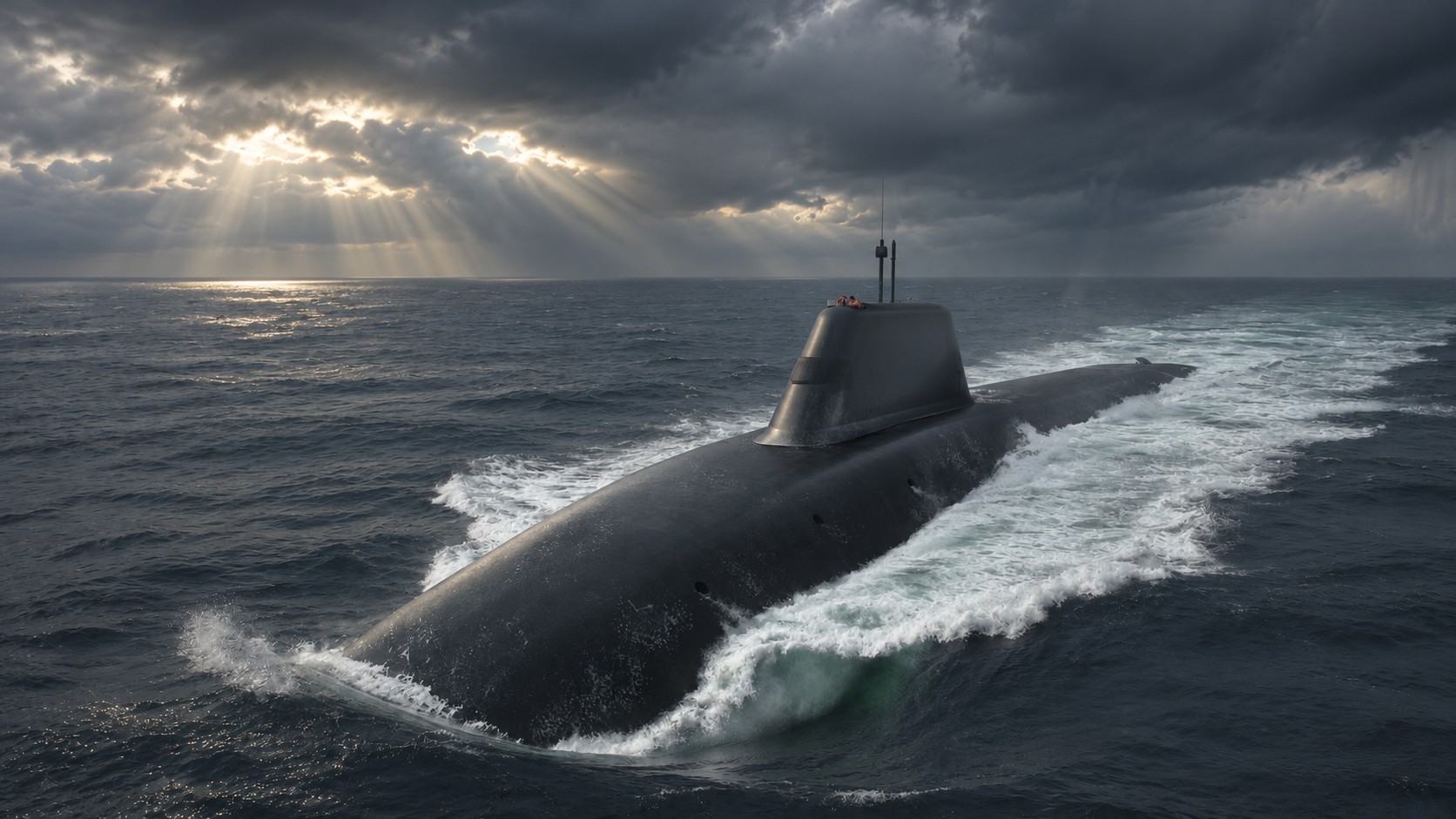
The Dreadnought programme has entered a phase that will take the first boat through the completion of her build, sea trials and certification before she enters service in the early 2030s, while the second submarine progresses to sea trials of her own, according to an answer given in Parliament.
James MacCleary, the Liberal Democrat member for Lewes, asked what progress has been made on the Dreadnought programme in the context of the delivery confidence assessments for Government Major Project Portfolio defence projects.
Luke Pollard, Minister of State for Defence, said: “Good progress is being made on the Dreadnought programme. In July, we announced Delivery Phase 4 (DP4), the latest phase of the programme, which will enable the first-in-class submarine, Dreadnought, to complete her build, sea trials and certification, ahead of entering service in the early 2030s. During this phase, the second boat will progress to sea trials, while the third and fourth boats will achieve key construction milestones.”
Delivery Phase 4 is the funding and contracting step that carries the programme from construction into the trials and certification work needed before a ballistic missile submarine can take on operational patrols. Dreadnought, Valiant, Warspite and King George VI will replace the four Vanguard boats that have maintained continuous at sea deterrence since 1969, and the oldest of those, HMS Vanguard, commissioned in 1993 against a design life of twenty-five years.
Stretching the Vanguard class beyond that design life has produced the longest deterrent patrols in Royal Navy history, including a 204-day patrol completed by HMS Vanguard, and the Defence Committee has examined the strain that places on crews and on the maintenance cycle. The programme’s schedule matters for that reason as much as for the capability itself.
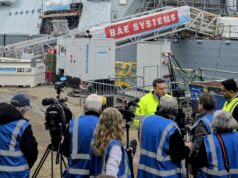
Construction runs at Barrow-in-Furness, where BAE Systems is expanding the yard to build Dreadnought and SSN-AUKUS alongside each other, and Rolls-Royce Submarines in Derby supplies the reactor cores. Major facility upgrades needed for Dreadnought core production have been delivered, with work now focused on commissioning and manufacture.
The Defence Investment Plan commits £63 billion over four years to the nuclear enterprise, taking in the submarines, a new sovereign warhead and the infrastructure at Barrow, Derby, Faslane, Coulport and Aldermaston.








DP1 was Labour
DP2 was the cons
These subs have truly been DP’d
Barrow has always been a lazy shipyard and why the employees enjoy the remuneration they do, is a mystery to me.
And of course, still no answers on the cause of the fire – was it Russian sabotage? Heavens, Russia has been hit enough times and yet we hear nothing of interest about Chinese yards… and the PLAN are the main threat.
Not for us they aren’t…at least for the present. It’s in Russia’s interest to destroy Europe, it’s in China’s interest to sell to us and will be for the forseeable future. In twenty years it might be different but one thing is for sure unless there is massive change in Russia (and the last one didn’t work) they will be a constant threat during that time. The concern in that period is any support China might supply to them. Russia wants Europe emasculated and an effective captive colony so that in 20 years it can resist whatever threat China becomes to them and that’s why the American Russian rapprochement is such a threat to Europe it solves both their problems from a far right nationalist perspective as they see it presently.
Yep it’s very true.. and you can see this written down in the US national defence strategy documents. Both Russia and the U.S. see Europe as food to strengthen them.. essentially a 21c and richer version of Africa ( Europe has better get cohesive or it will go the way of Africa).
In the end the way things are going and how far the US is sinking into nationalism and a pro Russian stance think it’s very possible that European and china end up friendly neutrals.. in the end chinas real long term beef is with the US, Japan and actually Russia.
China I believe has decided it can manage Russia by essentially utterly subverting and shackling it.. essentially it owns Russia now and I don’t think Russia has a hope of escaping the geopolitical bear trap it’s put itself in.. As for the US china clearly planning to take it apart the USN in the 2030s unless it voluntarily leaves the western pacific. By 2035 the USN is going to be so outnumbered as to make it the hight of hubris to fight ( but if there is one nation with that hubris it’s the US). Japan is in reality relatively easy for china to deal with.. it’s probably not going to want to be involved, because it knows china would not need much a reason to do very very nasty things to Japan and china has a lot of nasty it could do to a set of small islands a few hundred miles from it… a Europe detached from the U.S. is not very much in chinas view at all other than a place to sell stuff to.
It’s why I think the U.S. policy at present is bonkers.. Russia is never going to side with the U.S. in a U.S. sino war and the way it’s going the US is forcing Europe into a more globally neutral stance…
These will be decent boats, what with the RN and USN finally adopting electric propulsion onboard their submarines. The French have been using it for quite some time at this point.
To be honest I think both the UK and US were sensible in trying it out on surface ships first, both Zumwalt and T45 have had the kind of issues you would never want in an irreplaceable SSBN.
First cut of Aukus begins next year yet no real info of Size,Displacement or Name of first in class..!?
All we do seem to Know is it will carry VLS…!
Meanwhile ACHILLIES Seems to have Disappeared..?
It is the Achilles heel of the program?
I’m not sure the most powerful is the right description as these will have less launch tubes than the Vanguard, accepted the extra capacity isn’t needed but they won’t be as powerful.
It’s no secret the investment funding is massive, in place and work is ongoing at a very rapid rate (I would have said “at pace” but that’s just so pre 2022). Recruitment & training is all on track and capacity is building up to enable AUKUS to be delivered and that means Dreadnought is the launch pad project.
Quite simply the delivery schedule has build up speed so that the first SSN-A boats are built on a HOT production line backed with a supply pipeline that just has to deliver.
I read a lot of comments that continuously knock industry’s ability to deliver these 2 programmes and given recent experience of Astute, T26 and T31 I understand that.
But it isn’t down to Barrow or the Clyde being a “Lazy Yards” it’s down to the building being carried out at the pace it is funded for.
So can BAe and the supply chains deliver T26, Dreadnought and SSN-A on an 18 month Drumbeat ? Honest answer is as long as some spineless Politician funds it then yes it can and the proof is based on past History.
The 6 T45 were all delivered over 5 years (14 month Drumbeat)
The 4 Vanguards in 6 years, 2 months (18.5 months Drumbeat)
The 13 S & T class in 18 years 6 months (17 month Drumbeat)
And that was all done without modern facilities and processes such as CAD, 3D visualisation larger sub and mega assembly blocks et all.
I agree, I hate hearing this nonsense about lazy yards or workers, this stuff is not easy. China dominates commercial shipbuilding and look how badly they have struggled with SSN’s until very recently. Any submarine is hard to build and a nuclear submarine is a magnitude more difficult.
Guys do bore off. Jim, especially you.
Barrow is a lazy yard – I know, because I lived there and had family who worked there and socialised with people who worked there. Show me a Barrow shipyard employee who is knackered on a Friday night… just one. It is an easy touch.
And Rodders, I read your posts and have respect for them and you make valid points but, we have to agree to disagree.
6,000 people work in a a ship yard but DIMWIT knows they are all lazy 🤦♂️
Do you know any other ship yards that you compare it to to establish the lazy ship yard pattern 😂
Play the ball, not the man.
Live with the population, embed with the population, study the population and report on the population.
Clearly, you’ve done nothing.
As a spout all, know all, about not very much, l’m sure you’ll be back. Of corse, you could just STFU.
Cheers, easy
It’s a trope.
Not lazy at all.
Constant pressure to get things done and lots of things TBD.
Doesn’t mean lazy … just mean not enough hands to do all the jobs in an instant.
Schtick for the yard workers won’t make submarines quicker.
On the contrary.
The S and T boats were profoundly less complicated than the asutes and the future Aukus.. it’s the same with the US, as complexity has gone up so drumbeat has dropped off dramatically.. and the US did not suffer the same drought and loss of skills as Barrow, but it’s still had a massive crunch on drumbeat due to that complexity and supply chain complexity.
It’s not that Barrow is a lazy yard, it’s that complexity as well as that Devonshire dockyard hall can only assemble 3 SSBNs or SSNs at one time.. fitting out is also another bottleneck.. so I’m not seeing it get beyond a drumbeats of 1 Aukus every two years , not without a second assembly hall.
that’s a hard bottleneck really, when you think the Chinese can now assemble 24 SSNs concurrently if they wished to.
I’m not so sure that previous classes of Nuclear powered submarines are much less complicated than those being built today Jonathan. Mainly just different technology.
However, something is vastly different and time consuming, especially in Western Countries who follow the rules and it’s the standards and requirements demanded now for H&S in the workplace.
I’ve worked in the same Shipyard here in Australia for over 22yrs (following on from over 20yrs ay Devonport in Plymouth) and the time it takes to perform most tasks now compared to 20yrs ago is much, much longer. Permits for this, permits for that. Extra hotwork precautions, ‘TAKE FIVE’, JSA (Job Safety Analysis) setting up exclusion zones, hot-work fume extraction set-up etc, etc.. Plus Training/Refresher courses for all of the above. The list goes on and on.
Changes in H&S Legislation are fact, but often the time penalties are overlooked when comparing to vessel builds in days gone by.
Nigel
It’s not so much the sub and propulsion it’s the systems and systems integration that essentially went up a massive level.. think 4 gen fighter vs f35 but rite large.
Well agreeing to differ is always a good place to end up !
I can’t comment on your observations at Barrow, what I do know is that the supply chain has always had to work at the speed required to supply Barrow about 4 to 5 years ahead of them (hence the ordering of long lead items).
But I do have to say that your comment about never being “Knackered” as a way of measuring workload effects as a positive !
Being knackered is to put it bluntly “Bloody Supid” when the worker is welding up a pressure hull or working on any part of a nuclear anything !
If you had just modified your comments to “have on occasions in the past had some fairly Lazy working practices” I’d have actually agreed with you, because there have been times in the last 35 years where there was zero urgency.
You say “used to” about yourself and your relatives and assume that is the way things have always been and will always stay the same.
What you need to understand is we have been doing this since the late 50’s (about 80 years) and IMHO it can be broken down into 3 distinct periods.
1. Was late 50’s early 60’s which was mad scramble to research, design and start to build Nuclear Submarine.
2. Was mid 60’s through to mid 90’s which was manic build, build, build as we had Russia to deal with.
3. Was probably mid way through the Vanguards till up to now, which was very slow, very damaging and really miserable.
Next period has got to be a modernised version of phase 2 and that’s why the Dreadnoughts are speeding up as we need the pace to deliver AUKUS.
I haven’t been to Barrow recently so I don’t know how they manage workflow and workload up at Barrow, but I do know that modern workload / workflow management is way more efficient and transparent than it used to be.
Tasks can be very highly digitalised and that works right down to workers using tablets to ensure they have everything they need to carry out a task, how to do it, what it looks like and even how long it should take.
Very few of the current workforce were actually around when the R,C, S and T classes were churned out and those remaining would be from when it was tailing off. So all most of the recent ones have to base anything on are the Vanguards and the Astutes, and the latter is frankly sclerotic, I know some who are rather shocked by the present impetus.
Facts speak for themselves and between 1966 and 1991 we delivered 20 Boats in 25 years and some of those were built outside on a slipway, that’s 1 every 15 months which is pretty damned impressive.
I’m going to stay on optimist about Dreadnought and AUKUS and I’m basing that on what’s happening right now so that we get it right.
I do hope we can both agree that success is a positive for U.K Industry and the workers involved !
Interestingly if you look at the man hours for an LA class, they started off with a total construction requirement of 4.5 million man hours, that moved up to 6million man hours.. the Virginia class flight 1 started at 9 million man hours with the new flights on 15 million man hours.. essentially a LA class took half the man hours or less of a new Virginia…. Complexity is a big issue.
Around China.. its demographic bomb is essentially a 2040s issue and China is planning for it to do done one war or another well before then.
Hi Jonathan,
It’s very easy to look at a machine and associate increased size, power, weapons, sensors etc with increased complexity but that’s just not always true. Technically it’s far more sophisticated but it’s designed and constructed in a way that’s far more logical and simpler to fit, maintain or replace than the old boats were.
In many ways they are way simpler than the old ones, the reactors and propulsion systems certainly are far simpler and that’s largely due to 80 odd years of empirical knowledge to allow quite a lot of simplification as we know what works and what we don’t need.
There are many reasons for this and daft as it sounds but most are down to 3 complimentary happy coincidences.
1. The Arseholes in HMT have post Astute finally realised that size doesn’t relate to cost, small= cheap is total BS. In fact when it comes to through life costs it’s the exact opposite. A larger boat with components that are the same size (or smaller) makes the Design process far simpler, build is more efficient, controllable and more accurate. Having the same size crew means more space with better facilities, more supplies and refit / modernisation is also way easier and cheaper.
2. Many components are smaller, simpler, easier to fit, more reliable and when they go wrong or are out of date they just replace.
3. Computing and Automation mean everything is just easier to simply, a lot of it comes down to 3D CAD in the design process which gives a far more “Holistic” image of how everything fits together and in which order production is carried out. That translates down the line to fitter receiving a task on on Pad or similar, it lists the components, tools required, build process and the estimated time to carry it out.
In addition the build process itself is geared to simplify everything, pre out fitting of hull rings, forming those into larger sub assemblies which will then be wheeled over to Devonshire Hall for assembly / final outfitting means far less time for each hull in the actual assembly hall.
If you ever see a photo of an assembly being moved from the assembly hall at present it’s a single or sometimes double ring, being trundled round to the hall. In the future that’s going to be a far bigger Sub Assembly consisting of multiple rings all joined up and largely outfitted. Just imagine watching a quarter or even third of a boat being wheeled through Barrow !
The latter is the key to actually getting an efficient drumbeat given the constraints of the assembly Hall, 3 across is absolutely fine as long as one of them exits every 15 / 18 months. You are quite right a 2nd hall would be a nice to have but IMHO not a good use of the available land space available.
It’s actually far better to build a second Hull section assembly hall to feed into the Devonshire so that the time in there is minimised. It will work and in fact that may also help to solve the thorny issue of our Antipodean Cousins building AUKUS boats and not breaching the NPT.
I’ve looked at what the PRC is building, yes it’s impressive and it explains what the USN are finally doing. But I’m not envious nor do I see a need to compete (when 2 Giants are having a fight getting in the middle is a seriously bad idea).
We don’t need to compete with China as our driving forces are completely different, we are concentrating on being able to deter Russia by limiting their options. That’s a short term 10 to 15 years goal, but China is always looking 50 to 100 years ahead and Xia really doesn’t like what he sees.
It’s an odd situation but IMHO the US Demographics vs PRC are probably the real driving force behind Chinas “all in, now or never” attitude. They know that if their Military age population is heading downwards very rapidly and the US is doing the opposite, that is also the driving force behind their automation and interest in Robotics.
Best weapon the West ever had was Chairman Mao and his 1 child per couple mantra ! 🤷🏻
We need to cancel our order for F35s and concentrate on our own nuclear gravity bombs as backup for our Trdent submarines. Its great to hear that good progress is being made on the Dreadnought programme, but 4 is not enough and we must try to extend the life of a couple Trident boats if at all possible. We must plan for worst case scenario of the US withdrawing from NATO and develop a soverign UK gravity bombs based on existing warhead technology and intergrade it on our existing Typhoon fleet. This is the quickest and cheapest option that that steers us away from the US.
Err no thanks, the US B61 gravity bomb is the Nuclear Sop they supply to NATO as the absolute minimum they can get away with, in this day and age it’s pretty well a Kamikaze mission. If the Russian AD doesn’t get you the blast probably will.
Far more sensible would be to actually speak to the French and ensure that the joint project for STRATUS/LO and STRATUS/RS includes a tactical nuclear option.
Good points ABC, but what about the value of political signalling? It puts the enemy on notice that a nuclear clout from a submaine is imminent? STRATU idea is great provided that a democratic party wins the French Presidential election next year, Also it will not be cheap for a broke UK.