

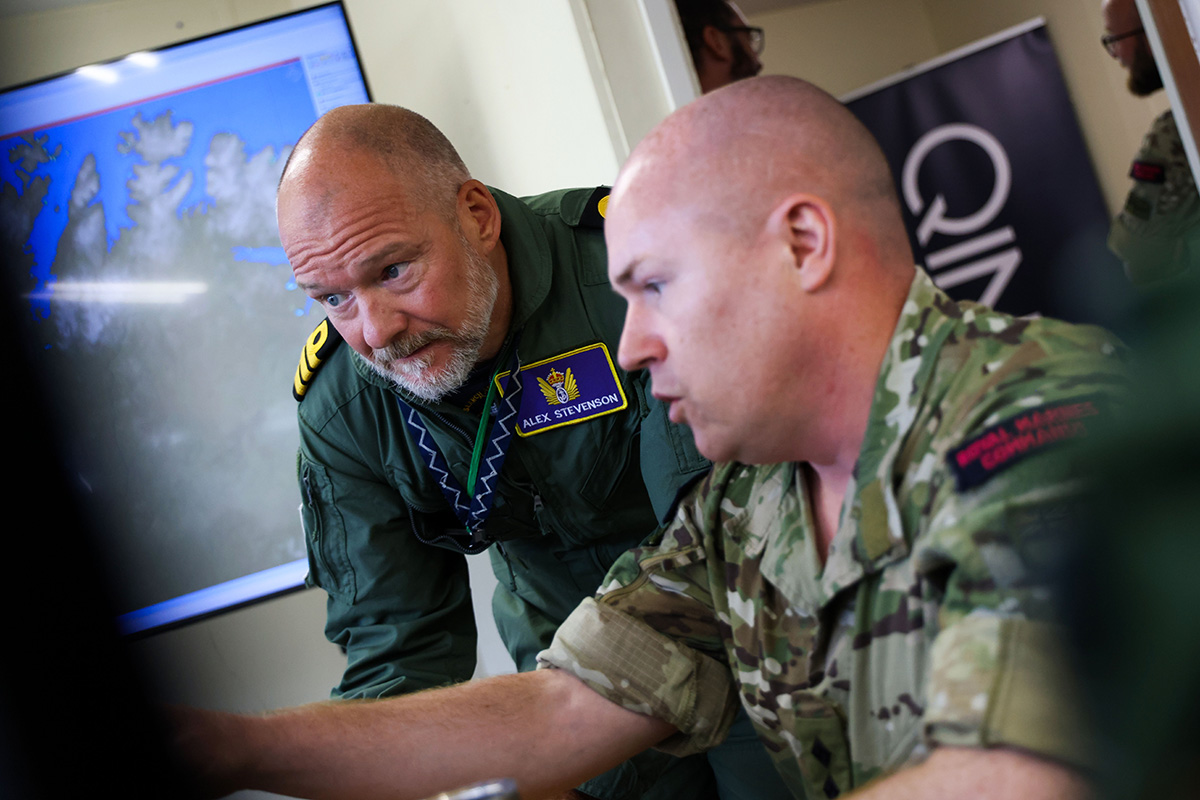
Exercise Virtual Warrior happens once a year, is held at Secret, and until this week, no journalist had ever been inside it.
What UK Defence Journal found at Rollestone Camp on Salisbury Plain, three miles from the ancient stones of Stonehenge and about as far from them in time as it is possible to travel, was the first large-scale outing of the Maritime Command and Staff Trainer, MCAST, the synthetic training capability delivered by QinetiQ under a £25 million, five-year contract, and the first time it has been deployed into the field rather than run from a fixed site.
The exercise exists to answer a specific question for the fleet’s operational commander: it assesses Headquarters Commando Force as a sovereign, one-star, very high readiness joint task force headquarters, providing Commander UK Strike Force with assurance that HQCF can command a joint task force for warfighting and small-scale contingency operations, while its second formal aim was reaching MCAST’s Initial Operating Capability milestone. Around 240 personnel took part across the two-week exercise, which followed a further fortnight of setup, split roughly half and half between the training audience, Commander UK Commando Forces and his headquarters of about a hundred people, and the hundred or so delivering the training around them.
The scenario placed them in a UK sovereign operation in the High North, across northern Norway and the Norwegian Sea, supporting Norway against aggression: the story opens with UK Commando Forces and the Carrier Strike Group remaining in theatre under sovereign command after their Winter Deployment as the threat in the region escalates from crisis toward conflict, and it is grounded in the real activities and planning the force has undertaken over the preceding year.
“What this construct does is it allows us to provide the complexity and realism in a real-world High North scenario with true adversaries, to really test the one-star battle staff at every level,” Captain Stuart Yates, the Captain Joint Training and Exercise Planning Staff and the exercise’s director, told UKDJ. “That’s from the lowest common denominator of a staff of 110 personnel, from the brigade commander, his chief of staff, all the way down.”
The synthetic environment, he explained, allows the exercise to inflict what a live exercise never safely could, “including some of the stuff that we can’t do in the live exercise: casualties, engineering defects, logistical chain difficulties, difficulty in command and control into our NATO partners. We can absolutely test that from a scale of activity ranging from competition to crisis to full-out warfighting.”
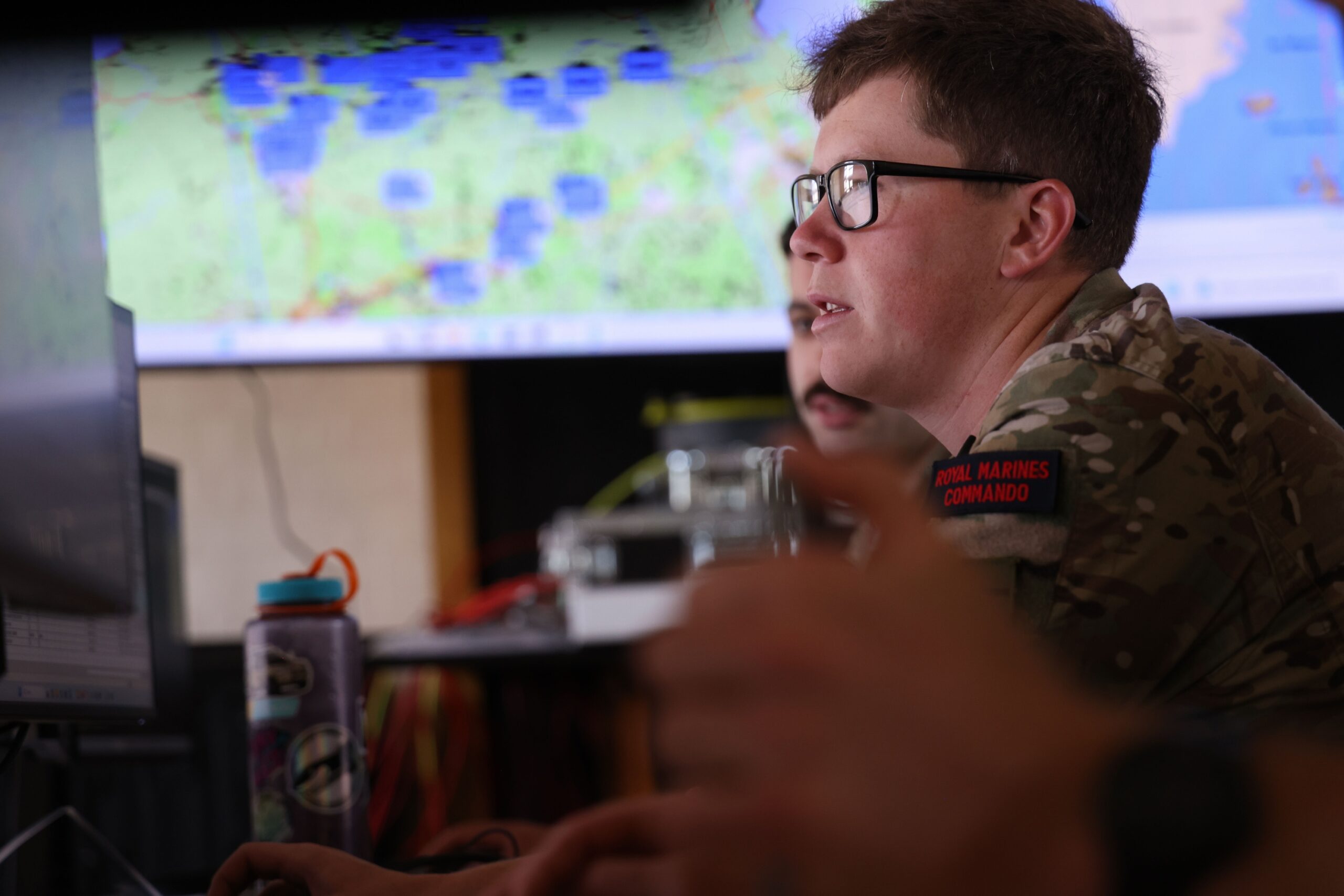
It also bends time, and the night before my visit the exercise control staff had done something impossible at sea by resetting the war overnight. “A particular scenario, if we allowed it to play for real, we’d be having to wait days for maritime shipping to manoeuvre,” Yates said. “In a computer-based model, we can press reset, reposition the pucks on the chart, and what we’ve done is accelerate the complexity overnight. The trick is you just need to read in the training audience, get them in a slightly different mindset, which we did this morning: your forces are now disputed, you’ve got less fuel, less ammo, you were here, you’re now here.”
The exercise belongs to Fleet Operational Standards and Training, the organisation whose assessments decide whether the Royal Navy’s ships, submarines and task groups, and the NATO and JEF allies who train alongside them, are ready to fight, and its commander regards this fortnight, the first exercise under the new MCAST contract, as a milestone. “This is part of a really important journey that we’re now on,” Commodore Andy Ingham, Commander Fleet Operational Standards and Training, told UKDJ. “It brings together the traditional live training that FOST has for many decades delivered, but also embracing new technology to have a meld of synthetic and live training, because that makes training more effective. There are some things that I can only do live, but there are many things that I can now only do synthetically.”
Inside the rooms where the war is run
Getting into the exercise’s nerve centre involves a small ritual of the classified world, because at the door everything that transmits is given up: phones, smartwatches, anything with an aerial, bagged and left behind so that whatever happens beyond that door, nothing you carry in can hear it.
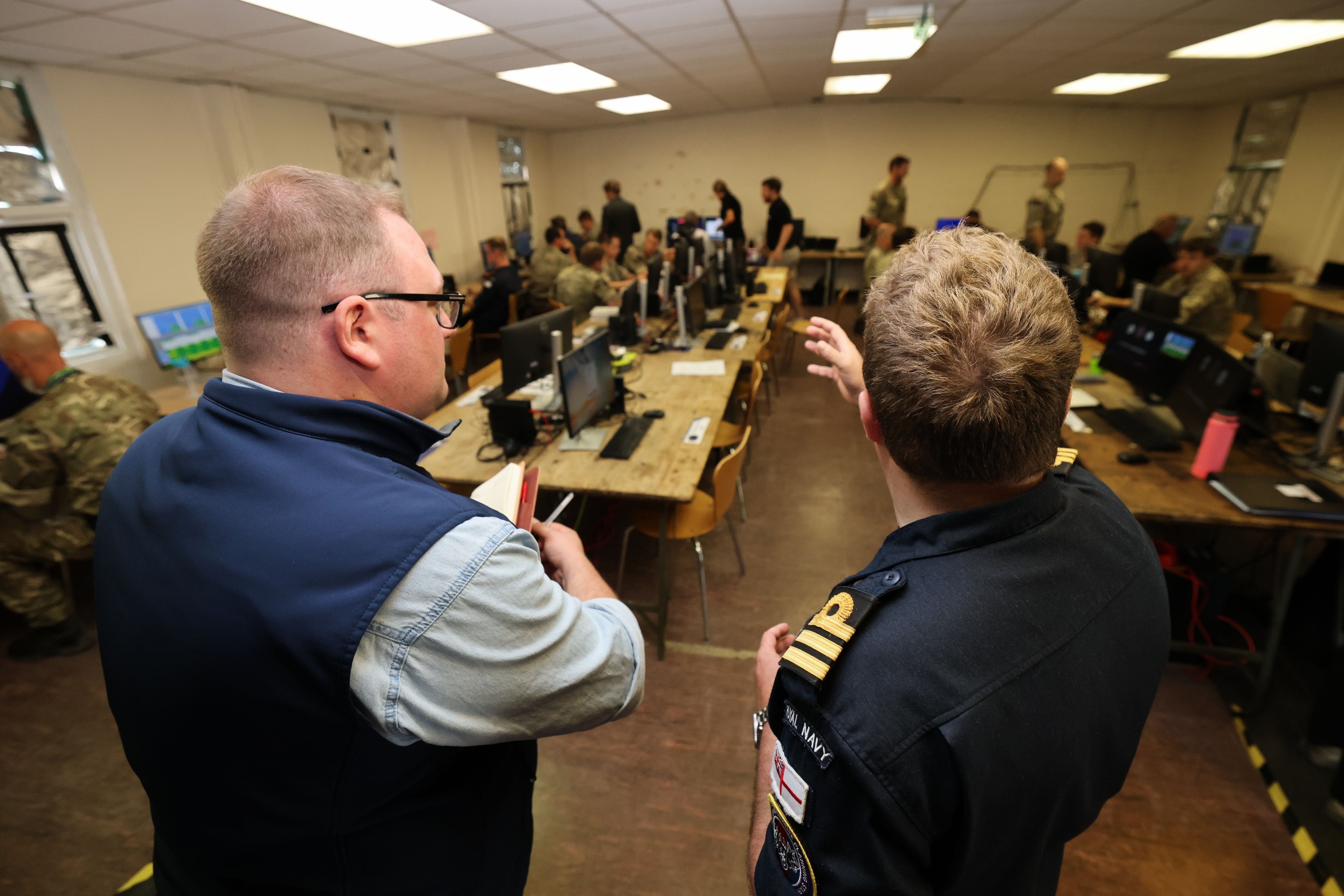
The first room beyond it is where the war is run: the J3 execute cell of Headquarters Commando Force, the current-operations heart of the headquarters being tested. Banks of computers and monitors fill every desk, yet the room is dominated by something defiantly analogue: a large paper map, plotted with adversary forces in as realistic numbers as the exercise designers could make them, the kind of picture a commander would genuinely face rather than a thinned-out training version, because whatever else is synthetic about this exercise, the enemy on that map is meant to be taken at full strength.
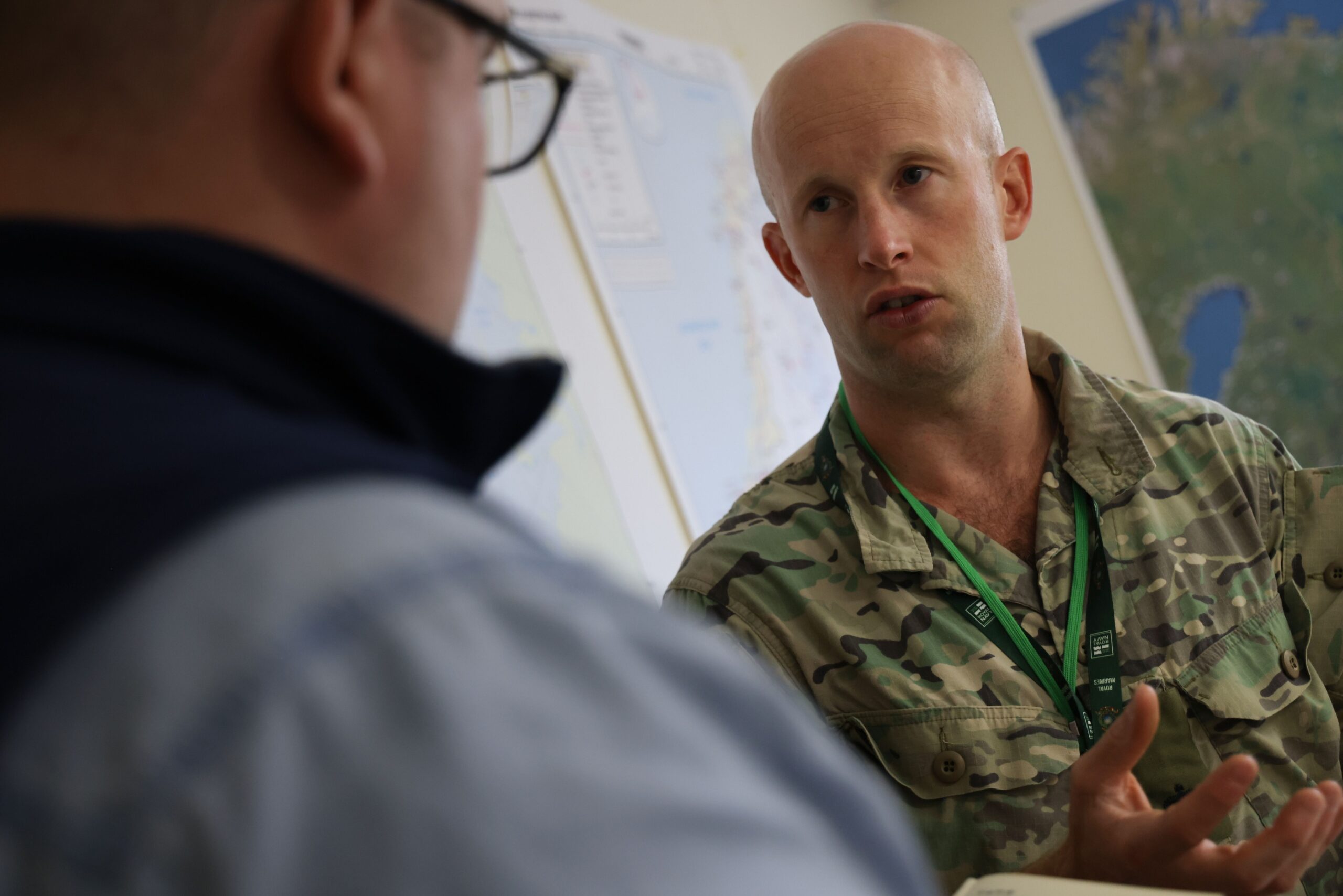
Deeper in sits the machinery that makes the war happen, split across two rooms. In the first, rows of monitors run the length of the floor, operators in headsets working beneath large charts and maps of the High North, and the overall effect sits somewhere between a NASA headquarters and the bridge of the Starship Enterprise. This room holds two teams, and the easiest way to understand them is as a sandwich with the headquarters being tested in the middle: above it sits HICON, higher control, pretending to be the bosses, the strategic headquarters that issues the orders and demands the updates, while around the whole exercise sits EXCON, exercise control, the puppet master deciding what the enemy does, when crises land and how hard the day is going to be.
It is here, each morning at half past nine, that the key players converge for the fusion meeting that decides, line by line, what the war will do to its participants that day, drawing on trusted agents embedded inside the headquarters who relay how the training audience is coping, and on a fusion cell that Yates credits with linking every inject and intelligence product into one continuous storyline. The value of that continuity reaches well beyond this fortnight, because the same storyline, built by the same designers, runs on into the live exercise Strike Warrior with the same training audience later this year, meaning the headquarters that steps off Salisbury Plain on Friday will meet the same war again at sea.

The final room belongs to QinetiQ, and it completes the sandwich from below. Alongside the engineers running the simulation, and the racks of servers so substantial they cannot travel two to a vehicle and need their own cooling, sit the LOCONs, lower control: the operators pretending to be everything the headquarters commands, the ships, the commando units, the aircraft, voicing them over the radio so convincingly that, to the staff in the execute cell, tens of thousands of people and dozens of platforms appear to exist. Many are augmentees pulled from busy front-line jobs at short notice who had to learn the simulation in days, and underneath it all runs MASA Sword, the French-developed software also used by the US Marine Corps, generating the synthetic battlespace at up to Secret classification across more than a hundred user terminals. When the commando force headquarters sends an order or asks a question, someone in the next building answers it in character, whether that character is a government minister or a frigate, and the result is that a one-star headquarters fights a war in which everyone it talks to, above, below and against it, actually exists a few doors away.
Part of what makes the battlespace so convincing is that much of it is real. The synthetic environment is fed with genuine open-source data, the AIS transponder returns of actual merchant shipping and real-world air traffic among it, so the plot the headquarters stares at carries the same civilian clutter a deployed force would have to see through, and the picture can tighten as the scenario escalates, down to details like the airspace warnings that would ripple outward as a real crisis built.
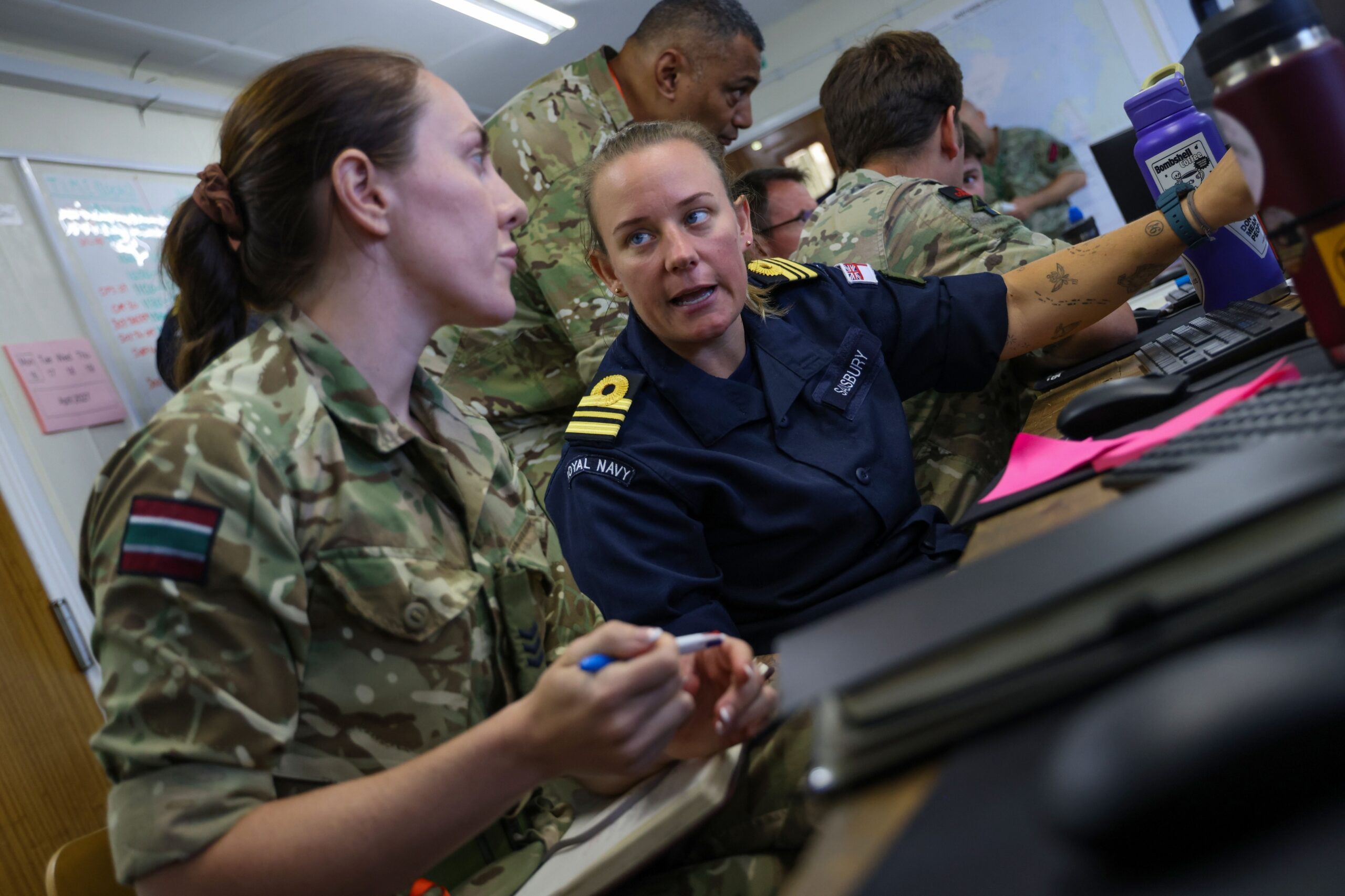
“When we’re delivering complex collective training, we use real-life data to provide extra complexity to the training itself, and real-life data is really good because it is real life,” said Jim Graham, managing director of QinetiQ’s maritime and land business. “We collect it from open-source environments, and we have the ability to inject that open-source data live into the exercise to make it real time.” For this first outing the feeds were drawn from data collected a year earlier to prove the system, but the ambition is to pipe them in live, which Graham says deepens the realism while sparing the designers from building a world’s background traffic from scratch: “It gives the participants a real feel of what it’s going to be like in the real scenario, and makes it very relevant for today’s battle.”
Elsewhere on camp sits the exercise’s supporting industry: geo cells producing the mapping, charting and bird-table overlays a deployed headquarters would demand, an assurance team of five officers measuring the training audience against its objectives, and a dedicated information warfare team feeding the scenario with fabricated news articles, social media and adversary state reporting.
The Navy has exclusive use of Rollestone for the exercise, and the 240 participants live on camp in prefabricated accommodation for the full two weeks precisely so that nobody goes home to normality in the evening, while during last week’s heatwave the headquarters’ operating rooms reached 43 degrees. “It’s not quite northern Norway,” as one of the exercise staff put it, “but you are deployed here.” Ingham makes the same point from the other direction: “You can put the scenario anywhere you wish in the world. Here we are in Rollestone Camp, and albeit the weather is slightly different, the scenario is the High North in winter. You can immerse the training audience in the geography you wish.”
From contract signature to war game in under a year
The contract for MCAST was signed in July 2025 and the team compressed what would normally be a two-year exercise planning cycle into roughly nine months to reach this Initial Operating Capability event, a pace Ingham calls “quite extraordinary, frankly, and testament to the hard work put in not only by the military but also industry. It’s been a real team effort.”
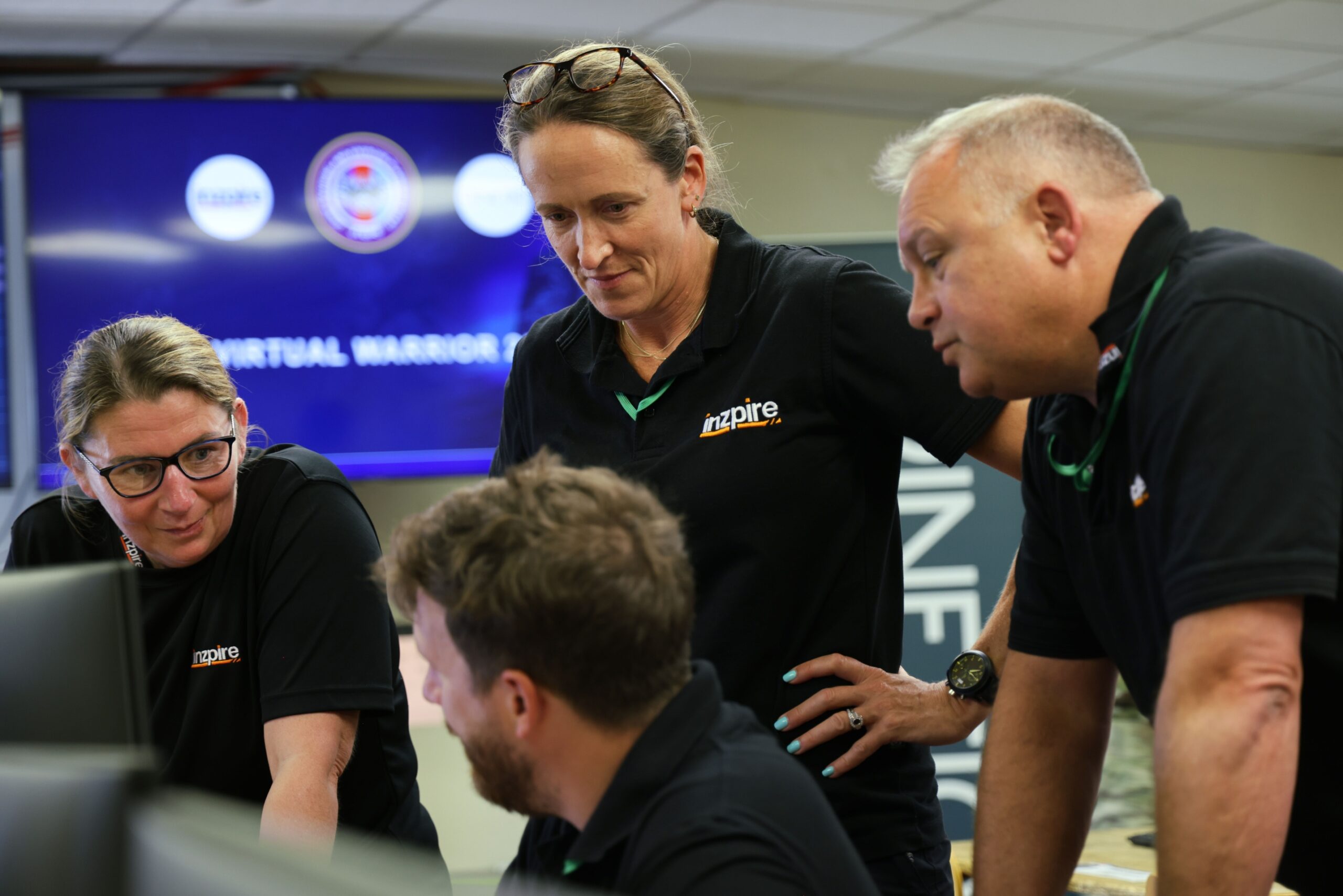
Since MCAST is a service rather than a box of equipment, I’d like to take a minute to explain what it actually is, because it’s quite complex on first read I would imagine: the MCAST Operating Service pairs QinetiQ and Inzpire personnel and their equipment with the Navy’s own collective training organisations, twenty of the 240 people on camp coming from industry. Inzpire’s contribution runs through the whole enterprise, because the Lincoln-based company, now part of the QinetiQ group, provides the White Force, the team of people who wrote the war and referee it daily, designing the scenario, shaping its injects and adjudicating what the training audience’s decisions actually achieve, and every one of the team is a veteran, drawn from a company where around four in five employees have served. Asked directly whether the nine-month sprint had cut corners, the exercise staff and the Inzpire team were emphatic it had not: the exercise was simply made the sole focus of a dedicated team, with a full system test run at QinetiQ’s Portsdown Technology Park in June before the servers were moved to Wiltshire.
Crucially, this is not a pass-or-fail event, since the assurance team measures the headquarters against collective training objectives agreed with its operational commander in a rolling year-long process that continues into a live exercise, Strike Warrior, with the same training audience later this year. “Success for me,” Yates said, “is: has the training audience, from the Commodore himself to his battle staff all the way to the youngest individual, properly done what I would call the sets and reps, so that if we went to war tomorrow, stepping away from here on Friday, could he deliver all his command and control functions and planning and execution functions? Even if we’ve achieved 75 per cent of what he was trying to achieve, and that delta has grown, then that is success.”
Where all of this is going
MCAST’s journey is only beginning, with a smaller exercise, MCM Warrior 26, following in September, next year’s Virtual Warrior training the Carrier Strike Group battle staff, potentially embarked in a carrier with the synthetic battlespace piped into the ship’s own planning spaces, and Full Operating Capability expected within roughly two years. The system’s data, every decision recorded, feeds after-action reviews designed to make each iteration harder than the last.
The destination the Navy is aiming for goes by the name LVC, live, virtual, constructive, and stripped of jargon it means real ships at sea, crews in simulators ashore and computer-generated forces all fighting in the same exercise at the same time. A frigate genuinely underway in the Atlantic could find itself defending against a simulated missile raid, coordinating with a virtual American destroyer crewed from a shore facility, inside a scenario run from a hub in Portsmouth, with none of the participants able to tell from their screens which parts of the battle are real, and where today Virtual Warrior’s synthetic war and Strike Warrior’s live one happen months apart, under LVC they merge.
Nor is this a training department’s side project, because it sits at the heart of the First Sea Lord’s agenda for the fleet. Under his Royal Navy Ready Plan, Yates explained, exercises like this one are being deliberately aligned into a single High North, NATO-facing pathway, and the Navy’s stated approach of “autonomous wherever possible, crewed only when necessary” leans on exactly this technology, since a hybrid fleet of warships and uncrewed platforms can only realistically be trained together in a blended battlespace, there being no other way to muster it. The Navy’s wider training transformation aims for a roughly even split between live and synthetic training by the end of the decade.
“The Royal Navy’s live virtual constructive programme, under SPARTAN, with some additional funding hopefully from the Defence Investment Plan, should allow us over time to potentially be doing live and synthetic training at the same time,” Yates said, while Ingham puts the destination more bluntly still: “Live virtual constructive training is the head mark, and Virtual Warrior is the first exercise under the new MCAST contract that is the stepping stone to that head mark.” What happened at Rollestone is the proof of concept for how the whole Royal Navy intends to train.
“A bunch of computers and some desks could be deemed as dull,” Yates reflected at the end of our interview, “but it’s not at all.” On the evidence of many days of simulated war in Wiltshire, he isn’t wrong.
You can watch our report on the exercise below.




I’m waiting for the posts on virtual ships……
Inzpire – essentially the commercialisation of UK military training. One of the many reasons most of the skills have disappeared from inside. FOST by another name.
And is it cheaper long term, outsourcing? I have my doubts.
So the system can slow down and rewind. We must remind the enemy to do that in our next war!