Babcock International Group has launched a national skills study aimed at ensuring the UK has the engineering skills needed to support future defence capability, national security and technological sovereignty, the company stated.
The initiative, titled Engineering the Future of Defence, was unveiled at the Farnborough International Airshow and has been developed in collaboration with the University of Oxford’s Centre on Skills, Knowledge and Organisational Performance, known as SKOPE. It will bring together government, academia and industry to examine how engineering education can keep pace with rapidly advancing technologies, including artificial intelligence, autonomous systems, cyber security and advanced manufacturing, alongside growth in the defence sector driven by increased investment.
The programme will open with a series of in-depth interviews involving representatives from government, academia and industry, followed by a nationwide survey of UK STEM talent intended to gauge the aspirations and challenges facing future defence engineers. Findings will feed into a report co-authored with SKOPE, due to be published in autumn 2026, with the aim of informing evidence-based policy discussions and strengthening the UK’s long-term engineering capability. According to the company, the study will focus on the growing gap between engineering curricula and industry requirements at a time when demand for specialist skills continues to outpace supply.
Sir Nick Hine, Chief Growth Officer at Babcock, was quoted as saying:
“Defence is undergoing one of the most profound periods of technological transformation in a generation. From autonomous systems and digital engineering to artificial intelligence and advanced manufacturing, the pace of change is accelerating rapidly. At the same time, the sector faces a critical challenge: ensuring we have the skills and talent pipeline needed to deliver and sustain these capabilities. This is not a challenge for any one organisation to solve alone. Alongside the University of Oxford’s SKOPE research centre, we’re bringing together industry, academia and government to better understand how engineering education and workforce development can evolve to meet future needs. If we want to maintain sovereign capability and national resilience, we must invest in the people who will design, build and support the systems of tomorrow.”
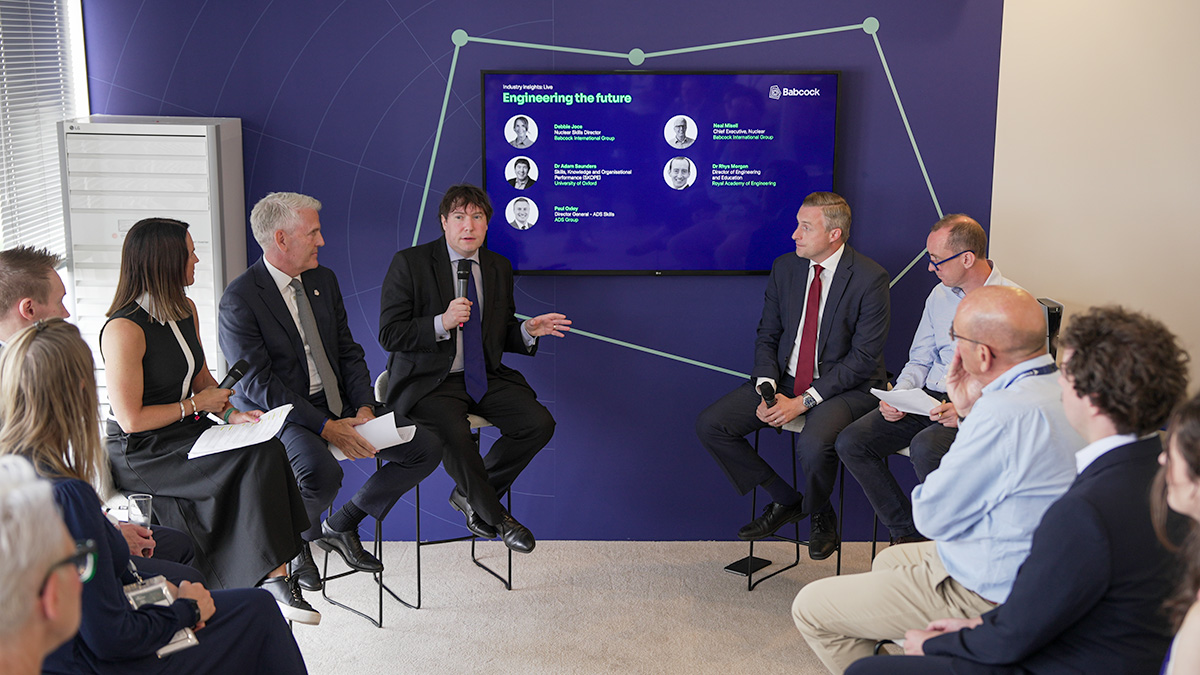
The initiative was introduced during a Farnborough panel discussion featuring representatives from Babcock, the University of Oxford, the Royal Academy of Engineering and wider skills stakeholders.
James Robson, Director of SKOPE, which is based at Oxford’s Department of Education, was quoted in the press release as saying: “At SKOPE, our aim is to understand the links between skills and knowledge, performance and productivity, and economic futures, and working alongside Babcock to examine this for the defence sector is already proving to be fertile ground for breakthrough findings. We’re deep-diving into the skills ecosystem in defence, and speaking to those studying and preparing for their engineering careers, to uncover what an evolution in defence and engineering skills should look like. Crucially, we’ll also consider what is needed from a policy perspective and from industry leaders to enable this transformation, and set up the defence sector for decades of success.”
The announcement follows recognition of Babcock’s own workforce development activity, with the company rising from 29th to 12th place in the Department for Education’s Top 100 Apprenticeship Employers rankings and securing a Top 20 position in The Sunday Times Top 100 Apprenticeship Employers 2026. Over the 2025/26 period, Babcock has taken on more than 1,600 new graduates and apprentices and continues to invest in skills areas including cyber security, advanced manufacturing, nuclear engineering and space systems. Its Emerging Talent Programme was recognised at the Enginuity Skills Awards 2026, where the company received Large Employer Skills Champion of the Year and New Talent Inspiration Programme of the Year.