

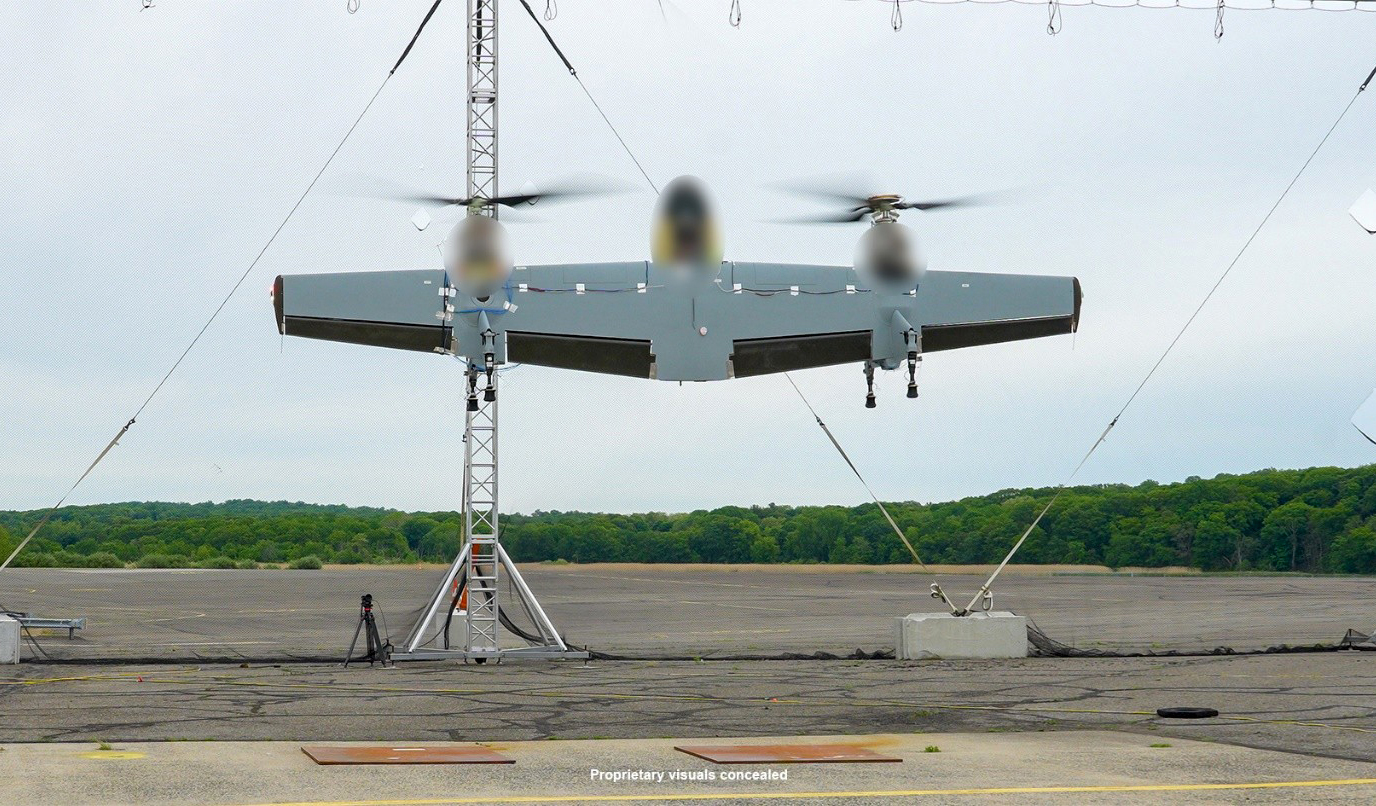
Sikorsky has completed initial ground and flight testing of its Nomad 100 uncrewed aerial system under a DARPA programme.
The Lockheed Martin subsidiary said the testing was carried out in collaboration with the Defense Advanced Research Projects Agency’s Early VTOL Aircraft Demonstration, or EVADE, programme. According to Sikorsky, the milestone marks a further step in delivering uncrewed systems to personnel operating in contested environments.
Rich Benton, vice president and general manager of Sikorsky, was quoted in the press release as saying: “Nomad 100’s ongoing flight testing reflects our commitment to advancing autonomous technology while delivering safe and reliable mission capabilities that equip customers to fill critical operational gaps. Nomad will serve as part of a crewed-uncrewed team complementing missions anywhere from austere forward operating bases to ship decks and unimproved landing zones.”
Sikorsky said the Nomad 100 would next advance through an intensive flight test campaign at a government facility, replicating a range of multirole missions.
According to the company, the Nomad 100 uses a rotor blown wing architecture, combining the vertical lift and hover of a helicopter with the speed, range and endurance of a fixed-wing aircraft. A twin prop-rotor system enables vertical take-off and landing, hover, cruise on the wing and runway-independent operation across land and sea. The aircraft is designed to function as part of a team of crewed and uncrewed platforms.
The company describes Nomad as its entry into the uncrewed market, combining its rotorcraft and autonomy experience with AI, advanced manufacturing and electric propulsion to produce what it says is a high-performance, lower-cost and scalable VTOL platform.
Sikorsky said DARPA had selected its MATRIX autonomous technology as the autonomy solution for all five platforms under the EVADE programme. The same technology underpins the company’s other uncrewed platforms, including the S-70UAS U-Hawk and its hybrid electric demonstrator. According to Sikorsky, MATRIX has logged more than 1,000 flight hours, over 500 tests and demonstrations, trained more than 100 operators, and been integrated onto more than 20 platforms to date.



I like the concept of this one.
…—…