

The framework known as Military Aid to the Civil Authorities has endured through floods, pandemics, fuel shortages and industrial disputes largely because everyone involved has treated it as a piece of machinery too valuable to be played with, a channel through which genuine requests meet honest answers without either side pausing to calculate the political dividend.
The events of the past fortnight in the Cairngorms, as reported by the BBC, suggest that this restraint can no longer be taken entirely for granted, and for those who care about the resilience arrangements of these islands that is a quietly dispiriting thing to have to write.
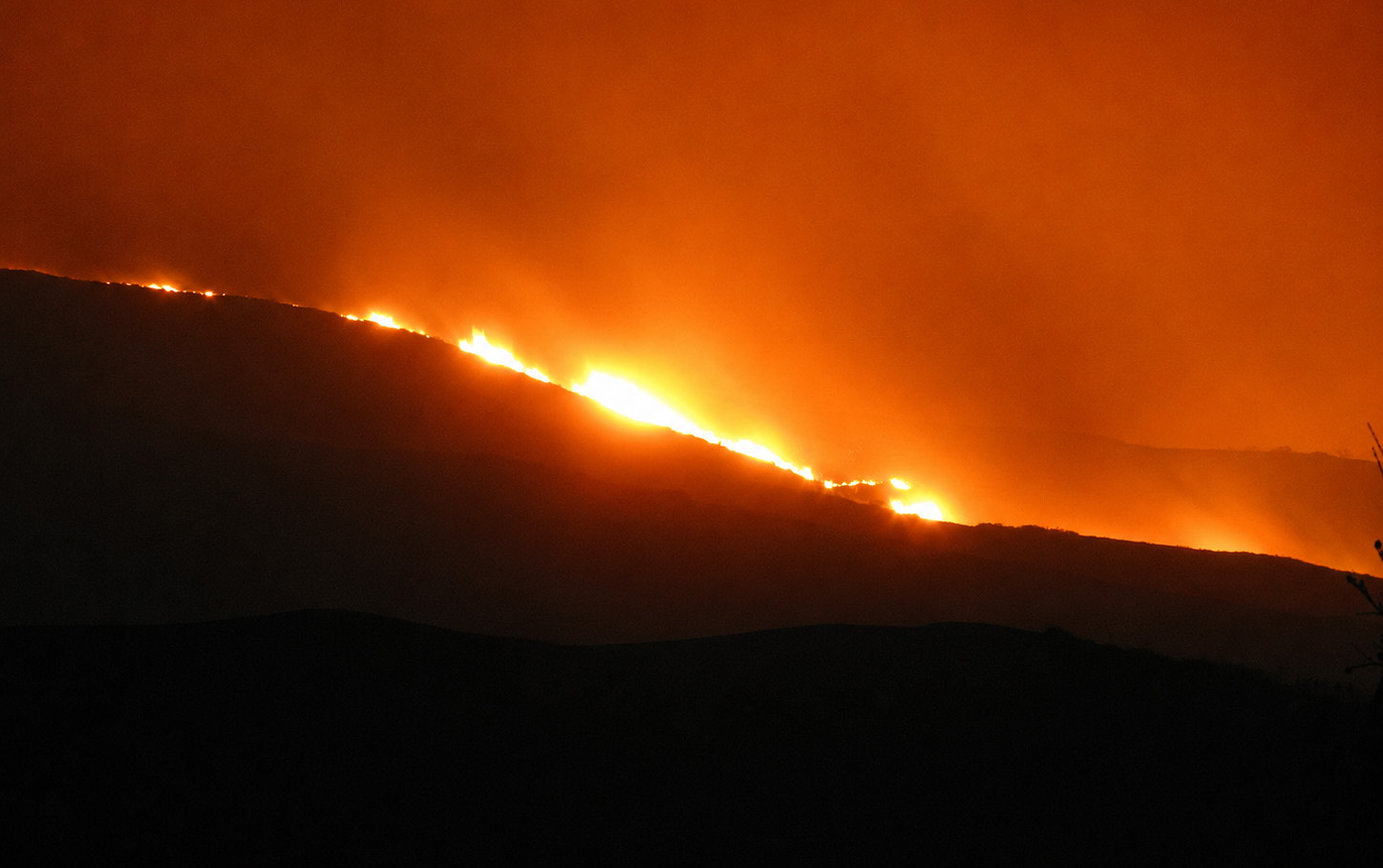
The facts, insofar as they can be established from the public record, run as follows: a wildfire broke out near Glenmore on 15 July and grew, according to the chairman of the local community council, from something the size of a small car into a burn area of roughly 30 square kilometres of heather, woodland and internationally significant conservation ground; a major incident was declared at the weekend; the UK government offered military helicopters for heavy lifting alongside support from stand-by battalions; and the Scottish government declined that offer, with the justice secretary, Neil Gray, explaining that the specific requirement on the ground was for waterbombing helicopters, that every commercial waterbombing aircraft in the country had already been committed to the fire, and that the military simply did not hold the capability being sought.
Up to this point the minister’s conduct is arguably a model of how such judgments ought to be made, since ministers are obliged to specify what responders actually need rather than gratefully accepting whatever happens to be on offer, and if fire commanders had concluded that personnel numbers were adequate and the shortfall lay in aerial suppression, then declining battalions of soldiers reflects discipline rather than any dereliction of duty.
What sits rather less comfortably is what Mr Gray conceded on BBC Radio Scotland, namely that he had heard informally, before any formal request was submitted, that the UK military possessed no waterbombing capability, and that he proceeded to submit the request regardless, received the answer he had every reason to expect, and then observed publicly that “people might be concerned to learn” of the gap. One need not be a cynic, merely a reasonably attentive reader of Scottish politics in a season of strained relations between Holyrood and Westminster, to notice how that sequence appears from the outside.
It is worth adding, before that framing hardens into received wisdom, that the minister’s flat assertion about UK military capability does not entirely survive contact with the order of battle, because the armed forces have in fact been dropping water on wildfires for decades, just not from British soil. No. 84 Squadron at RAF Akrotiri conducted aerial firefighting over Cyprus with underslung Bambi buckets throughout the Griffin era, Chinooks of 1310 Flight dropped some 450 tonnes of water on the largest Cypriot wildfire in generations in July 2025, and this very month three new H145 Jupiter HC2s arrived at Akrotiri under a £148 million programme whose principal summer tasking is precisely the waterbombing Mr Gray says the military cannot provide.
There are entirely respectable reasons why those aircraft could not have been surged to Speyside, since they exist to protect the Sovereign Base Areas at the height of the Mediterranean fire season, sit more than two thousand miles from the Cairngorms, and were in any case still working up on a new type, but a capability that is committed elsewhere and held at the wrong scale is a rather different thing from a capability that does not exist, and a justice secretary constructing a public grievance around the latter claim owed his listeners the distinction.
The Scottish Conservatives have denounced the episode as a cynical stunt, which is a partisan characterisation this column need not adopt wholesale, not least because there exists a perfectly legitimate case, familiar to anyone who has spent time in resilience planning, for converting informal soundings into formal requests: paper trails matter in the aftermath of any major incident, informal answers occasionally prove wrong, and a minister who failed to exhaust every conceivable avenue would rightly face criticism once the smoke had cleared.
The decision to formalise was not, in itself, the offence; the offence, if that is not too strong a word, lay in the framing that followed, because a minister acting on purely operational logic confirms the position, thanks the responders and returns to the business of the emergency, whereas a minister who elects to draw public attention to a capability the armed forces do not possess, in the middle of a live incident and while declining the assistance actually on the table, has made a communications choice whose costs extend well beyond a single news cycle.
MACA runs on trust, and if devolved administrations come to regard formal requests as devices for the manufacture of grievance, while Whitehall comes to suspect as much, then the machinery that has moved helicopters and ambulance drivers through past emergencies becomes markedly harder to operate at the speed such emergencies demand.
None of which should be read as absolution for the UK government or the wider defence establishment of course, because the substance of Mr Gray’s observation happens to be accurate and merits attention entirely on its own terms. Here is a state that has watched its Mediterranean allies burn through successive summers, whose own climate projections point unambiguously towards longer and drier fire seasons, and which has proved perfectly capable of building, equipping and funding a standing aerial firefighting force when the ground being defended is a pair of bases on Cyprus, yet holds not a single equivalent asset for the homeland and tolerates a domestic commercial market so thin that one Highland incident absorbed it completely, while nations such as Greece, France and Spain treat fixed-wing and rotary waterbombing as core instruments of national resilience rather than as a niche export posture.
The question raised by the Cairngorms is therefore why the calculus that justifies £148 million of Jupiters for the Eastern Mediterranean has never been run for the Highlands, the Pennines or the heathland of the south.






In the early days of this fire they could have quite reasonably asked for help from 39 Engr Regt up there in digging/cutting fire breaks before the fires got out of hand! Water bombing is not the sole answer to containing fires!
Do the Scottish government have any idea even what 39 is and what it does?
Do they even care?
Did anyone in London take the initiative and lay out options available should MACA then be called?
It’s always go for the sexy option! Christ 32@21 are not that far down the bloody road!
I doubt the Scottish government has any idea how to fight wildfires and thus ask the right questions, even if it knew what 39 is and what it does.
As always, HMG have their priorities, and only u turn after the embarrassment is shoved in their faces.
Can Drones drop water? As there aren’t many helicopters left, and getting fewer, courtesy of HMG.
Chinooks? Being halved shortly, 14 ER depending.
Fixed wing? 22 Atlas and 8 C17, already overstretched trying to fill the gap through cutting 14 Hercules, without buying water bomb kit and diverting some to this task.
You have your priorities and have made your bed, HMG, so bloody well own it and lie in it…..
As you say, a400m are over stretched, but they will have to bite the bullet and get the airbus firefighting kit for the a400m. Not only have shot themselves in the foot with poor defence reductions over decades, their cost cutting is effecting civil duties.
Yes, sadly, it’s only going to get more common.
Annoys me though how HMG run in circles after the event.
As the article rightly says, they KNOW, it’s an issue on the continent and have done sod all. And when they do act, it’s the military who they constantly reduce who they call on, with even fewer assets, meaning other tasks get shelved.
Agreed. If the HMG wants a cohesive and engaged population this is another example of military engagement with society that will be noticed by the public.
Did RAF Hercules ever fight fires?
I think Daniele was more referring to if they were not cut, we would have.more assets available for this sort of thing.
True. But the assets have to be useful for the job required. We could have 50 Hercules and another 100 helicopters, but if they aren’t suitable for fire fighting, (which is a very specialised flying skill) then it doesn’t really make any difference.
MAFFS, Modular Airborne Firefighting System, a simple Google, used in the US, so we will be aware of it.
Flying skill. We have RAF Transports that regularly fly at low level through the Mach Loop, as part of their training.
Sorry, I refuse to believe that our highly trained pilots are incapable of flying a predetermined course, at a set level, to drop water!
Hell, 47 AD Sqn RLC have dropped people for decades, transports drop aid to Gaza and other places.
This is not possible, because we got rid of them.
So we never had MAFFS for our Hercules? I never said our crews aren’t capable. But it is skill set in its own right that crews would have to train for and be signed off as qualified, just like staying current for low level flying or A2A refueling. You don’t just take off and go drop water on Scotland.
Aerial firefighting is rather more dangerous than a low-level cargo drop. Large fires cause huge up- and down-drafts above them which can push aeroplanes into the ground or trees.
In this decade in America alone 25 aircrew have been killed in 14 fatal crashes, against 45 Americans killed in the military. Out of the 155 Canadair CL-415s built, 14 have been destroyed in accidents. A risky business.
Hi M8, The problems with MAFFS is it’s dependant upon landing at an Airfield, filling up and then taking off and going back to drop it.
IMHO it’s another gold plated add on to defence that justs sucks up money ! The Chinooks are already paid for and in use as Water Bombers in Cyprus and let’s face it here in the UK there are few places that are more than 15 minutes flight time (by helicopter) from open water.
An A400M can carry 20 tonnes of water or fire retardant, it’s an omni directional drop and completely dependant on the pilot knowing where to drop it and makes the approach accordingly. In addition because it has to maintain an airspeed above its stall speed it’s not exactly an easy thing to do ! And unlike an Air Drop fires tend to move so it’s a no exact flight plan job.
If you do want a really fast heavier than air solution it the De Haviland Canadair CL2115 which is being put back into production due to orders from various countries. It just skims across any open water, scoops up 7.5 tonnes, does its drop and repeats till the fire is out.
On the other hand we already have the Chinook which uses its existing 4 point lift harness with a Bambi Bucket on the bottom, it literally drops that into any water source going so any lake, reservoir or the open Sea. The capacity is 5 tonnes and because it’s a Helicopter it can hover, loiter and be very precisely guided to exactly where it’s needed, then repeat !
It doesn’t need a fixed Airfield, which has to have the ability to fill a tank, it can just use the nearest open water source and its faster sortie rate means it can stick far more water down per hour, with far greater accuracy and flexibility than any fixed wing aircraft can. It can even just hover until the guy on the ground says drop !
I have actually watched a couple of Chinooks, an old Huey and big Old Russian Mil 26 being used in Crete to put a major fire out and it’s just amazing watching them do it. The old Mil26 can drop 15 tonnes at one go !
FYI I have been doing a bit of serious research on this very subject as it’s madness to have the Kit, the Crews, not use it and just run the force down. Fact is the damn things work which is why last year they sent 2 out from Odiham to Akrotiri to be trained up to assist the local authorities. It’s a really important add on to fully justify keeping our Ch47 fleet at its present size.
Hi mate.
Agree to all.
I quoted MAFFS, having never even heard of it,after Robert raised the point if Hercules are even suitable, so I did a Google and found that yes they are, and are used.
Use banbi, use something.
My original point was that we have, again, next to nothing for a situation that is becoming commonplace in Europe.
Ahh yes, another pf my bugbears, the imminent halving of the Chinook fleet which no doubt after the event will be needed and the excuses will be coming from all sides.
Just like the RAF Hercules loss, and just like here that it’s indeed not so easy yet others happily engage in it.
I find it frustrating and it seems just asheer lack of foresight, yet again.
Cheers.
We’d need a new purchase of air frames, but standing up a ‘modular capabilities’ specialised squadron for A400 seems like a good use of money to me. Now available are aerial firefighting, AAR and also various palletised UAV/cruise missile launchers that are all roll-on and off but are not required for continuous use and should be swapped between.
No sign of the wanted buy of additional A400 in the DIP, despite CAS stating they were needed and desired years ago.
But yes, great idea. There is nothing to refuel the 14 ER SF Chinooks, and using Transports to fire stand off LAM was explored over a decade ago and I recall even formed a suggestion for a solution to the RAF FOAS.
As the risk of wildfires is going to increase in the future, we should be looking at acquiring the water-bombing kit developed by Airbus for the A400.
(Though the cost should not come from the defence budget.)
lemonde.fr/en/environment/article/2026/07/26/how-the-a400m-military-transport-plane-was-converted-to-fight-wildfires-in-france_6755839_114.html
Excellent assessment George.
Over to HMG AND Scottish (and Welsh) Government to sort out how they respond to similar fires in the future because it will keep happening. Greece and Croatia have recently invested heavily in new firefighting aircraft as part of a european process which will support Spain and France no doubt.
Sorry Craig, Excellent article.
I’m honestly surprised that there isn’t any capability for this, I mean if the Irish DOD can spring for Bambi buckets for the AC, I always just assumed the RAF had the capability in the UK? Suppose on the other hand its a quick way to burn lifespan on the helicopters, the 139’s are shagged because of it.
To a scot and an active watcher of Scottish politics. The SNP manufacturing grievance is far from new.
However the fact remains, these events are becoming more frequent and as a country we need to gear up for them. HMG needs to rapidly procure water bombing capability.
How MACA really works…
1) the emergency is managed by the local resilience forum and the Category 1 responders that make up the forum.. they each lead in their own field, gather and share resources and responses across the Emergency.
2) only if it becomes apparent that the resource of the local resilience forum cannot manage a major incident can they look at outside resources.. and this has to be a clear failure… not struggling to manage the event but a true failure… people waiting 8 hours for an ambulance or no ability to relieve staff after a 12 hour shift it’s not a true failure…
3) when the local resilience forum makes a MACA request due to catastrophic failure, the forum has no knowledge of capabilities, all it can do is describe the situation in the request.
4) the request then needs to go to the appropriate minister depending on the area of failure.. health, fire, police etc.. the minister then makes a decision to agree to pass on the MACA.. a MACA is made at resilience formation level but passed on at ministerial level.
5 ) the minister at the MOD then reviews the MACA and if they agree to take it they will then ask the services what is available to support the MACA as described. The services will then provide an offer.
6) this is passed from the MOD minister to the Minister responsible for the organisation requesting support who will then pass it back to the local resilience forum. If the forum decides to take the offered help, the resilience forum will then get the direct contact details of the senior officer or MOD civil servant acting as the resilience forum liaison…
7) the requesting organisation then pays the bill as presented by the MOD… for its help.
Personally my experience of the process as a member of a local resilience forum and an incident control room manager during Major incidents the MACA process is essentially incapable of managing…
1) fast moving overwhelming events that immediately overwhelmed the resilience forums ability to respond.
2) a nationwide event that overwhelms all areas.
Essentially Ministers are usually unwilling to support MACA because the response is always limited, not sensitive to the need and comes with a very high financial cost.
By the time the resilience forum gets to the point it understands its going to be overwhelmed it’s to late and the outcome will play out to it’s conclusion before any MACA request can be put through the system and the forces linked in.
If we are looking a future mass casualty events, NBC events, national level attacks etc the local resilience forums and MACA are inadequate…
And that is true both ways.. if something utterly devastated a UK military base it will have no link to the local resilience forum to work with and request immediate aid….
Personally I think a nation that is looking to be resilient should have local resilience forum
That can tap into all local resources and capabilities.. and have military that can tap into local resilience forums.
One would have to ask the question of what need are large water buckets on the battlefield? The obvious answer is none, therefore the need for the Military to have this capability is not there. If wildfires of this size and nature was a constant problem then the Govt should allocate resources (ha ha, yea I know) and the Govt should determine it was a capability the military should have. But as things stand I am not at all surprised at the current state of affairs.
The problem is that the military are the only people who need heavy lift helicopters continuously. Keeping civilian Chinooks specifically for firefighting, for example, would be a huge expense for a few weeks’ use each summer, while the smaller Coastguard helicopters are also in heavy use at this time of year.
It’s more efficient to use sorely needed Chinooks when things get out of hand than have civilian government helicopters for niche applications.
No, the reverse is the better solution. The cheapest most cost effective efficient solution is payIng civIlian charter helicopter operators a retainer to maintain some of their helicopters with Bambi buckets to deal with wildfires. This is a civil issue and sending the RAF is a sticking plaster solution. The failure here is with the Scottish government not maintaining such contracts with charter operators.
There is alot of sounding off that MOD does not have fire-bombing etc equipment sitting on call. Fire fighting, in this sense, is not a UK Defence responsibility. It’s a Home Office and devolved Home Affairs responsibility. So why not sound off to the politicans and planners who should be taking local responsibilities more seriously? MACA is there to assist and shore-up not replace local short comings or inadequacy. BZ to the firefighters and volunteers for their efforts.
“Mediterranean allies burn through successive summers, whose own climate projections point unambiguously towards longer and drier fire seasons”
False. What is happening is that most euro countries are much more green, specially forests, so have more fuel to fire, this is connected to the green ideology means the green areas are much much bigger with consequent larger fires. Another point is that there are much less people and animals working the fields.
“Forest and woodland area in the UK covers approximately 3.29 million hectares, representing about 14% of the total land area. This reflects a steady historical increase from a low point of around 5% at the turn of the 20th century, though it remains low compared to the European average of roughly 40%”
In my “Mediterranean” country in 1875 the forests were 6% of the country, today they are 35%. Much more fuel. 2024 was the year with less fire since that has been accounted for. Because now fires are much bigger due to the continuity of fuel/green areas)
1875 is right before the end of the period of the most intense deforestation, around when the majority of consumption shifted from wood to coal. That’s the low point referred to in your quote. After human settlement and before industrial population growth forest coverage of Britain was about 20% but in ancient Britain (which I’m not suggesting we return to) it was as high as 75%.
Alex, thanks for reading closely. Craig has asked me to review your complaint, and we take accuracy seriously, so I have gone back over the sentence and the sources behind it.
The line stands. It says that Mediterranean countries’ own climate projections point towards longer and drier fire seasons. That is a statement about what the projections say, and it is not in dispute. The European Environment Agency projects an expansion of fire-prone areas and longer fire seasons across most of Europe, with Portugal and Spain remaining the countries of highest absolute fire danger. IPCC AR6, as summarised by Copernicus, finds wildfire risk increasing across all European regions and particularly in the Mediterranean. Nothing in your comment addresses that claim.
What your comment addresses is a different question: what is driving the fires we are seeing now. There you are on solid ground, and we would not argue otherwise. Afforestation and rural depopulation have produced a large and continuous fuel load across southern Europe. Spain’s forest area alone grew by roughly 7 million hectares, about 59 percent, between 1970 and today. Fire scientists treat fuel accumulation and fuel continuity as major drivers of large fires, and the attribution work on last year’s Iberian fires cites land use alongside heat and drought rather than instead of it. Fuel determines how much can burn. Fire weather determines when it ignites and how fast it runs. These are complementary explanations, not competing ones.
On 2024, a single quiet season is not evidence of a trend, and the following year makes the point. 2025 was the EU’s worst recorded fire season, with just over 1.07 million hectares burnt across 25 member states, close to double the 2006 to 2024 average. Spain and Portugal both set record burnt areas.
One point where we would accept a qualification: burnt area across Mediterranean Europe has declined slightly since 1980, largely thanks to suppression capacity, so rising fire danger has not translated into a straight line rise in hectares burned. We are happy to say so, and it does not make the sentence you quoted false.
No correction is warranted, but I am glad to look at anything further you want to put to us.
This whole mess smacks of too many chiefs! Chinooks have often been fitted with Bambi Buckets, and used to waterbomb fires. So the offer of Chinooks was the right call by the UK government. 1000’s of troops on offer, was another right call by the UK government.
The fact that the Scottish Government ‘turned down’ the Governments offer, sounds like a petty little Scottish minister believing, ‘no thanks, we can fix things ourselves without having to rely on you bloody English.
That’s the bottom line here. Then the ‘Scottish Justice Secretary’ thought oh shit, this could come back and burn us (no pun intended). So he comes out with some utter garbage, regarding the abilities of a Chinook Helicopter.
The Scottish Government are guilty of negligence on a monumental scale here. That is how the UK government needs to respond to the tin pot little know bodies, currently ‘in charge’ of Scotland.
The Cairngorms are a Scottish, but British national treasure, and for petty people to allow petty views to stand in the way during a National Emergency, must be viewed as gross misconduct, in public office.
Furthermore, The upstart jock git who said ‘No’ to the offer of assistance, should be fired immediately, and face criminal charges.
Guaranteed to happen. It has been obvious now for last few years tgat the UK being one of the biggest economued in the world , should have jumbo jet size plane on 24hr readiness to be able to drop water . Be it Civiliian or UK . This plane can also be able to help out europw when not being used. It has been painful to listen to response so far in Cairngorns . Like a 3rd world country . Money spent on benefits not essential services .