

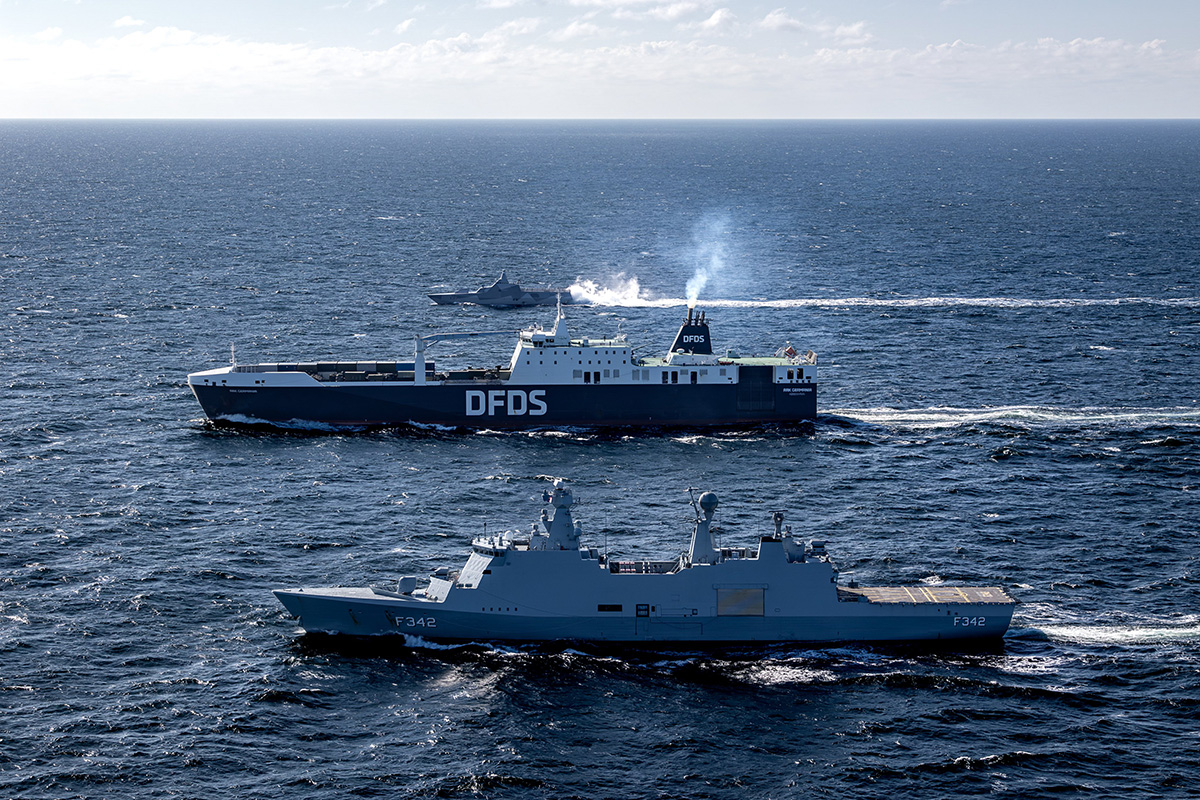
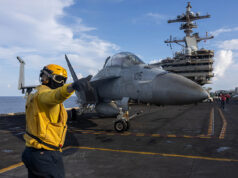
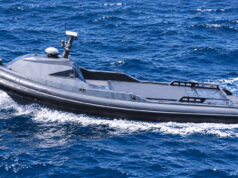
Warships escorted vessels carrying allied military equipment through Latvian territorial waters and into port during Lion Protector 26, the Joint Expeditionary Force exercise now running across Northern Europe, the Latvian Ministry of Defence stated.
The exercise began on 3 August and runs until 12 October, covering Northern Europe, the North Atlantic and the Baltic Sea region. Its opening activity, designated Baltic Express, is built around the rapid coordination and movement of forces across the region.
Rapid movement is a key part of credible deterrence. 🚢🚛🛡️#BalticExpress demonstrates how @JEFnations can coordinate and move forces across Northern Europe, strengthening military mobility, interoperability and readiness in support of #NATO’s deterrence and defence.… https://t.co/ahvmCBSzp5
— NATO Allied Joint Force Command Brunssum – JFCBS (@NATOJFCBS) August 12, 2026
According to the Latvian ministry, their Armed Forces worked with the JEF to escort the vessels safely, oversee their entry into port and handle the unloading of equipment and its onward movement to deployment locations.
NATO’s Allied Joint Force Command Brunssum said rapid movement is a key part of credible deterrence, and that Baltic Express demonstrates how JEF nations can coordinate and move forces across Northern Europe, strengthening military mobility, interoperability and readiness.
Moving heavy equipment into the Baltic states is the problem the exercise exists to solve. The region is connected to the rest of NATO by sea and by the Suwalki gap, the stretch of Polish and Lithuanian border running between Belarus and the Russian exclave of Kaliningrad, and reinforcement in a crisis would depend heavily on ports and the roads and railways leading inland from them.
Baltic subsea cables and pipelines have been damaged repeatedly since 2023, including the Balticconnector gas pipeline and several telecommunications cables, and NATO stood up Baltic Sentry in January 2025 to increase patrolling in response. Suspected shadow fleet tankers have been detained by regional navies, and GPS interference across the region has been attributed by several governments to Russian sources.
The Joint Expeditionary Force is a British-led grouping of ten Northern European nations: the UK, Denmark, Estonia, Finland, Iceland, Latvia, Lithuania, the Netherlands, Norway and Sweden. It operates outside the NATO command structure but is designed to complement it, allowing a smaller group of countries with common interests in the High North and the Baltic to act faster than an alliance of thirty-two members can.
Lion Protector 26 covers the maritime, air and land domains from the Arctic to the Baltic. Latvia describes it as complementing NATO’s vigilance and deterrence measures while strengthening the ability of participating nations to deploy forces rapidly.



With Sweden and Finland now in NATO the defence of the Baltic Sea suddenly has a new importance and it also gives NATO and JEF an entire new strategy to attack and pressure Russia with.
Kaliningrad can be easily isolated and the local population will likely be calling for independence with in five minutes of a war being declared and St Petersburg would come with in artillery range and serious threat of NATO ground forces in the first few days of a conflict. All while Russia has to defend Murmansk and its single road and rail connection to the rest of Russia.
From a NATO perspective defence of the Baltics now seems like not only a realistic prospect but a desirable theatre to engage Russian forces in.
I honestly think you are miss understanding the ethnic Russian mindset and love of mother Russia..
The simple truth is no matter how you cut it the ethnic Russian populations tend to support and side with mother Russia..
The reality of this is what has fueled and given some form of legitimacy ( in their minds) for the invasion of Ukraine. We often forget the Ukrainian conflict ( in its entirety ) has three sides ( we had 3 sides) the Ukrainian state ( and ethnic Ukrainians, the ethnic Russian separatists who wanted to split with the ethnic Ukrainians and the Russian state.
The simple truth is ethnic Russians have a cultural propensity to love mother Russia and fear or hate anyone they consider a threat to Russia.
Might I recommend Katya Adlers BBC series “Living next to Putin” for some balance. No chance the ethnic Russian population of the Baltics came be expected to act in the Wests interest.
Blimey Jim talk about a bombastic statement “calling for independence within 5 minutes of a war being declared”, name me any Russian ethnically populated area in History that has ever just turned its back on Mother Russia ? (A reply would be interesting).
Kaliningrad is massively ethnic Russian, heavily industrialised, the HQ of Russias Baltic Fleet and very well stocked with supplies, bunkers, munitions and hundreds of IRBMs many of which are armed with Tactical Nucs.
Post WW2 Stalin ethnically cleansed it, re populated it then made damn sure no one was going to take it off them easily.
If there are 2 things about Russians that you can rely on it’s they are pretty useless at attacking other countries unless it’s in retaliation, but hellishly difficult to beat when they are attacked and decide to really dig in.
Kaliningrad would not be an easy target, then again nor was Leningrad (St Petersburg) or Stalingrad (Volgograd), what makes you think the Russians would just cave in ? It certainly not History, they have a long record of fighting tooth and nail.
TBH Jim I think there will not even be a declaration of war it will just escalate via asymmetric warfare, little green men, incursions, sabotage and red flag ops pretty quickly.
And both sides know that the area around Kaliningrad / Suwalki Gap would be the number one Bloody Battleground of any future outright NATO / Russian conflict and as neither side can afford to lose it probably the first to go Nuclear.
FYI as far as I can tell other than Chad / Sudan and Iran / Iraq the last formal declarations of war were by Brazil against Germany and Germany against the USA in WW2.
I like Jim’s enthusiasm.
Not seen you about much of late. Nice holiday?
Good thanks mate, well rested 😀
I’m glad, that was for ABC Rodders but you’ll do!
Yes I am fine thanks, we had a lovely Holiday in Greece before it got silly hot. I’m spending more time as a Grandpa so less posting and TBH what is there really to post about regarding UK Defence until Mr Healey delivers his Budget.
No Money = No Hope.
On the subject of Kaliningrad I actually see it as NATOs no 1 priority Target in the event of an open war or an opportunity to leverage its existence to help end the Ukrainian War.
Completely agree around ethnic Russian culture as a whole..
With a small exception ethnic Russians will always support and fight for mother Russia.. and Kaliningrad has about a 98% ethnic Russian population.. its population will put up resistance.
In reality a nation needs to be careful if it has any significant ethnic Russian population and boarders Russia.. because that population when push comes to shove will support mother Russia.
It’s what Ukrainian found to its cost in 2014.. in the end the first Russian assault on Ukraine, the annexation of Crimea and the setting up of the break away republics was only possible because these areas had a 40-60% ethnic Russian population… that then opened the door for some form of legitimacy around a conflict with Ukraine that has lasted 12 years…
It’s why the Baltic states are in such a perilous position.. any disruption of them will start from within.. because will the US and wider NATO want to or even know how to react to a civil war, even one incited and fuelled by Russian sub kinetic action..
Kaliningrad is also the result of Russian ethnic cleansing. The Russians in Kaliningrad live on land stolen from Poland and Germany and they know it. No way would that population want a peace deal that, in their minds and the words of any Russian propaganda channel, see their home returned to it’s previous owners.
Hi ABC, my summation is that Kaliningrad had quite a few rumblings for independence in 2023 after just a war with Ukraine. Now after five years of disastrous war forced conscriptions and the prospect of being surrounded and annihilated by NATO might change the local populous desire even more.
Personally I think we over play the mother Russia card way too much especially amongst younger Russians. I worked in the country a fair bit over the years and use to know many of them. Most of the ones I know want to be European and they want a passport that treats them like a modern European nation instead of a North Kore 2.0 hermit kingdom.
In any conflict with NATO Kaliningrad is the most likely please to be nucked which again may sit in the minds of anyone in the enclave especially if their family is present.
I don’t doubt places like st Petersburg to be hard targets but even if NATO doesn’t attack them it can all be used to tie down Russian forces which will have an 800 mile open flank to guard unless they want to loose their northern fleet at Murmansk.
In any war of manoeuvre Russia is at a massive disadvantage to NATO and after a few months of fighting it’s at a massive manpower disadvantage.
There previous hope was essentially pilling across the Estonia boarder while operating an A2AD bubble in the Baltic long enough to get in place so that NATO would just accept Russian occupation of the Baltics. I don’t believe that is an option for them now. They would get bogged down on Estonian fixed defences while Kaliningrad was cut off and they would have to deploy hundreds of thousands of soldiers to hold the Finish boarder while simultaneously having to deploy hundreds of thousands of soldiers to hold the Ukrainian boarder neither of which they can do.
All the while everyone from their civilian population to their entire military structure would know that NATO winning would probably the best thing for people in Russia. White ethnic Russians in western Russia will likely not see European or US forces as ethnically different from them in this day an age. It would be hard to play the Nazi invader card when most Russians are use to going on holiday to Cyprus or Majorca these days.
The Joint Expeditionary Force is interesting.
As most will know on here, for a long time I’ve considered NATO to be a half dead moribund entity, that America first has essentially just shot in the head.. ( as we speak the US is undertaking grey warfare again a fellow nato member state and warned Ukraine of attacking Russia oil tankers as against American interests)..
I also consider NATO without the America First US present to probably being politically unable to react to Russia aggression..
Don’t get me wrong I know collectively even without the US European NATO has the collective power to flatten Russia..
But like the frog in a pan of water on the stove when will NATO Jump or will it slowly let the water temperature rise until
It dies… and be of no doubt Russia will and is slowly raising the heat.. sabotage across Europe.. in the UK it’s poisoned people with nerve agents, attacked our strategic defence infrastructure ( even damaging an SSN) and now regularly fired live weapons in the Channel while keeping a permanent naval presence in the channel as it escort illegal shipping through our waters.. make no mistake the water in the is now very hot and the frog is suffering…
I think this is where we must be very careful because there is a truth we forgot.. Yes Russia thinks it needs to control its near abroad, but it does not hate and fear those nations.. it does not think they are the architect of every anti Russian action or move that happens in the world.. there is only one nation that gets that crown, one nation Russia wants to humiliate and destroy one Nation that it thinks if it removes will see almost all anti Russia forces dissolve and that’s the hated “Anglo Saxons”.. the UK.
So yes we must as much as possible support NATO and we should have a reasonable army of intervention to support NATO allies and help communicate, capability and credibility in defeating NATO nations from attack… BUT and this is the biggest BUT there is.. Russia may choose to come at the UK first.. not existentially, but to humiliate and destroy our credibility and if they can do that just maybe they fracture NATO ..
Because there is a chance NATO does not immediately react to an attack.. Spain and the US are a long way away and article 5 requires a consensus of all NATO nations.. how long will that take even then what does the supposed look like..
If UK oil and gas pipelines and plaforms start to go boom.. if Russia say its ship was responding to a UK attack on a Russian merchant.. how long and how much damage.. if Russia smashes the UK and then backs off will the US and many other NATO nations allow the trigging of article five or will they back off and talk peace.. considering the UK blooded and humiliated a price worth paying for peace.. and will NATO have any meaning at that point…
The first duty of a government is to defend the NATO the best defence is a profoundly powerful offensive linked with deep national resilience for the long haul)..
I would argue that a total focus on NATO has stripped our nation of that.. infact you could argue that dependence on NATO is by far a greater reduction in sovereignty than being an EU member ever was…
Yes be part of an Alliance.. but first and foremost be able to kill your enemies on your own if your allies are off picking lint out of their collective belly buttons..
We really do need a defence review that says line one mission one..
Smash our enemies and keep smashing them till they come to the peace table or our allies turn up..
No matter what happens, if Russia attacks the UK it needs to know its own based will be smeared in blood and it’s own critical infrastructure destroyed by conventional strategic weapons fires by the UK armed forces… NATO needs to be the icing not the cake and the British army the the candles 🎂
Hi Jonathan,
Can you expand on when Russia damaged an SSN? Maybe I’m forgetting things but I don’t remember that specific event. Are you referring to the Barrow fire? Has anything official or semi-official been released about that now?
I agree the Russians have some misplaced grievance with us for some reason, maybe because once upon a time they thought we were rivals (ie that they were up to our level!) or maybe because they are upset at the high bank fees they are charged by the City of London, so we make for an oversized target for destabilisation and humiliation. From a strategic standpoint, we are the staging point for US reinforcements being shipped across the Atlantic to support NATO so another reason to take us out the game early doors.
But I fear there is still a complacency among some politicians and a large chunk of the general public that war is inconceivable: “why would Russia do that?” etc. But war doesn’t have to start with a grand Pearl Harbour attack, it can result from a series of miscalculations. The great reduction in size of our armed forces, the struggles with deploying assets and the slow pace of rearmament, together with our muted response to various acts of espionage, sabotage and murder on British soil, are an invitation to Russia to continue to push boundaries, the concern being eventually they will overstep the mark and we will have no choice but to go to war.
Jonathan and ABC are quite right on this one: the ethno-nationalist card works for Russia. There are significnt Russia-speaking minorities in Svalbard, eastern Estonia and eastern Latvia, and of course a Russian majority in Kaliningrad. Eastern Moldova, ‘Transdnistria’, is another such Russian enclave.
As we saw in Donetsk, it only needs a militant nationalist core to foment trouble via agitprop and then armed action. All controlled and orchestrated by the Kremlin of course, which has its little green men standing ready to turn local unrest into armed invasion. This is all part of Russia’s grey zone playbook. The balancing point is: will NATO go to war over the loss of Svalbard, Narva or similar, anymore than they would over the subjugation of Donetsk?
Jim’s view that the ordinary Russian speaker, used to holidaying in south-east Europe, would not support such irredentist action, is not too relevant: they will be the silent minority in a world of whipped-up Russian nationalism. This follows exactly Hitler’s playbook, first whip up nationalist sentiment in German-speaking areas so grab the Rhineland-Palatinate and see if Europe objects, then stubborn Austria, then demand the Sudetenland and the Danzig corridor. The newsreels of the time show the mass ranks of citizenry cheering the German invaders, all staged by the Nazi Party. The ‘ordinary’ Germans who spoke out against the actions were rounded up and disappeared, the majority kept their heads down and their mouths shut. It was the same in Donetsk. It was the same in Northern Ireland, where not all Catholics let alone a majority, supported the IRA’s military action.
Russia will inevitably test NATO resolve in one or more of these areas. NATO needs more boots on the ground in places like Estonia and Lithuania and should step up to offering forces for Moldova too. Kaliningrad remains a thorn in NATO’s flank that would need to be starved out and then reduced by force in wartime, despite the inevitable nuclear threats by Russia.
It’s interesting, I remember watching a debate during the fall of the wall, when a historian said that when all large multi ethic empires fall or retract massively there is always a load of bloodbaths as ultra ethno nationalism takes hold and the fact the multi ethnic empire always scattered enclaves of ethnic groups across national borders..
He predicted in 1991 that the fall of the Russian empire (soviet union) would lead to multiple bloodbaths that would take years to resolve.
When you consider the fall of the Ottoman Empire is still essentially still sparking bloodbaths now, as is the retraction of the British empire.
Cripes,
Largely concur w/ ABCR’s, Jonathan’s and your geopolitical and geostrategic assessment of the Baltic states situation/status. In addition to the issue of percentage of ethnic Russians embedded in Estonia and Latvia, there is also the issue of the geographic distribution of same. An ethnic Russian minority comprising ~38% of the population of Tallinn and an approximately equal percentage of Riga, present quite foreseeable issues for NATO in both gray zone and open conflict. Virtual certainty that once Mad Vlad secures a favorable ceasefire in UKR, his attention will shift to Baltics and/or Georgia and Moldova. Simply a matter of the timeframe. If Baltic conflict begins as gray zone civil conflict/insurrection, not certain the current or future POTUS will risk an existential conflict w/ a nuclear armed state. Potential partitioning of states based upon the results of a fair and free referendum re sovereignty might seem logical, however, that will be the least probable course of action. 🤔
The only thing I would say is that I no longer think the ending of the Ukraine war will be the building block of an attack of some description on NATO.. I think Putin now sees the political destruction of NATO and the humiliation and retreat of the more active nations like the UK as a requirement to winning in Ukraine, I think he will do something to try and disrupt NATO to try and remove active physical support to Ukraine.
This all reminds me of the Atlantic convoys during world war II. And lets not forget the merchant vessels and crews involved in this whose part is vital.
I agree with Jonathan that Putin may well try to disrupt supplies to Ukraine.