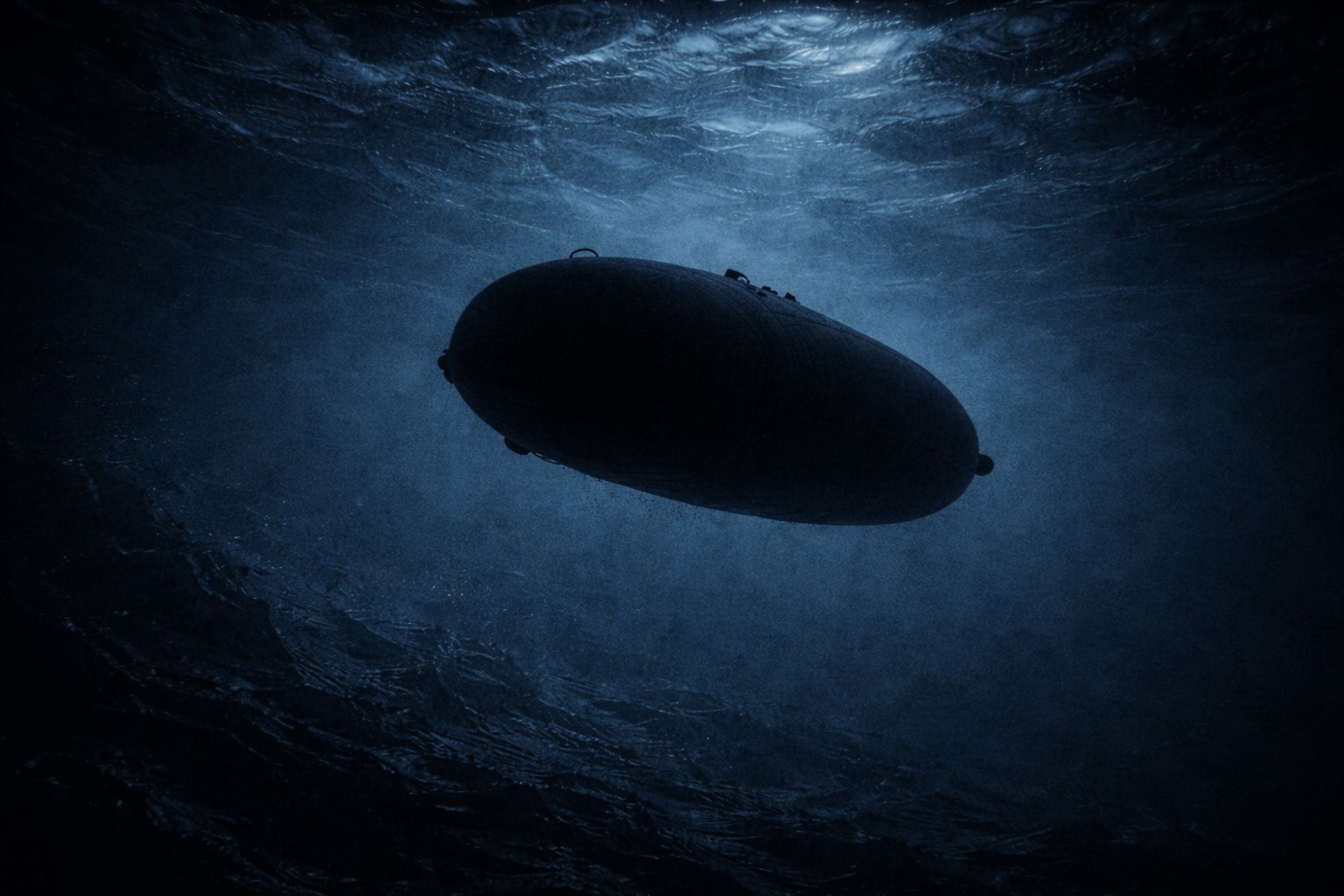
Britain is the lead nation for a NATO programme to bind frigates, uncrewed underwater vehicles, surface relay nodes and satellite links into a single interoperable network, described by the officer running it as the alliance’s most significant undersea domain awareness initiative since the Cold War, the Apex Europe conference in London heard on Wednesday.
Commodore David Burton, who directs the anti-submarine warfare Smart Defence Initiative and advises the Royal Navy on the AUKUS second pillar, set out the problem the Allied Underwater Battlespace Mission Network exists to solve, and did it in one line.
He said: “I like to say we’re trying to deliver an Internet of Things in the underwater landscape. The problem is we’ve got lots of things and no internet.”
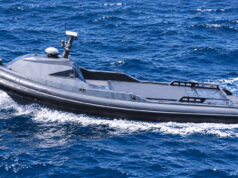
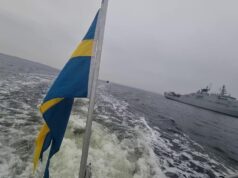
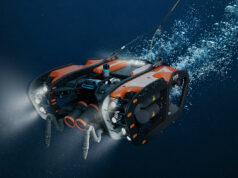
The physics of the ocean is what makes the undersea battlespace different, whether the task is protecting critical underwater infrastructure, hunting submarines, clearing mines or fighting on the seabed itself. What the programme aims at is a federation of bottom-mounted sensors, uncrewed underwater vehicles, uncrewed surface vessels and air vehicles, working alongside conventional warships.
Commodore Burton was blunt about what happens if the alliance lets the market take its own course. “The growth in uncrewed systems is exponential, and the challenge as an alliance is, do we sit back and allow that to happen and to take shape? And if we do so, I think there’s only one thing we can guarantee, and that is that we won’t be interoperable,” he said.
The architectural shift underneath that is the one navies have been circling for a decade. “How do we transition from what I describe as a small number of very large assets, conventional assets, to a very large number of small assets? Architecturally, it’s totally different,” he said.
Open architecture is a phrase he has little patience with on its own. “People blandly talk about open architecture, but the truth is we need something that truly is open and something that we can test and validate against. And that’s the piece of the jigsaw that’s missing,” he said, and the same logic governs the next stage of the work. “Standards alone are not good enough. We need to be able to validate them, and that’s the test and reference environment.”
Twelve nations sponsor the programme and he expects that to reach fifteen, with Australia, Canada, Denmark, France, Germany, Italy, the Netherlands, Norway, Portugal, Spain, Sweden, the United Kingdom and the United States taking part, and Finland, Belgium and Greece either joining or observing. NATO’s maritime research centre and Maritime Command are signatory stakeholders.
Industry comes in through the Mangrove consortium, led by Saab Kockums and running to ten partners. British involvement is substantial, with Saab UK, BlueBear, S2IX and the University of Plymouth alongside Fincantieri’s IDS, CETENA, FlySight, GraalTech and Miraya.
The reference architecture was delivered this year, and the programme has now moved into a second phase worth more than thirty million to build and validate the test and reference environment, running to 2028. The architecture is intended to end up codified as an alliance-wide standard.
Validation of all of it happens at sea, against a calendar that is already set. REPMUS 27 in Portugal anchors the trials, Dynamic Mongoose 27 covers operational integration in the North Atlantic, and Task Force X Arctic takes high-latitude uncrewed underwater operations into the High North next July, with interim events in November and February.
The sheer number of these is becoming a problem of its own, he says. “Everywhere we look, there are operational experiments popping up. This is a big drain on industry, and we really have to orchestrate these to maximise the impact of them,” he said, describing them as good opportunities for companies to prove what they can do.