

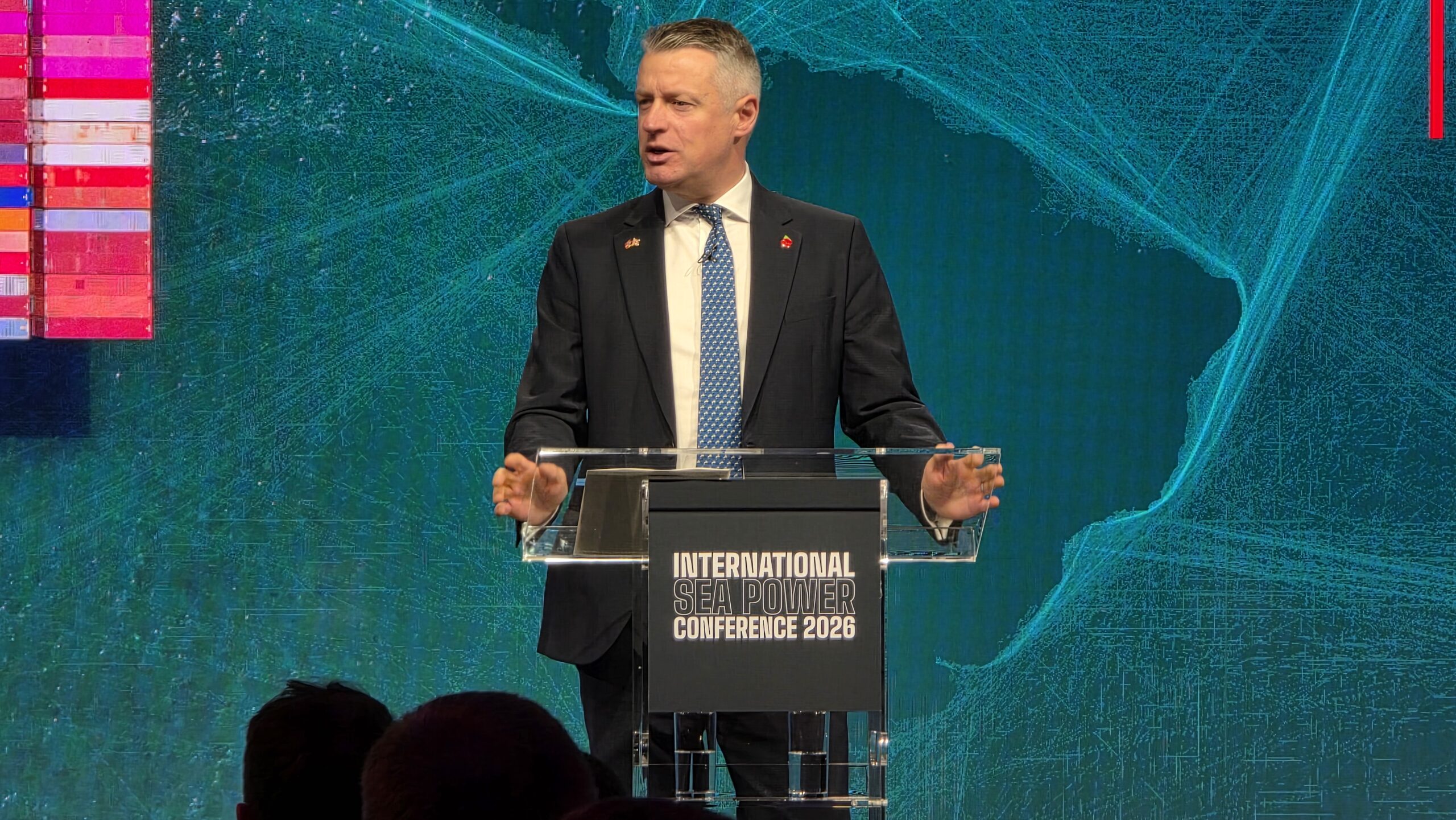
Luke Pollard, Minister for Defence Readiness and Industry, has called for Joint Expeditionary Force nations to join up their defence supply chains so their navies become interchangeable, according to remarks made at the International Sea Power Conference this morning in Oslo.
Speaking on board HMS Prince of Wales in Oslo, Pollard said: “And if we’re going to fight together, we should be designing and delivering side by side too. Shared challenges need shared solutions.”
He said Britain needed new partnerships that join up more of the industrial bases and supply chains across Northern Europe, adding: “The JEF can be the engine that propels this integration forwards”. He went on: “Our aspirations should be JEF-wide supply chains that allow a British frigate to be repaired in Estonia, a Dutch warship to restock here in Norway, not just interoperable but interchangeable”.
Pollard challenged delegates to identify what is holding back faster integration, asking: “What are the stupid rules that are getting in the way”, which he said might have been acceptable in peacetime but not in a period of contest.
He said Norway’s purchase of five Type 26 frigates alongside the Royal Navy’s eight is creating a highly capable combined anti-submarine warfare fleet, and said Norway is not just an important ally but an indispensable strategic partner.
Britain and Norway announced the Lunna House agreement last December, covering closer work on the Type 26 fleet, Norway’s programme for motherships for uncrewed mine warfare systems, Sting Ray torpedoes and naval strike missiles.
Joint Expeditionary Force nations already share Operation Nordic Warden, which uses AI to track Russian shadow fleet vessels near undersea cables, and navy chiefs signed a statement of intent on an enhanced JEF navy earlier this year, with ratification aimed for this month in Norway.





It reads as a pre delivered excuse……because, with our allies, we have so many ships, people & munitions: therefore we need less ships, people & munitions.
However, we need more money to have less: the MoD paradox.
It actually make perfect sense if you aren’t just trying to hate on everything.
To me this is something that we all should have been arguing for a decade and more ago but it’s true that defence has been seen more as a peacetime activity over actual preparation for serious conflict and thus national factors have taken priority over actual capability too often. I think the in some ways understandable, but I think we see now naive, pushback against European unified defence structures even under the NATO umbrella, hasn’t helped in this regard getting European cooperation to a deeper level. European defence generally has not been helped by the deeply ingrained attitude that Europe should spend more on defence but essentially focusing it on in support of US aims rather than European independence. Hopefully all these issues will now move in a more focused and independent direction that will give Europe at least something of the voice it deserves when balanced against the likes of Russia with a tenth of the economic power, a fraction of the population and wealth being taken many times more seriously on the World stage and even by the US president these days. However the lack of Unity as Meloni has said is now the biggest barrier to being taken seriously.
But I do think the north European powers at least are keeping to a pretty much unified stance these days so it’s a start at least if the issues stated in this article can be further resolved. JEF is likely to be the vital sector in any initial conflict with Russia so these factors will be vital to defend Scandinavia and the high north in particular.
“What are the stupid rules that are getting in the way”
How about the ones imposed by his own Treasury?