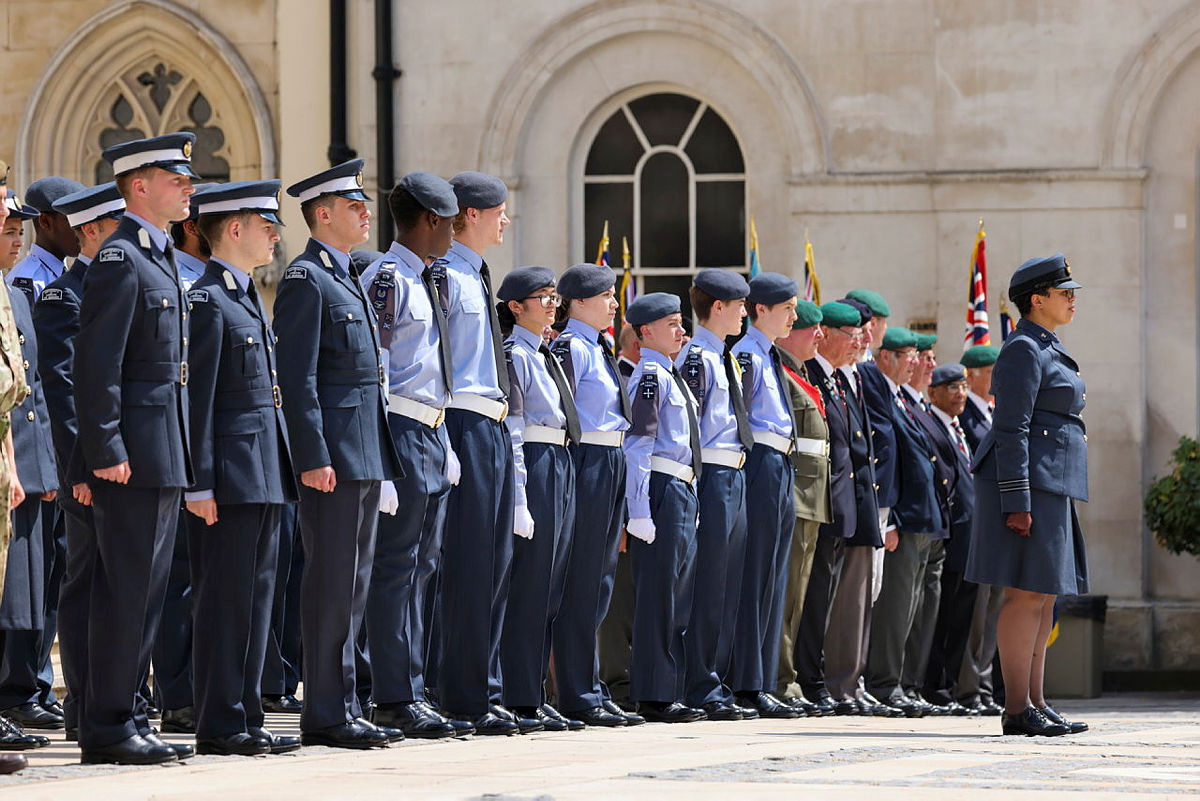
Thirty-three RAF Air Cadet squadrons are still waiting for temporary parading locations after hundreds of buildings were found to have electrical compliance problems, according to a newly deposited Ministry of Defence letter.
Thirty-three RAF Air Cadet squadrons remain affected by the temporary closure of buildings following the discovery of electrical compliance problems across hundreds of sites, although the Ministry of Defence says the organisation’s planned summer activity has not been disrupted, the UK Defence Journal understands.
The figures are contained in a letter dated 7 August from Minister for Veterans and People Calvin Bailey to Conservative MP Mims Davies, deposited in the House of Commons following a parliamentary question about the number of RAF Air Cadet units whose headquarters remained temporarily closed. Bailey said the MOD was treating “headquarters” as RAF Air Cadet squadron buildings which had been shut because of electrical non-compliance identified from January 2026 onwards.
According to the letter, 370 non-compliant sites had been identified by 5 August. Remedial work had progressed sufficiently for 287 permanent buildings to reopen, while alternative parading spaces had been secured for 44 squadrons whose normal facilities could not yet be used.
Bailey wrote: “RAFACs are committed to providing safe and high-quality spaces for all its members and adult volunteers. As of 5 August 2026, of the 370 non-compliant sites identified, remedial work has been delivered at pace to ensure the re-opening of 287 permanent buildings, and alternative parading spaces have been secured for 44 Squadrons.”
He added: “RAFAC organisation continues to source temporary parading locations for the remaining 33 affected Squadrons. This is a priority for the organisation to ensure business as usual cadet activity can be delivered. The planned summer programme of activity is not affected.”
The figures indicate that the majority of the affected permanent buildings have returned to use, while a further group of squadrons is continuing activity from alternative accommodation. The MOD’s letter does not explain whether the figures for reopened buildings, alternative spaces and the 33 remaining squadrons overlap in any way, so they should not be treated as a simple breakdown of all 370 non-compliant sites.
The closures followed electrical compliance problems identified across RAF Air Cadet accommodation, requiring buildings to be taken out of use while inspections and remedial work were carried out. The response has involved both bringing permanent headquarters back into service and finding temporary locations from which squadrons can continue meeting where repairs have not yet been completed.
The Royal Air Force Air Cadets operates through a large network of local squadrons and other units across the UK, with permanent buildings used for training, administration and regular parade nights. Losing access to a squadron headquarters can therefore affect routine activities even where flying, camps and centrally organised events continue elsewhere.