

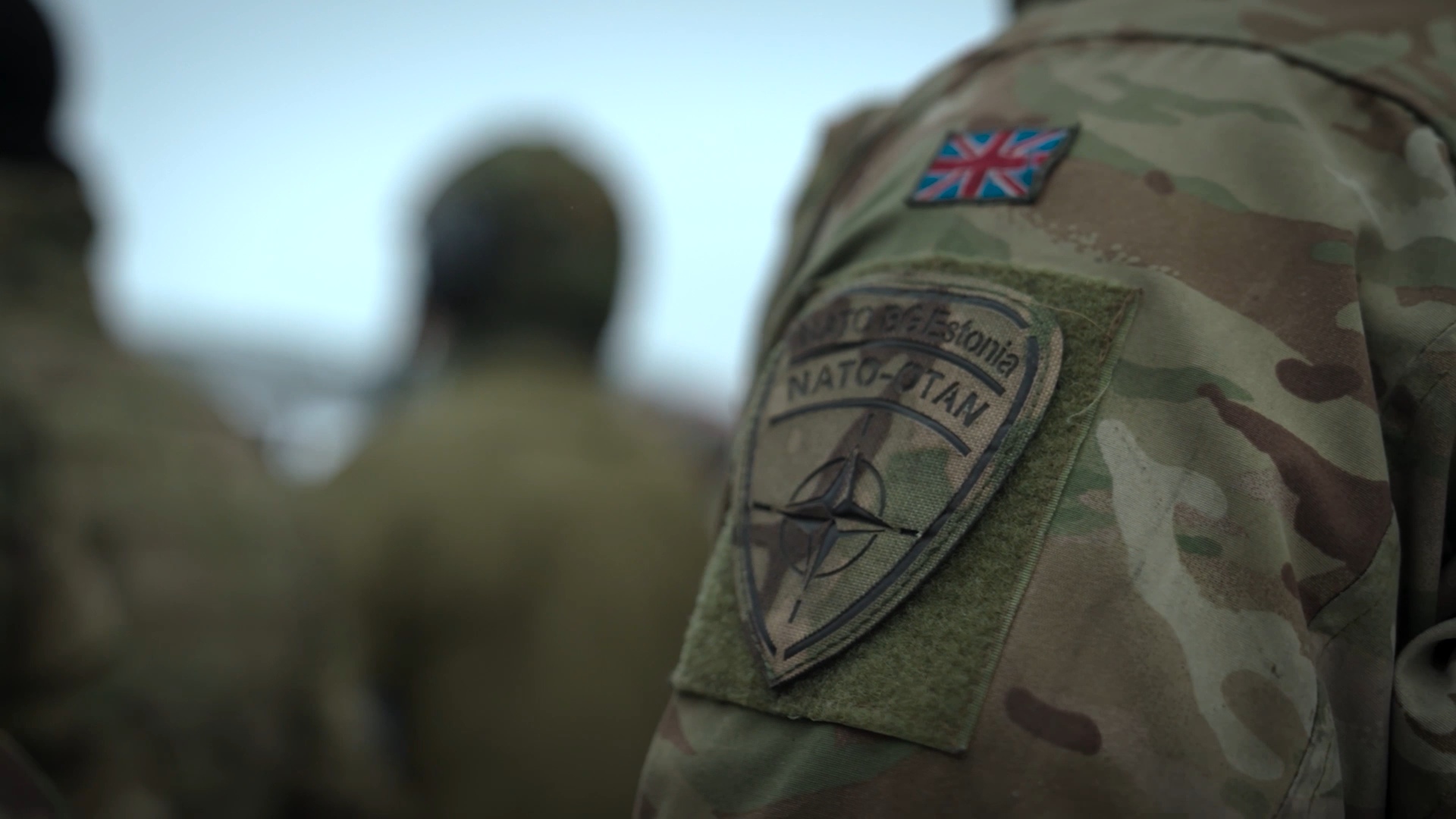
The UK’s NATO Interoperability Roadmap has been completed and is already being implemented, but the Government says it will not be published because it contains information on defence planning and capability development.
The status of the document was confirmed in a written parliamentary answer to Conservative MP Ben Obese-Jecty, who asked when the roadmap would be made public.
Defence Readiness and Industry Minister Luke Pollard said the document had in fact been completed at the beginning of the year and approved by the then Minister for the Armed Forces, Al Carns.
Pollard said: “The UK’s NATO Interoperability Roadmap was completed in January 2026 and approved by the then Minister for the Armed Forces, Al Carns MP. Implementation commenced immediately thereafter.”
The roadmap stems from the Strategic Defence Review, which directed Defence to establish a plan for deeper interoperability with NATO allies and to develop shared approaches and standards.
According to Pollard, the UK document is aligned with NATO’s own Interoperability Plan and is intended to provide a framework for improving the ability of British forces to operate alongside allied militaries.
He said: “It provides Defence with a framework to improve the Armed Forces’ ability to operate effectively alongside NATO Allies through common standards, digital integration, training, exercises and capability development.”
The Government has, however, ruled out publishing the document.
Pollard said: “The UK’s NATO Interoperability Roadmap contains information relating to Defence planning and capability development and will therefore not be published.”
He added: “The House may be assured, however, that the SDR’s ‘NATO First’ principle remains central to both the Roadmap and its implementation.”
The answer clarifies that the roadmap is not awaiting completion or approval, but has been in implementation since January. Its work covers areas including common standards, digital systems, training, exercises and the development of military capabilities intended to make British forces more readily interoperable with other NATO members.







Great news. Interoperable C2 will, of course, be a key factor in the operational effectiveness of NATO land/air formations.
Better news would be if the Army Corps of two expeditionary divisions that Britain has promised NATO were now fully formed; manned and equipped.
I’m not sure any division in the history of mankind has ever been fully manned and equipped, there is always something lacking.
On 1st and 3rd UK divisions there are shortages but there are also work arounds in place. 1st Armoured division sent to the gulf in 1991 was in a much worse state.
You will find every division in the NATO ORBAT in the same position and the ones in Russia in a massively worse position.
‘SDR 2025 7.3 Land Domain
Recommendations:
41. The Army must modernise the two divisions and the Corps HQ that it provides to NATO as one of the Alliance’s two Strategic Reserves Corps (SRC). The SRC should be led by the Corps HQ (Allied Rapid Reaction Corps) and enabled by, and command, Corps-level capability. The first division should comprise a fully deployable Headquarters, three manoeuvre brigades with armoured and mechanised capabilities, support brigade, and associated enablers. Planning should include the integration of the Royal Marines Commando Force into the SRC when appropriate
42. The Army must accelerate the development and deployment of its new ‘Recce-Strike’ approach—combining existing capabilities and technologies, such as armoured platforms, with constantly evolving technology—as part of its efforts to modernise the SRC. It should be bolder in its ambition, seeking to increase lethality ten-fold, measured against a conventional armoured brigade model.
43. The Army must evolve its mix of Regulars and Reserves, with a minimum of 100,000 soldiers, of which 73,000 are Regular. A small uplift in Regular personnel should be considered when funding allows…’
The British Army, for a variety of reasons, is currently nowhere near those aspirations.
The ARRC is nowhere near ready or capable to ‘(before a decision by NATO to invoke Article V)…deploy anywhere in Europe’:
SDR 2025 7.3 Transformation:
‘The UK-led, multinational NATO Allied Rapid Reaction Corps (ARRC) Headquarters already provides the Corps Headquarters and two divisions for one of two new Strategic Reserve Corps (SRCs). SRCs must be ready to execute pre-planned options tasked by SACEUR to manage escalation (before a decision by NATO to invoke Article V) and to deploy anywhere in Europe.’
How is it going to get there?
Recollections may vary
‘In round terms 1 UK Div consisted of some 20,000 men, 7,000 vehicles and 72 aircraft; all of which deployed into theatre through Jubayl on the Gulf coast of Saudi Arabia. They were not all assembled with their equipment until the end of January 1991 and even then stores and ammunition were still flowing into theatre. My force was not a conventional division; in terms of combat and service support it was similar to a WW2 corps.’ Rupert Smith 2012