

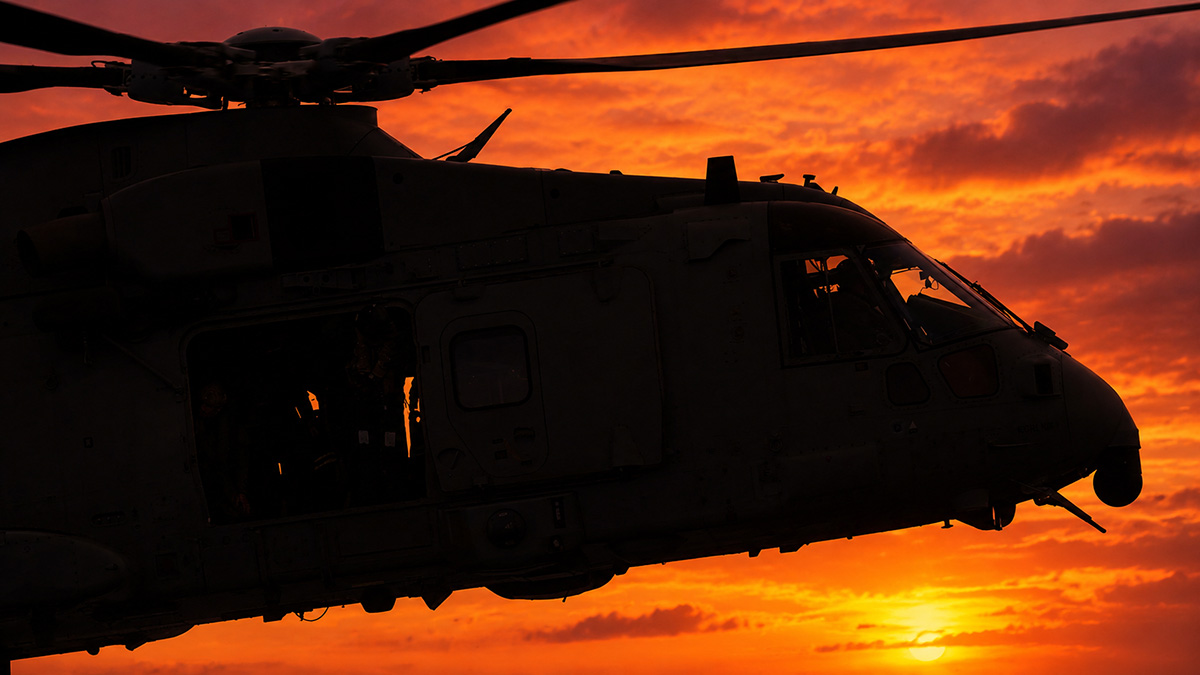
A split diaphragm in a Royal Navy Merlin’s engine fuel system, followed by an incorrect diagnosis of the emergency and the manipulation of two serviceable engines, led to the fatal ditching of the helicopter while operating with HMS Queen Elizabeth in September 2024, according to a newly published Service Inquiry.
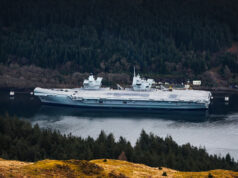
Merlin Mk4 ZJ135 ditched in the English Channel approximately 25 nautical miles south of Lyme Regis on the night of 4 September 2024 while returning to the aircraft carrier. The Handling Pilot died in the accident, while the Aircraft Commander and Aircrewman escaped from the aircraft.
The inquiry traces the beginning of the emergency to 20:46:30, when a diaphragm in the pressure drop regulator within the number two engine’s high-pressure fuel pump assembly split. That allowed excess fuel into the engine and caused what investigators described as a runaway, with the number two engine rapidly increasing in speed and producing more than 130 per cent torque.
The Merlin’s control system attempted to compensate by reducing output from the other engines. The cockpit was simultaneously presented with a red ENG FAIL warning and a rapidly developing difference between the torque produced by number two and the other engines. Investigators concluded that the combination of those indications contributed to the crew forming the wrong picture of what was happening.
The report states: “The panel concluded that the inappropriate diagnosis of the emergency was a causal factor.”
The inquiry found that although members of the crew checked different engine parameters, there was no evidence that the information was brought together sufficiently to recognise that one engine was producing excessive power while the others remained serviceable. During the final approach towards HMS Queen Elizabeth, the condition switches for the number one and number three engines were moved from FLIGHT to OFF. Both were serviceable.
That left the runaway number two engine attempting to maintain rotor speed by increasing its output further. Its overspeed protection system then activated and cut the fuel supply, after which rotor speed fell and ZJ135 entered a rapid unpowered descent towards the sea. The inquiry identified the way those actions were carried out as another of the accident’s three causal factors.
It said: “The absence of an all-informed plan of action, and subsequent manipulation of flight critical switches was determined to be a causal factor.”
The helicopter struck the water at 20:49:30, less than three minutes after the initial technical failure. The aircraft broke into major sections during the accident and was subsequently recovered from the seabed.
Escape and survivability
The inquiry also examined why the Handling Pilot was unable to escape while the other two crew members survived. Investigators found that the variable-load energy absorber on the Handling Pilot’s seat had been set for an occupant mass around 12kg below his total mass once personal protective equipment was included. The inquiry assessed that incorrect setting as an aggravating factor.
Damage to the seat and cockpit showed that the seat descended during the impact and struck the cockpit floor. The Handling Pilot suffered an injury which the panel assessed had “almost certainly” adversely affected his ability to extricate himself from the aircraft.
The right-hand emergency jettison window was later found still fitted, with its emergency handle in the closed position. Investigators also found that the Handling Pilot’s restraint quick release had not been operated and his personal locator beacon had not been activated. The report concluded that these were actions that would have been expected had he successfully escaped, and assessed that it was “highly likely that he died in the cockpit of the aircraft after impact.”
The Aircraft Commander escaped through the left cockpit window, while the Aircrewman became disorientated inside the flooded aircraft before eventually finding a cabin window and reaching the surface.
The inquiry also found that the lack of emergency egress lighting in the cockpit may have made escape more difficult, while the incorrect application of underwater escape drills increased the likelihood of disorientation.
Training and warning systems
Across the investigation, the panel identified three causal factors, 11 contributory factors, five aggravating factors, 14 other factors and 10 observations. The contributory findings included low recent exposure to embarked aviation, crew competence in the maritime environment, aspects of synthetic training, the presentation of cockpit warnings and the way the initial emergency was interpreted and managed.
Investigators also examined the ENG FAIL warning itself. They found that the warning could be generated by several different engine conditions, ranging from a total loss of power to the unusual situation encountered by ZJ135, where one engine was producing excessive output and the others were reducing power to compensate. The inquiry recommended that the warning system be independently reviewed to determine whether engine malfunction information is presented to crews in a sufficiently clear and unambiguous way.
Other recommendations cover simulator training for power-related malfunctions, crew currency for maritime operations, flying supervision, seat-setting procedures, underwater escape training and the provision of rescue hoists during over-water flying.
The panel also called for improvements to sea-boat equipment used during night searches and stronger procedures between Royal Navy and HM Coastguard operations where a military and civilian search-and-rescue response takes place together.




Navy Lookout has a full report on the Merlin ditching and it’s well worth a read.
Sounds like a bit of a 💩show all around.