

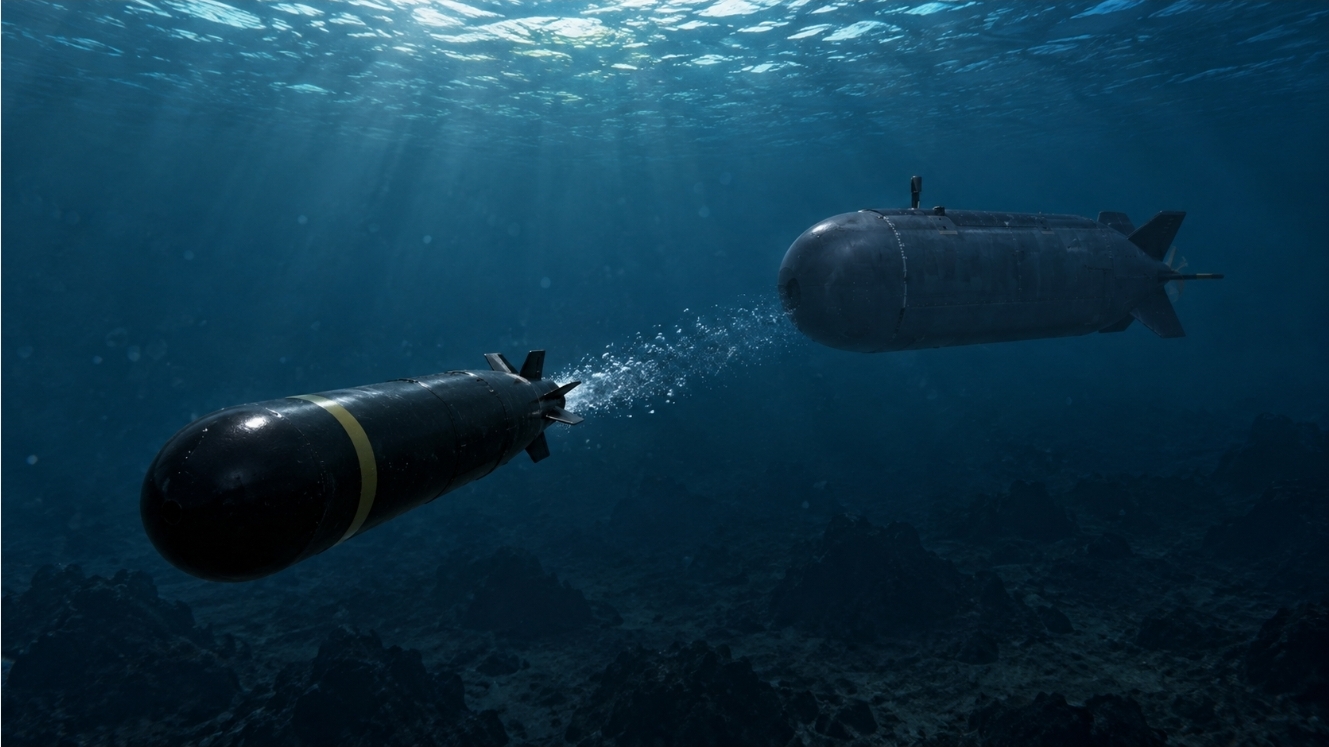
A Royal Navy extra-large uncrewed underwater vehicle has fired a US Mk 48 heavyweight torpedo during trials in Scotland, in what Britain and the United States say was the first launch of its kind from an allied autonomous underwater platform.
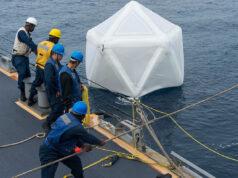
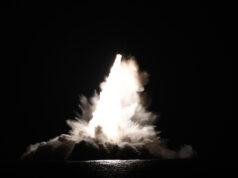
The proof-of-concept firing took place at the British Underwater Test & Evaluation Centre, or BUTEC, on 13 September, using the Royal Navy’s 12-metre XV EXCALIBUR vehicle and an exercise Mk 48 torpedo, according to the US Navy.
The British Government separately described the event as a historic live firing from a Plymouth-made undersea drone, saying it was the first time either the UK or US had launched a heavyweight torpedo from an uncrewed underwater vessel rather than a crewed submarine.
The trial was carried out under Project Broadsword and Trial Iron as part of AUKUS Pillar 2, with engineers proving the mechanical, electrical and software integration required to deploy an American weapon from a British autonomous vehicle.
US Chief of Naval Operations Admiral Daryl Caudle said: “This successful test marks a historic first for allied undersea warfare. Proving that we can seamlessly launch a U.S. heavyweight torpedo from a Royal Navy autonomous underwater vehicle validates our shared vision for true interchangeability.”
He added: “By integrating weapons, payloads, and mission architectures across allied platforms, we are increasing the flexibility, scale, and combat power of our combined forces and ensuring they are ready to meet the strategic demands of tomorrow.”
The Mk 48 is the US Navy’s heavyweight submarine-launched torpedo, designed for use against surface ships and submarines. The US Navy said the weapon used during the Scottish trial was an exercise torpedo, with the work focused on proving the interfaces between the weapon and EXCALIBUR.
The UK Government said the firing represented a major step in developing autonomous undersea strike capabilities and would feed into wider work between Britain, the United States and Australia.
Prime Minister Andy Burnham said: “Our work together already shows what can be achieved when our two countries combine our expertise and innovation.”
He linked the trial to a wider UK-US push on artificial intelligence and autonomy, adding: “That ambition is underlined in our new defence partnership with the United States on AI and autonomy, bringing together the brightest minds to strengthen the protection of critical infrastructure, deter those who threaten our security, and use the enormous potential of AI to our advantage.”
The proposed partnership will bring together the UK’s Rapid AI Delivery Taskforce and the US Department of War’s Chief Digital and Artificial Intelligence Office, with the two sides intending to develop interoperable AI and autonomous capabilities for tasks including the protection of sea lanes and airspace.
Vice Admiral Robert Gaucher, Director of Submarine Programs, said the torpedo firing was an early step towards adding offensive capability to autonomous underwater systems.
He said: “Demonstrating the launch of a US torpedo from a UK extra-large unmanned underwater vehicle (XLUUV) is an important early step in developing lethality in our undersea autonomous systems.”
Project Broadsword was approved by the US Department of the Navy Rapid Capabilities Office in February 2026 and reached the firing stage in less than seven months. The work involved the Royal Navy, US Navy, Defense Innovation Unit, Naval Undersea Warfare Center Keyport and industry partners.
Vice Admiral Seiko Okano, director of the Rapid Capabilities Office, said: “We are not waiting 10 years for a single bespoke platform; we are pioneering a modular, software-defined, open-systems approach that integrates allied hardware with commercial innovation to rapidly scale distributed lethality.”
Further work will now move into Project CUTLASS, using Anduril’s Dive-XL extra-large uncrewed underwater vehicle. That phase will examine payload integration, command-and-control architecture and tactical employment as the three AUKUS countries continue developing autonomous undersea systems alongside their crewed submarine fleets.


This is why SSK’s will become increasingly irrelevant. Very few things they can do that can’t be done by UUV’s at a fraction of the cost.
And the issues around having physical crews with lives to lead etc
The number of people who want to be a Fish Head is limited – some revel in it.
But the cost savings from, the reduced volumes from not having a crew moving around in it; of not having to make sub habitable; the reduced safety margins over those for a crewed sub.
Absolutely.