

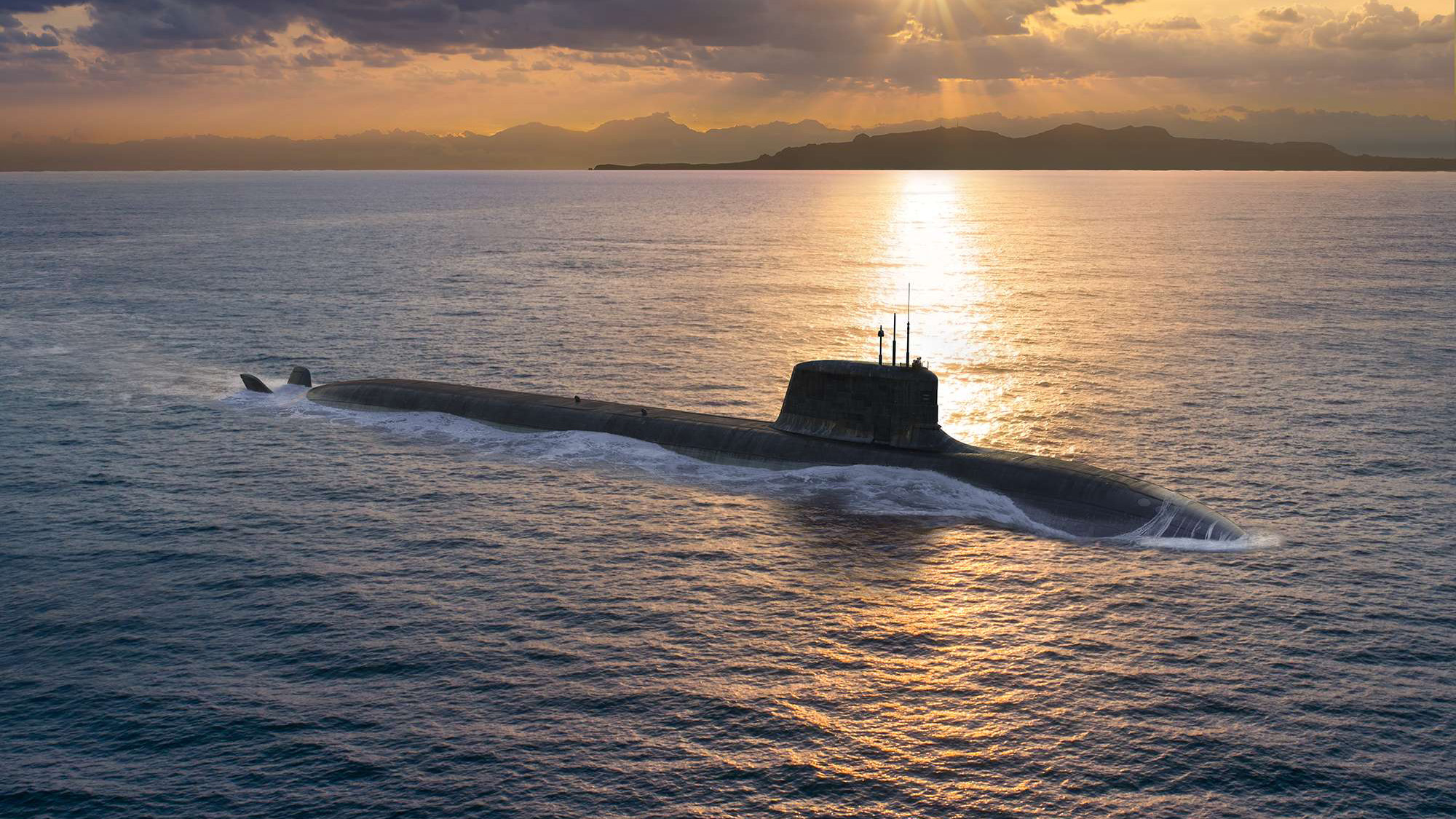
The Ministry of Defence has again said that it intends to procure up to twelve SSN-AUKUS submarines, according to an answer given in Parliament.
Ben Obese-Jecty, the Conservative member for Huntingdon, asked the Secretary of State to set out the number planned following the 2027 spending review.
Luke Pollard, the Minister for Defence Readiness and Industry, answered in one sentence: “As set out in the Defence Investment Plan, we intend to procure up to 12 SSN AUKUS submarines.”
The question asked what the plan would be after the next spending review, and the answer restates the existing intention without saying whether the figure is secure against it. Up to twelve is a ceiling, not a commitment to a number.
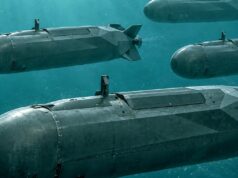
SSN-AUKUS is the next generation nuclear powered attack submarine, designed in Britain around a British reactor and incorporating American technology under the first pillar of the AUKUS agreement. It will replace the seven boat Astute class, and will be built by BAE Systems at Barrow-in-Furness, with Rolls-Royce supplying the propulsion plant from Derby.
Australia is to build its own boats to the same design at Osborne in South Australia. The first British boat is expected to enter service in the late 2030s.


‘up to’ 12. So anywhere from 0 to 12.
It’s far and away the best thing we can bring to NATO.
The minimum should be 10 SSN, and 5 SSBN, though I don’t think we’ll get more than four SSBN.
No point in messing around with SSK. It’s not as though Europe is short on littoral conventional submarines.
100% completely agree…
The littoral conventional submarine could well be made obsolete by the use of drones, certainly in the North Sea/Baltic Sea.
I reckon a good chunk of their roles definitely will be, though for nations without the budget to dedicate to nuclear boats, there will likely always be a draw.
However, I think there’ll be a nuke boat proliferation rush.
Currently, SSN operators are:
1) USA
2) USSR
3) UK
4) China
5) France
That’s the order that they gained an operational SSN capability chronologically.
Since then, we’ve seen India lease an SSN capability from Russia, but apart from that, no nation has made the push.
North Korea and India have both invested in SSBN capability, but for some time now, SSN capability, whilst being developed, has not yet culminated in another nation joining the ‘club’.
Yet, in the past decade, that’s gone out the window. Now, five new nations are looking to secure SSN capability going forward, those being:
1) Brazil
2) Australia
3) India
4) Japan
5) South Korea
Of these, Brazil has an SSN under construction. Australia has LLTI for an SSN under construction. I’m unsure of India’s progress; I believe there is a domestic programme, and given their SSBN experience, the hurdles are shorter for them. South Korea has confirmed an SSN programme. Japan is debating one, though it seems likely that they’ll eventually join the group as well.
It seems likely that North Korea will also rush for this capability as well, though there’s not been confirmation of a programme there as of yet.
By 2040, the number of SSN-operating nations will have doubled. Every populated continent (save Africa) will have at least one SSN-operating nation.
Since their introduction, SSN have marked out the ‘great powers’, so to speak, more so than nuclear weapons. They’re the modern capital ships, and in an era of saturation, will be relied upon ever more to deliver combat capability, perhaps more so than the visually dominant aircraft carriers.
I don’t see a ‘nuclear-weapons rush’ as particularly likely. I do think that we’re already in the middle of a ‘nuclear-submarine rush’, and for the RN, a navy used to operating over the last two decades with impunity on a global scale, it’ll be a bit of jarring change.
It’s strange to imagine that a nation like Brazil would have the capability to operate off the British Isles, but that’s the world we’re entering.
Nuclear submarines have limited use in shallow seas; they are best used in deep water. So a mid power proliferation of SSN boats makes sense for nations bordering deep seas and worried about their neighbours. For nations in enclosed seas where waters are shallow and operating close to base it changes. There the need is for coastal defences – a large number of surface and submarine drones kept under tight control from the mainland would be a cheaper, more efficient and cost effective option. (Not: cheaper and cost effective are not the same. )