

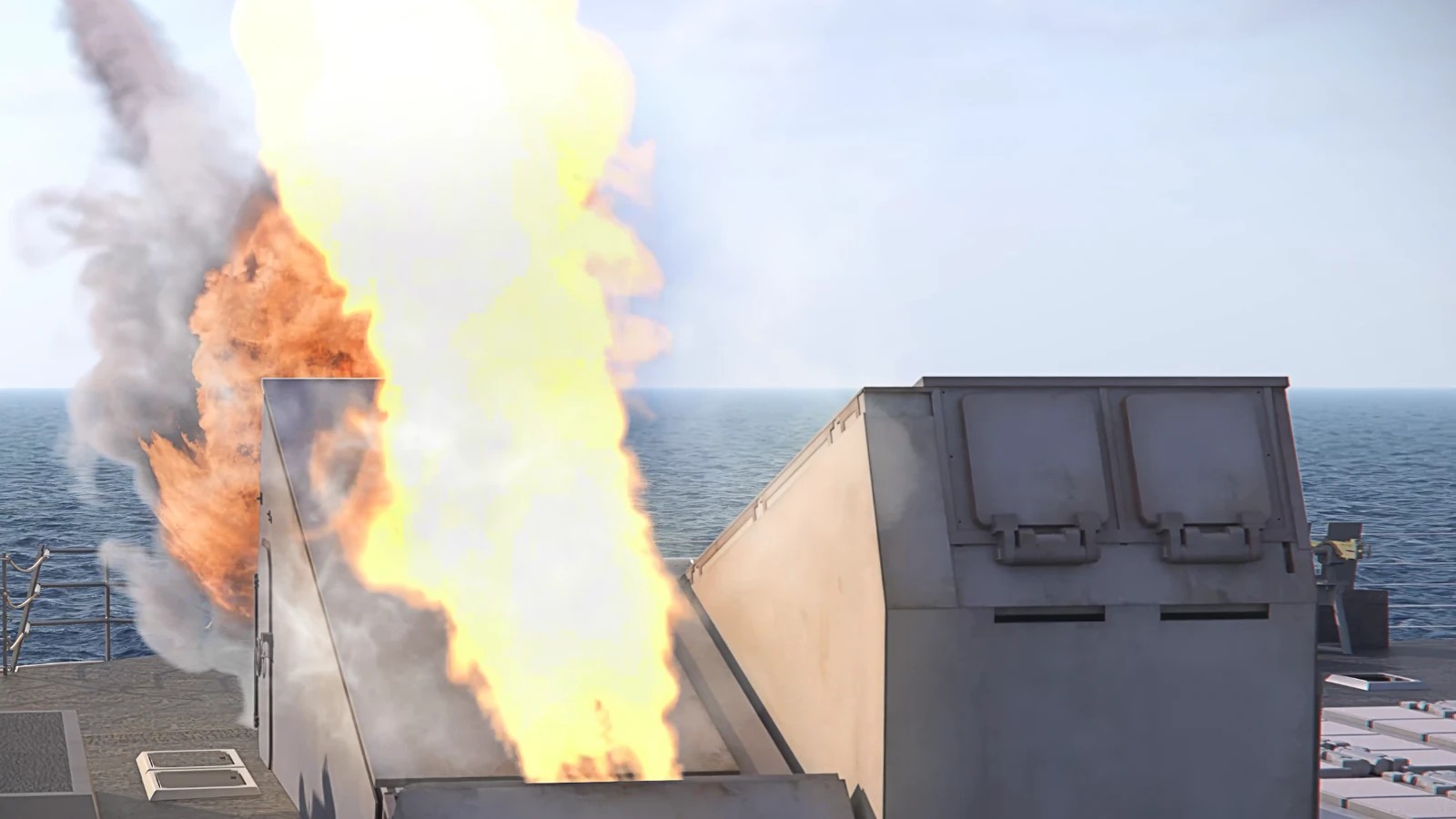
BAE Systems has completed the first live firing of the Adaptable Deck Launcher, a missile launcher that bolts onto a ship’s deck and can be replenished at sea without the vessel returning to port, according to the company.
The launcher was developed under a United States Department of War contract for the NATO Seasparrow Project Office. It uses the logistics and electronics suite of the Mk 41 vertical launching system already in service, which the company says gives it the reliability of that system at lower operating cost.
Jason Casciotti, vice president of weapons systems at BAE Systems, said: “The successful demonstration of the Adaptable Deck Launcher is a major milestone in our commitment to enhancing the Navy’s combat effectiveness and readiness. The ADL complements the Mk 41 VLS, the foundation of naval missile integration, by providing a capability for rapid replenishment, using standard shipboard equipment and offering the fleet additional flexibility in how it sustains combat loads at sea.”
Replenishment is where the real significance lies, I’d argue, because after a warship empties its vertical launch cells, it must go back to a port with the right facilities to reload them, which in a sustained campaign takes the ship off station for days or weeks. Royal Navy and United States Navy ships firing interceptors at Houthi drones and missiles in the Red Sea ran into exactly that constraint, and the United States Navy has spent several years working on ways to rearm cells while under way.
The launcher is designed for anti-air defence and can go on aircraft carriers, amphibious ships and other surface combatants. BAE Systems said it is also optimised for uncrewed warfare, with compact configurations suited to medium uncrewed surface vessels, which is where a deck-mounted launcher has an obvious advantage over cells built into a hull.
As mechanical design agent for the Mk 41 family, the company built the launcher to take Evolved SeaSparrow Missile Mk 25 quad-pack canisters, which hold four missiles in the space of one cell and provide defence against supersonic anti-ship missiles, aircraft and other aerial threats.





This is actually an outflow of an operational requirement to replace the old rotating launchers that most USN carriers and amphibious ships have. Those ships don’t go with VLS because of a need to avoid fouling the deck with debris from missile launches. This launcher not only slots in well below the flight deck, but helpfully redirects debris out over the rail. Coupled with ESSM’s ability to turn right out of the cannister, this solves the point-defense/self-defense problem for carriers. As far as being able to be reloaded at sea, I am very skeptical that this is anything more than marketing baloney. A lot of the same issues of heavy mass swinging at the end of a rope remain with this solution. At best, you’ll end up with a clunky, DANGEROUS solution like the old Mk-41 crane that the Ticos and early Burkes had, and in the end nobody will bother.