


Overseas companies winning British defence contracts worth more than £50 million will be required to put benefits back into the country that could match the full value of the contract, through jobs, apprenticeships, factories, investment in British suppliers and transfers of technology, under an offsets policy published today, according to the government.
A contract worth £100 million could carry an obligation to deliver up to £100 million of new jobs, facilities or skills training in Britain, and a new central Offset Authority will agree, value and monitor what each supplier owes through dedicated Offset Agreements.
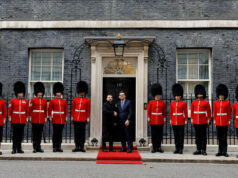
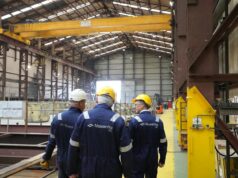
The policy was announced by the Chancellor and the Defence Secretary on a visit to BAE Systems at Scotstoun in Glasgow, and forms part of the Back British approach set out in the Budget.
John Healey, Chancellor of the Exchequer, said: “We are putting British jobs and British businesses at the heart of how Government spends taxpayers’ money.
“When a big contract goes overseas, these changes will ensure 100% of the value creates new opportunities for workers and businesses here at home, strengthening our industrial base and supporting growth across Britain.”
Wes Streeting, the Defence Secretary, said: “Every pound we invest in defence should be judged by what it does for Britain. That’s why we are backing British by buying British wherever we can.
“Even when that is not possible, we are acting to ensure that any investment brings jobs, skills and investment back home, strengthening our national security by boosting our domestic industry.”
The money at stake is the eleven per cent of departmental spending with industry that goes abroad. More than £35.2 billion has been spent on defence contracts and services with overseas industry since 2016, measured against total direct expenditure with industry and commerce between 2016-17 and 2025-26, while 85 per cent of spending already goes to British firms. Last year defence investment supported 274,000 jobs in British industry, up ten per cent on the year before, with £34.1 billion going to businesses based in Britain.
Companies holding qualifying contracts will be able to meet the obligation by creating British jobs and apprenticeships, opening or expanding factories here, investing in British suppliers, transferring technology and know-how to British firms, or using more British-made components.
Offsets of this kind are standard practice among allies, and the government named Poland, Norway and the Netherlands as countries already running similar schemes. Britain abandoned its own industrial participation requirements more than a decade ago in favour of open competition, so the policy reverses a position held across several governments.
Scotland was chosen for the announcement because the defence economy there is worth £2.5 billion and directly supports 12,200 jobs, with the £10 billion Norwegian order for Type 26 frigates supporting 2,000 local jobs and a £453 million Typhoon radar contract supporting 300 roles in Edinburgh.
The policy delivers commitments from the Defence Investment Plan and the Defence Industrial Strategy, and follows the Chancellor’s confirmation on Wednesday that the National Wealth Fund and the British Business Bank will deploy up to £5 billion over four years into defence, dual use and other sectors supporting national security, alongside the start of treaty negotiations with the Netherlands, Poland and Finland on a Multilateral Defence Mechanism to procure and stockpile equipment at scale.










This is an excellent idea
The world is a dangerous place, with major wars underway in Ukraine and the Middle East, Africa, Myanmar and threats of further warfare over Taiwan and the South China Sea from the ever more powerful China
This has been recognised in the UK, but not, it seems across the Atlantic,
Trump, enraged that NATO failed to follow his orders and join in with his failed assault on Iran, has ordered the Pentagon to undertake a review of American force levels in Europe. Following yet more direct nuclear threats to the UK from the Russian war criminal Putin and his deranged lackey Medvedev – who recently demanded that the CIA assassinate the brave and Churchillian Vlodymir Zelenskyy – Hegseth has ordered the return of the nuclear-capable American B1 bombers from RAF Fairford. Putin was in raptures over this, as it proved the value of his regular 2 hour “very good” telecons with his asset, Trump
Elbridge Colby, United States Under Secretary of Defence for Policy is undertaking the review. He has asked several NATO countries to “tone down” their rhetoric regarding the threat posed by Russia, arguing that some statements by European leaders and officials have “undermined” continental security. Colby told a Baltic (Estonian) official recently that there should be no “poking” directed at the Russians. Clearly, Colby wants to deny the proven Russian threat to Europe, the better to persuade us that America needs to withdraw forces from NATO to appease Putin
Trump recently turned from denying Ukraine the Senate-approved military and financial support needed to prosecute the war, to actively supporting the Russian war criminal Putin with sanctions relief. This is exceedingly ominous.
Just wait until after the midterms.. it’s going to get a whole lot worse.
Agree and this should be mandatory for most goods sold in the UK. Japan and South Korea have applied these conditions for years and now the USA.
The US in its own way has always applied this, by a simple rule if it’s a government contract and it can be provided by a us company it must be provided by a US company, unless that’s prohibited by cost and I think the cost prohibitions are 100% over.
As the author writes, offset arrangements are fairly normal. It’s a good thing that our previous abandonment of this policy has been reversed; all part of the govt’s policy to re-industrialise the UK. If we buy Patria it must be built in the UK and the winner of the LMV competition must also comply with this offset policy. Ineos take note.
It makes sense, but I would far rather the UK finally wakes up and develops its own sovereign capabilities and not rely on so-called British companies that are in reality foreign-owned with IP and profits going overseas. Other than with the likes of Canada, Australia, Norway and Ukraine, the current dire straits of world politics also mean that once trusted relationships cannot be relied upon in the future. The UK needs to transition back to having its own strategic defence industry and resources. It also needs to nurture and protect from take-over, UK defence companies that have been decimated over the years on the London Stock Exchange. If the UK Gov were to invest directly into UK industry, resources, and technologies, (and not rely on crumbs from others) the benefits would flow back in terms of employment and community wealth – hence help grow the economy in a defence-led regeneration of UK industry.
Also, if the UK and a strong, credible military, intelligence, cyber, and space services, as well as a Nuke-strike shield, it strikes me that other countries could buy in to this protection with hard £££££s.