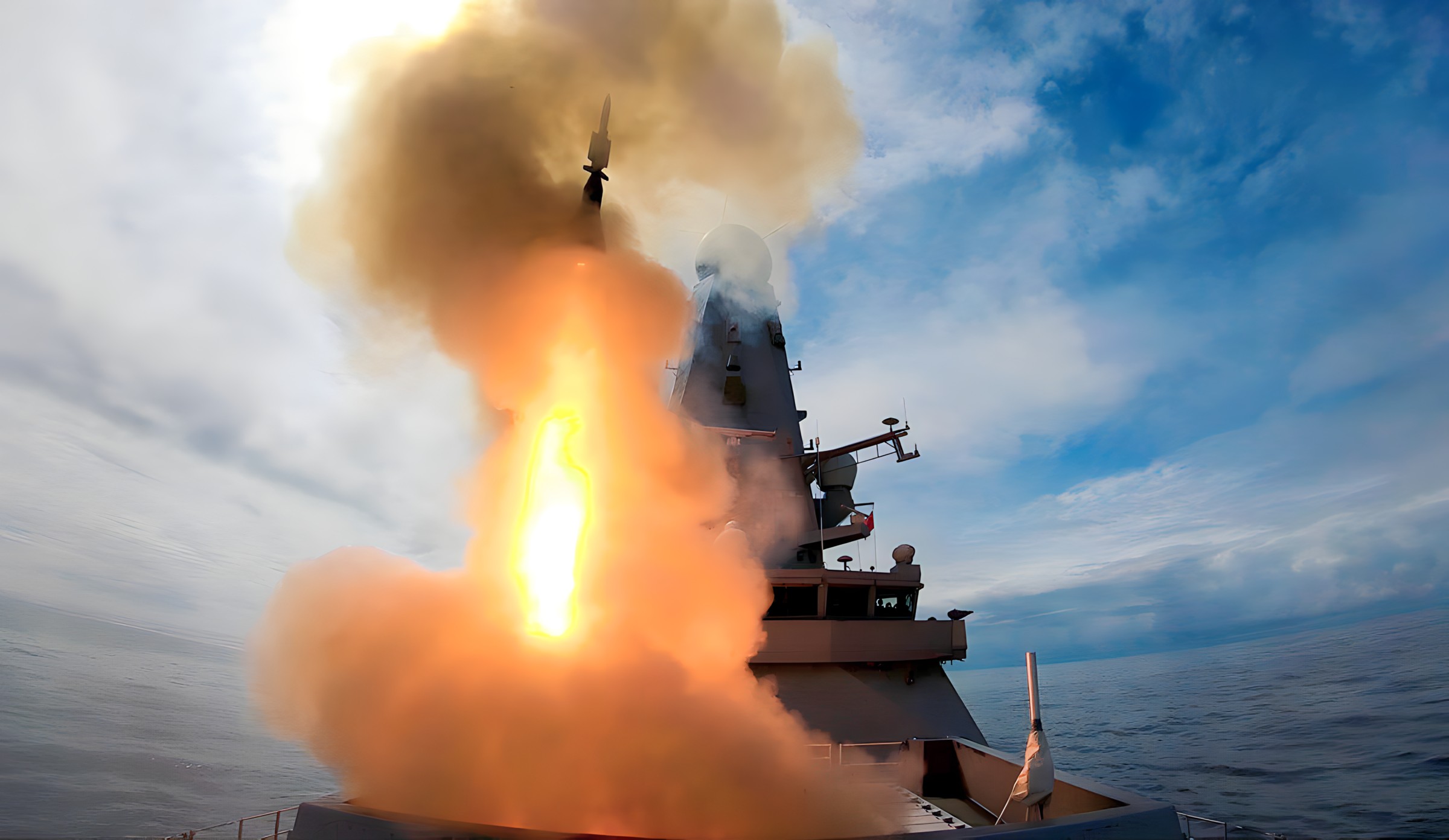
Additional deliveries of new Aster Block 1 missiles will begin later this year, and considerable progress has been made over the past twelve months on upgrading existing Royal Navy missiles to the same standard, according to the Ministry of Defence.
Ben Obese-Jecty, the Conservative MP for Huntingdon, asked what progress had been made on upgrading all Royal Navy Aster missiles to Block 1 standard through Sea Viper Evolution Capability 1.
Luke Pollard, Minister for Defence Readiness and Industry, replied: “The upgrading of missiles to Aster Block 1 standard is being undertaken through the Aster Mid-Life Refresh programme. The exact number of missiles upgraded to date cannot be disclosed owing to security concerns, however considerable progress has been made over the last 12 months. Additional deliveries of new Aster Block 1 missiles will commence later this year.”
Pollard said in January that Sea Viper Evolution Capability One, the Royal Navy’s entry-level ballistic missile defence capability, is expected to reach Full Operating Capability in late 2032. The Ministry of Defence announced a £405 million package for the work in 2024, following HMS Diamond’s combat deployment in the Red Sea.
The Aster 30 is a two-stage, solid-fuel surface-to-air missile developed by the European missile manufacturer MBDA. It measures approximately 4.9 metres in length, has a diameter of 180mm and weighs around 450kg. Published manufacturer specifications give the missile a maximum speed of Mach 4.5 and an engagement range exceeding 120 kilometres. It uses inertial guidance with mid-course updates followed by an active radar seeker during the terminal phase. Manoeuvrability is provided by aerodynamic control surfaces and a system of lateral thrusters, known as PIF-PAF, which allows rapid adjustments to the missile’s flight path during interception.
The Block 1 configuration incorporates modifications to the warhead, guidance software and seeker processing to provide an additional capability against short-range ballistic missiles while retaining the original missile’s air defence functions.
On the Royal Navy’s six Type 45 destroyers, Aster missiles form part of the Sea Viper air defence system, which combines the SAMPSON multifunction radar, S1850M long-range surveillance radar and associated command and control equipment. The destroyers currently carry up to 48 Aster missiles in Sylver vertical launch cells, with a separate programme introducing 24 Sea Ceptor missiles to increase their total missile capacity to 72. Sea Viper Evolution also includes upgrades to the SAMPSON radar and combat management system to support ballistic missile engagements.