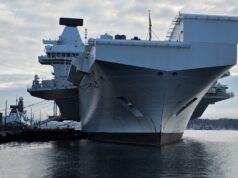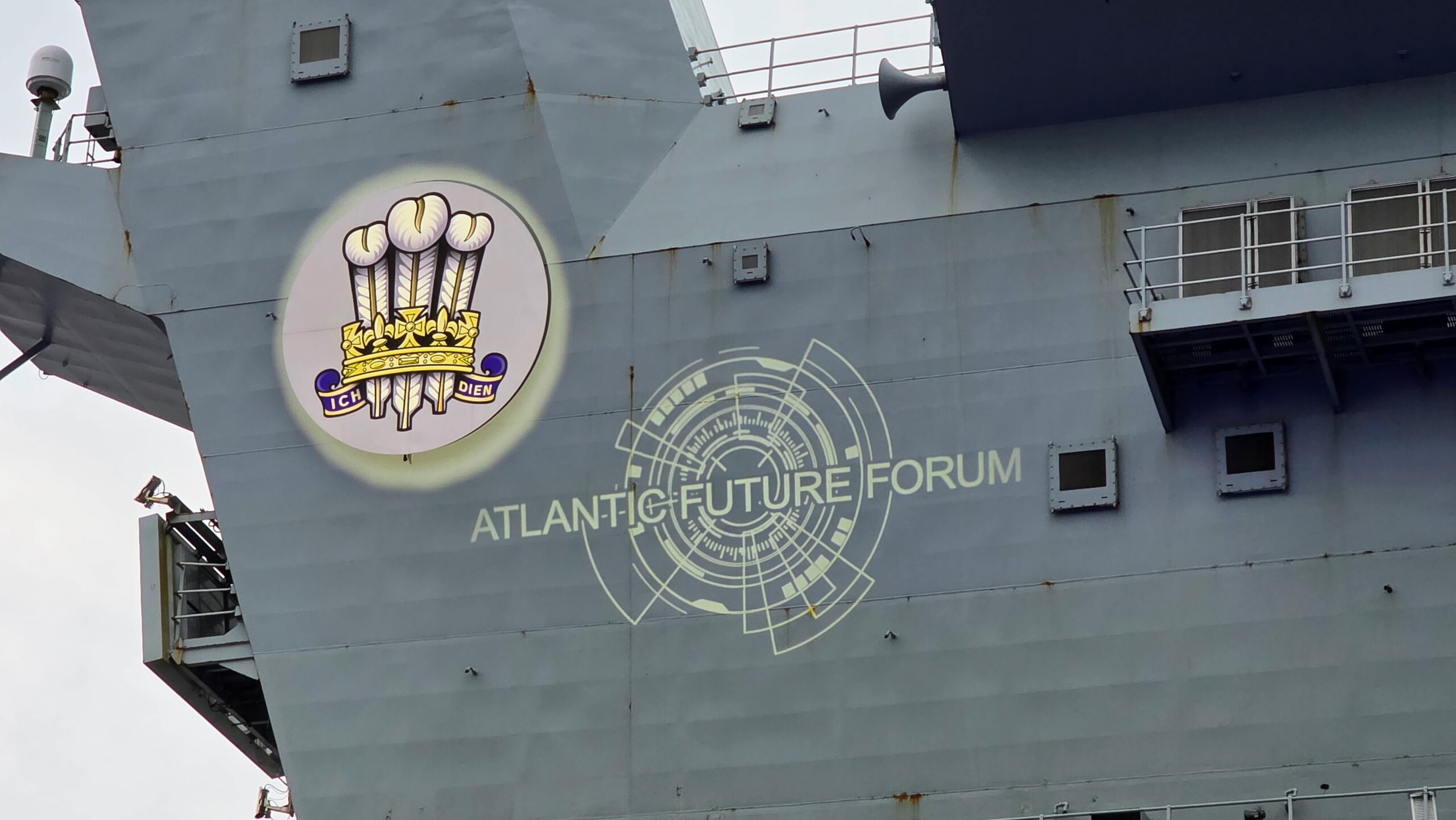
The Atlantic Future Forum ended in Oslo on Thursday with a ten-nation naval pact, a Royal Navy deal for Norwegian mine-hunting motherships and a run of industry contracts, after two days on board HMS Prince of Wales.
Wes Streeting, the Defence Secretary, called it “one of if not the best AFF that we’ve had”. This year’s event, co-hosted with Norway under the theme The New Security Paradigm, was the eighth forum and the first staged in mainland Europe.
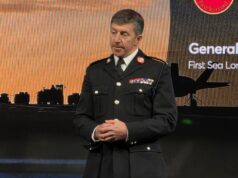
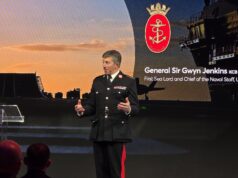
It followed the International Sea Power Conference hosted by General Sir Gwyn Jenkins, the First Sea Lord, on the same carrier on Tuesday, and the organisers say it is the largest and most ambitious forum yet, with more than 70 international businesses taking part and a record number of small firms attending for the first time. Jenkins told delegates that more than 80 industry partners and over 700 delegates had come aboard across the two events, the largest gathering of business leaders ever convened on a UK carrier.
The first forum was held aboard HMS Queen Elizabeth in New York in 2018, and last year’s Pacific Future Forum in Tokyo ran alongside the carrier strike group’s Indo-Pacific deployment. In his welcome to delegates, Lord Sedwill, the forum’s chair, wrote that “NATO’s northern flank now sits at the centre of Euro-Atlantic security”.
The plenary programme in the carrier’s hangar ran from an opening panel on the new security paradigm, chaired by Professor Peter Frankopan, through sessions on Northern Europe and the High North and on grey zone and hybrid warfare, to a panel on defence transformation with Dutch and Norwegian defence officials alongside Auterion and Palantir, a session with NATO’s DIANA innovation accelerator and a panel on total defence.
On the first morning the forum paused for an Armistice Day commemoration, with the Last Post and two minutes’ silence in the hangar. Mark Rutte, NATO’s Secretary General, told the forum that Putin is failing on the battlefield, with Russian losses possibly passing fifty thousand in October, and NATO said he used the address to thank service members on board.
Jenkins and his nine Joint Expeditionary Force counterparts signed the Northern Navies agreement on board, committing the ten navies to operate alike, train to one standard and build compatible equipment. Luke Pollard, Minister for Defence Readiness and Industry, called for interchangeable northern European navies, and on Thursday Streeting and Tore O. Sandvik, Norway’s Minister of Defence, confirmed that the Royal Navy will buy three Norwegian standardised vessels as mine-hunting motherships, with an option for three more. Streeting told delegates: “When it comes to protecting our waters, the UK has no closer partner than Norway.”
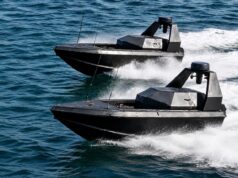
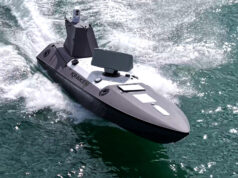
The Ministry of Defence said Atlantic Net, the £90 million network of drones and sensors run with Ocean Infinity to watch for hostile underwater activity, will become operational within months. The Royal Navy awarded Saab a £15 million contract for counter-drone radars for its Kraken boats, confirmed Kraken interceptors will follow in the new year, and Jenkins was due to sign a statement of intent with Northrop Grumman to prepare its Talon drone for trials from a British carrier. The Chief of the Defence Staff, Air Chief Marshal Sir Richard Knighton, announced that Royal Marines will get AI battle software from British firm Arondite, which is opening its first overseas office in Oslo, while Balaena and Kongsberg Maritime agreed to build the Arctic Hunter uncrewed sub-hunter at Birkenhead.
Streeting said “High North security is homeland security” and that “Russian activity in the UK’s maritime area of responsibility is up 41% this year.” Lord Sedwill said Britain is already on the front line of hybrid war, and Jenkins told the conference that Britain has an open border with Russia to its north. Espen Barth Eide, Norway’s Minister of Foreign Affairs, warned that the old America is not coming back, Dr Martin Schäfer, Germany’s defence policy director, said Germany must be able to move allied troops east within a month, and Pasi Rajala, Finland’s State Secretary, said Helsinki wants the EU to curb Russian tourist visas.
In a joint statement for the forum, Knighton and General Eirik Kristoffersen, Norway’s Chief of Defence, said a coordinated operation in the North Atlantic this year had sent “a clear message to GUGI: covert activities in our waters will not be tolerated”, referring to Russia’s deep-sea intelligence directorate. They said Britain is doubling the number of troops exercising in Norway on rotation over the next three years, and added: “Increased spending alone will not deliver greater security; investment must be turned into operational capability at the speed and scale of relevance.” Streeting struck the same note on industry, telling delegates: “We need to out-produce them too.”
Jenkins closed the Sea Power Conference telling delegates that the Royal Navy has turned a corner and that he leaves Oslo with hope. Douglas Alexander, the Secretary of State for Scotland, told the UK Defence Journal on board that economic security must underpin national security, and Streeting described the carrier’s Operation Firecrest deployment, which brought it to Oslo, as “a statement of NATO’s intent in the High North.”
They gathered in a hangar that normally holds F-35Bs, on a carrier fresh from patrolling the High North, and fell silent there on Armistice Day to remember the cost of the last great European war. Two days later they left Oslo with signatures on paper, ship orders on the way and a shared plan for keeping the northern seas from becoming the scene of the next one. This was a fantastic success.