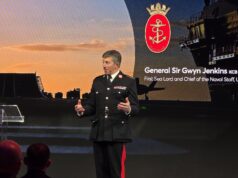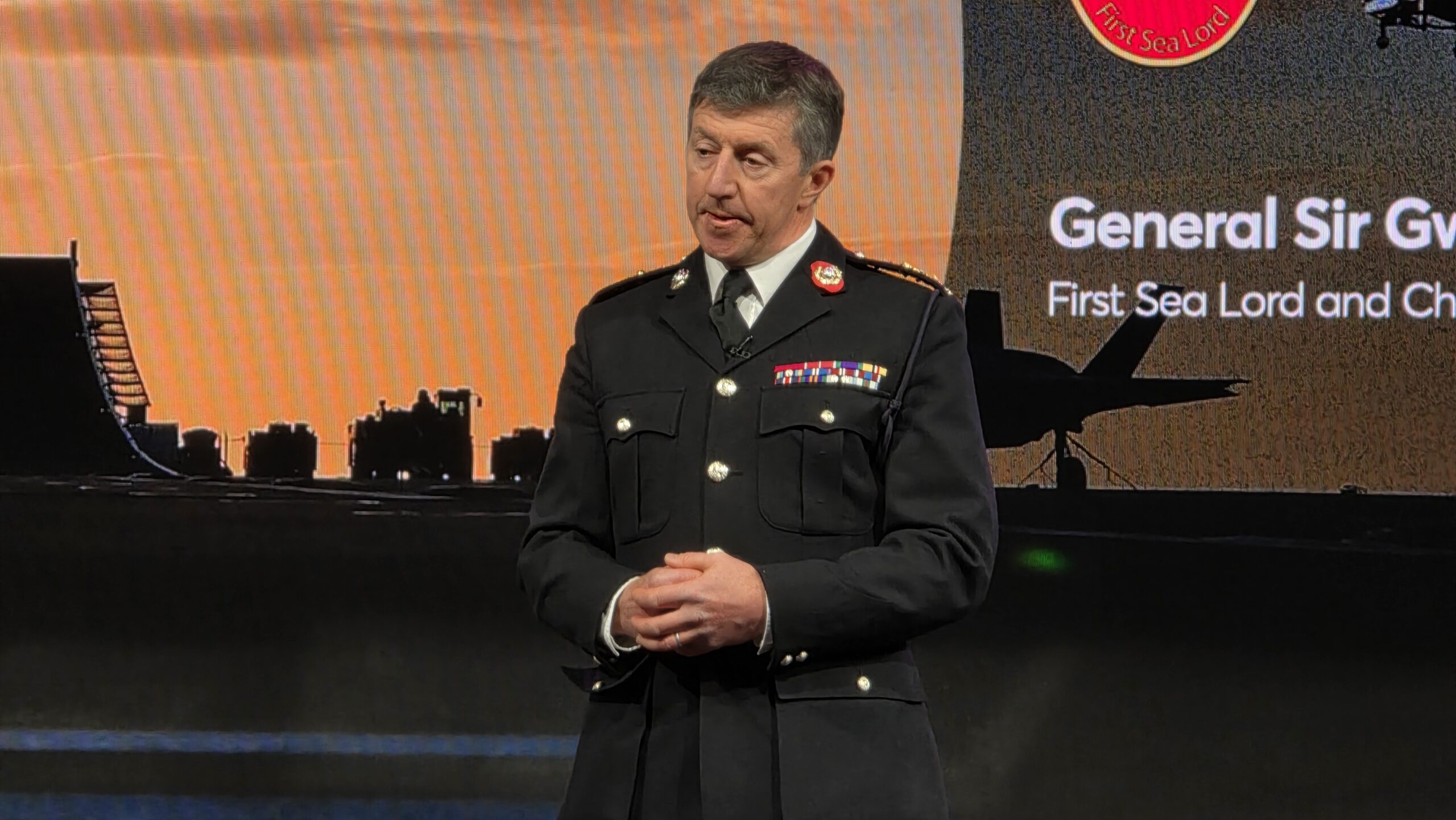
General Sir Gwyn Jenkins, the First Sea Lord, has said the Hybrid Navy can give Britain an industrial lead in one of the biggest global markets of the coming decades.
Speaking on board HMS Prince of Wales at the International Sea Power Conference in Oslo, Jenkins said the opportunity the Hybrid Navy represents is huge, not only because it will change the way the Navy fights. He said: “The Royal Navy is not separate from Britain’s economic prosperity – our job is to protect it, while also becoming an engine that helps deliver it.” He said UK shipbuilding already generates billions of pounds and sustains thousands of jobs, with supply chains spanning every region “From the Clyde, to Rosyth, Barrow and Belfast, to Birkenhead and the Solent.” He went on: “Britain and the Royal Navy are leading the world in maritime autonomy. The Hybrid Navy is already creating the demand at home.
“But if we get this right, we can build British industrial advantage in one of the biggest global markets of the coming decades.
“The export potential, the ability to work with allies and strengthen our industrial base is genuinely exciting.”
Jenkins said the Navy itself has to change to get there: “Because I’ll be really frank: I do not believe the Royal Navy can build the Hybrid Navy at the speed we need it by doing things the way we have always done. During my career, I have seen too many examples of what happens when institutions become too set in their ways.” Setting out what he wants from both sides, he said: “So I need industry alongside us from the start.
“I want industry talking directly to the operators who will use their equipment. I want technology tested in realistic conditions – and the solutions you bring us must be simpler, adaptable and capable of being scaled rapidly.
“For our part, the Navy must explain clearly what it needs and open the door to smaller companies and new ideas.
“And when a system is proven to work, we must invest.” He added that this is not just a question of procurement but fundamental to being ready for war.
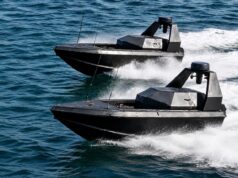
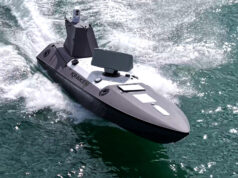
Jenkins said more than 80 industry partners and over 700 delegates were on board for the conference and the Atlantic Future Forum, the largest gathering of business leaders ever convened on a UK carrier. He also described the new Royal Navy Capability Accelerator Hub in Portsmouth as a delivery engine for the Hybrid Navy, bringing operators, capability teams, engineers and industry under one roof to identify what the Fleet needs, test proven or near-ready technology and get it to the front line quickly. During the conference, Kongsberg Maritime and Balaena agreed to build the Arctic Hunter uncrewed sub-hunter at Birkenhead, and the Royal Navy awarded Saab a contract for radars to fit to its Kraken drone boats.