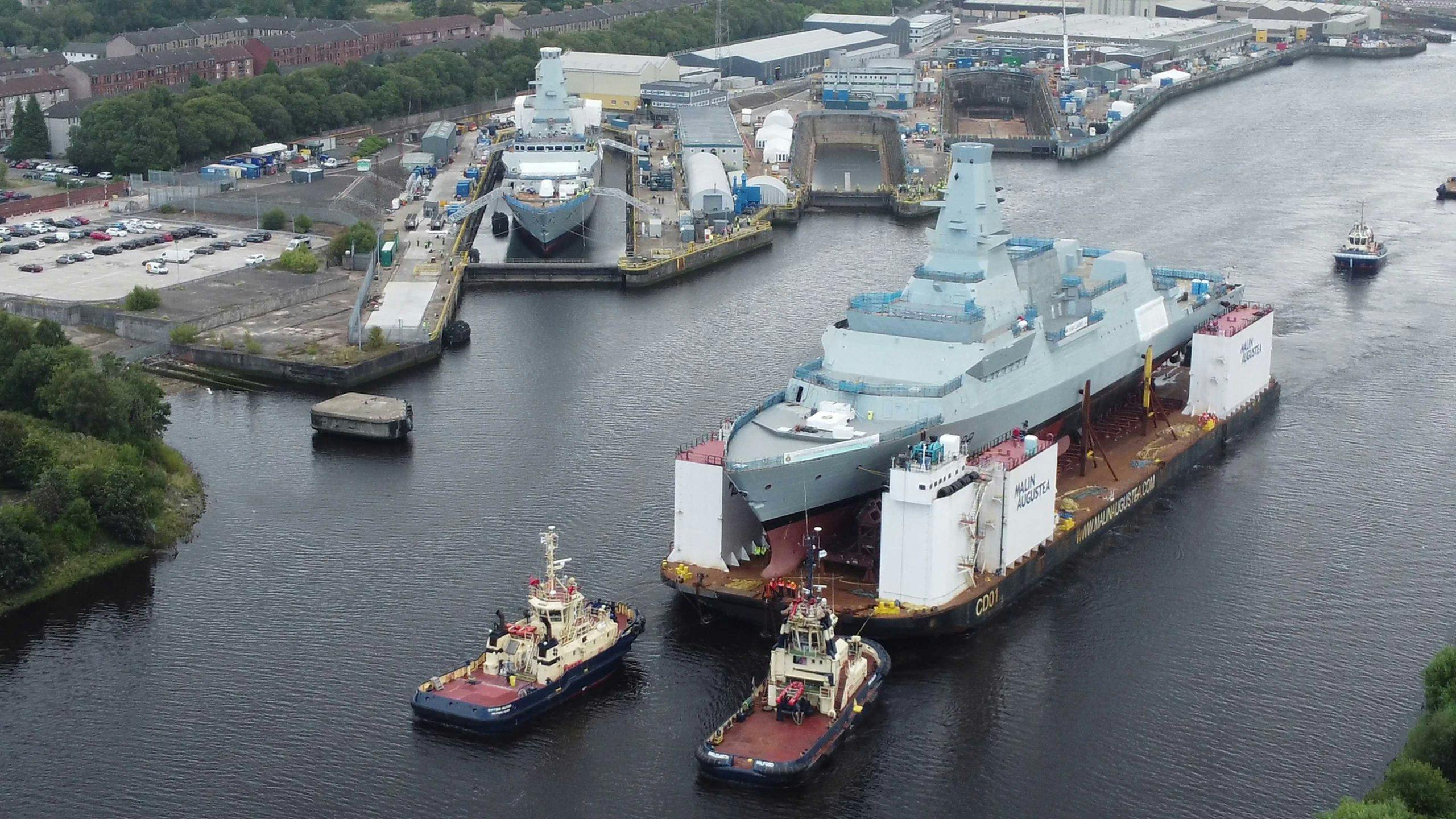
BAE Systems has said growth and margins in its Maritime sector remain subdued as the Type 26 frigate programme works through its first-in-class stage, with stronger trading elsewhere in the group more than making up for it, according to the company.
In a market update on Thursday, the company said that, as in the first half of the year, strong trading in its Electronic Systems, Air and Platforms and Services sectors had “more than offset subdued growth and margins in our Maritime sector as we progress through the first-in-class stage of the Type 26 frigate programme.” BAE did not put a figure on the effect, and kept its full year guidance for sales, profit and earnings unchanged while raising its free cash flow forecast to about £3 billion.
The first-in-class stage covers the lead ship, HMS Glasgow, which carries the cost of proving the design before later ships benefit from experience on the Clyde. BAE builds the Type 26 at Govan and Scotstoun, with eight ordered for the Royal Navy, and Norway has chosen the design for its own next frigates.
The Maritime sector also booked about £4.3 billion of further funding in the second half for the Dreadnought class nuclear deterrent submarines built at Barrow, which BAE said will progress the boats towards entry into service.
Charles Woodburn, BAE Systems Chief Executive, said: “We’ve delivered strong financial and operational performance year to date, as well as positive order intake momentum. Our substantial backlog provides good visibility and, with our portfolio aligned to evolving threats and customer priorities, we remain well positioned to deliver sustainable growth over the years ahead.”
HMS Glasgow has progressed towards sea trials, and the government has been aiming to speed up delivery of new warships. Norway picked the Type 26 as its next-generation frigate, and Douglas Alexander, the Secretary of State for Scotland, said in Oslo this week that Norway did not choose the Clyde by chance.