

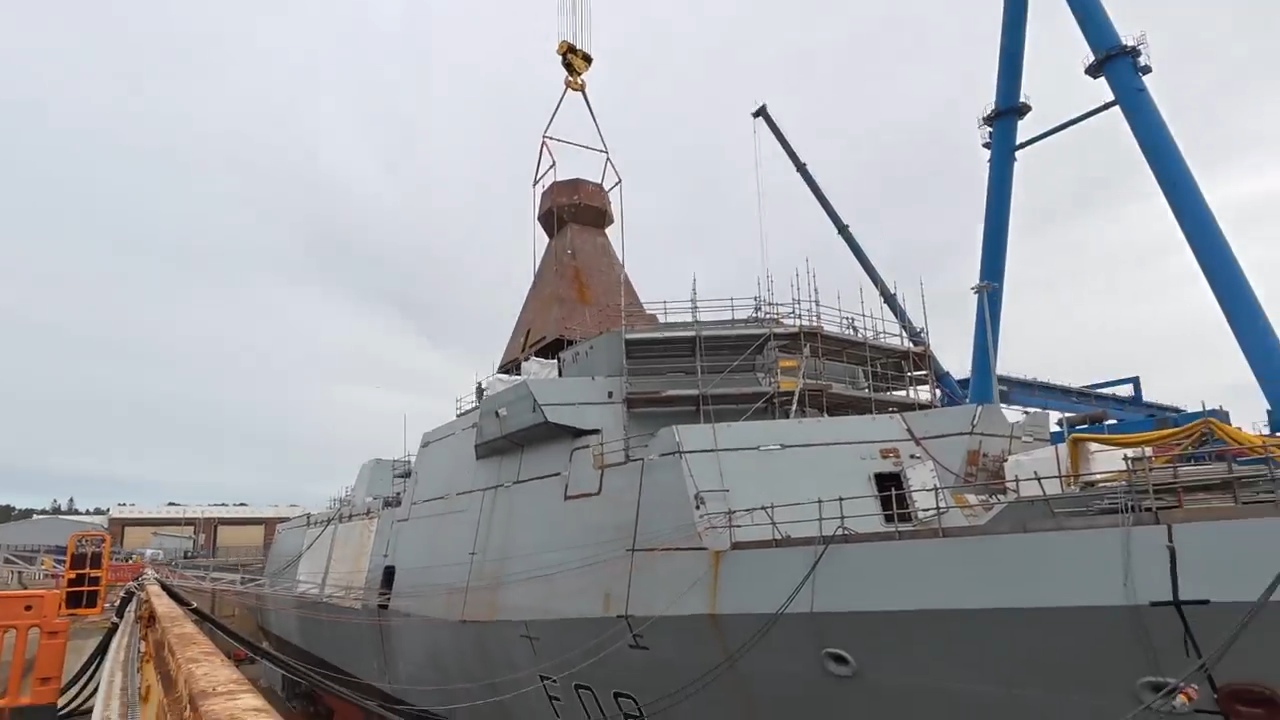
The forward and mid masts have been installed on HMS Active, the second of five Type 31 frigates being built at Rosyth for the Royal Navy, moving the ship into the final stages of structural assembly, according to Babcock.
The two masts, with a combined weight of 48 tonnes, were lifted into place using Rosyth’s 68-metre Goliath crane, and Babcock said outfitting is continuing alongside the structural work.
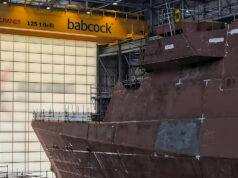
Charlotte Holden, Head of Ship Build Structures for Type 31 at Babcock, said: “This marks another milestone of the Type 31 programme with the installation of the forward and mid mast on HMS Active, the second of the five Type 31 ships. The ships are built using modular construction within the synchrolift and the Venturer Hall, which is just here, before coming out here to install the tallest components. This means that we can build efficiency into the programme, bringing the ship out here means we can bring other ships into the build hall, and it means we’re independent of the weather. The progress we’ve made on HMS Active is a testament to the capability that we have in Rosyth and within our wider shipbuilding team, and it’s another step forward for the Type 31 programme.”
Active was rolled out of the Venturer Hall in February, when construction also began on HMS Bulldog, the government said when it announced that the warship programme had reached milestones for two ships.
The Venturer building lets Babcock build two frigates at once and forms part of about £200 million the company has invested at Rosyth. The government said the programme sustains 1,250 jobs at Babcock and 1,250 more in the UK supply chain, along with over 400 apprenticeships.
In March Active entered the water for the first time, in a float-off carried out entirely at Rosyth for the first time on the programme, the UK Defence Journal reported when the new British frigate entered the water for the first time.
The 5,700-tonne Inspiration-class frigates carry a 57mm gun and Sea Ceptor air defence missiles, have a mission bay for modular payloads and can operate a Wildcat or Merlin helicopter, with all five expected to enter service by 2030. The first of the class is HMS Venturer.





Good to see the modern day Bacchante class build progressing
Soon to be sold to Norway.
‘All five expected to enter service by 2030…’
Really? I thought I read recently that Venturer is expected in service by 2028 or 29, with the last one in 2035. It will be remarkable if Babcock get five ships into service in the next 4 years!