

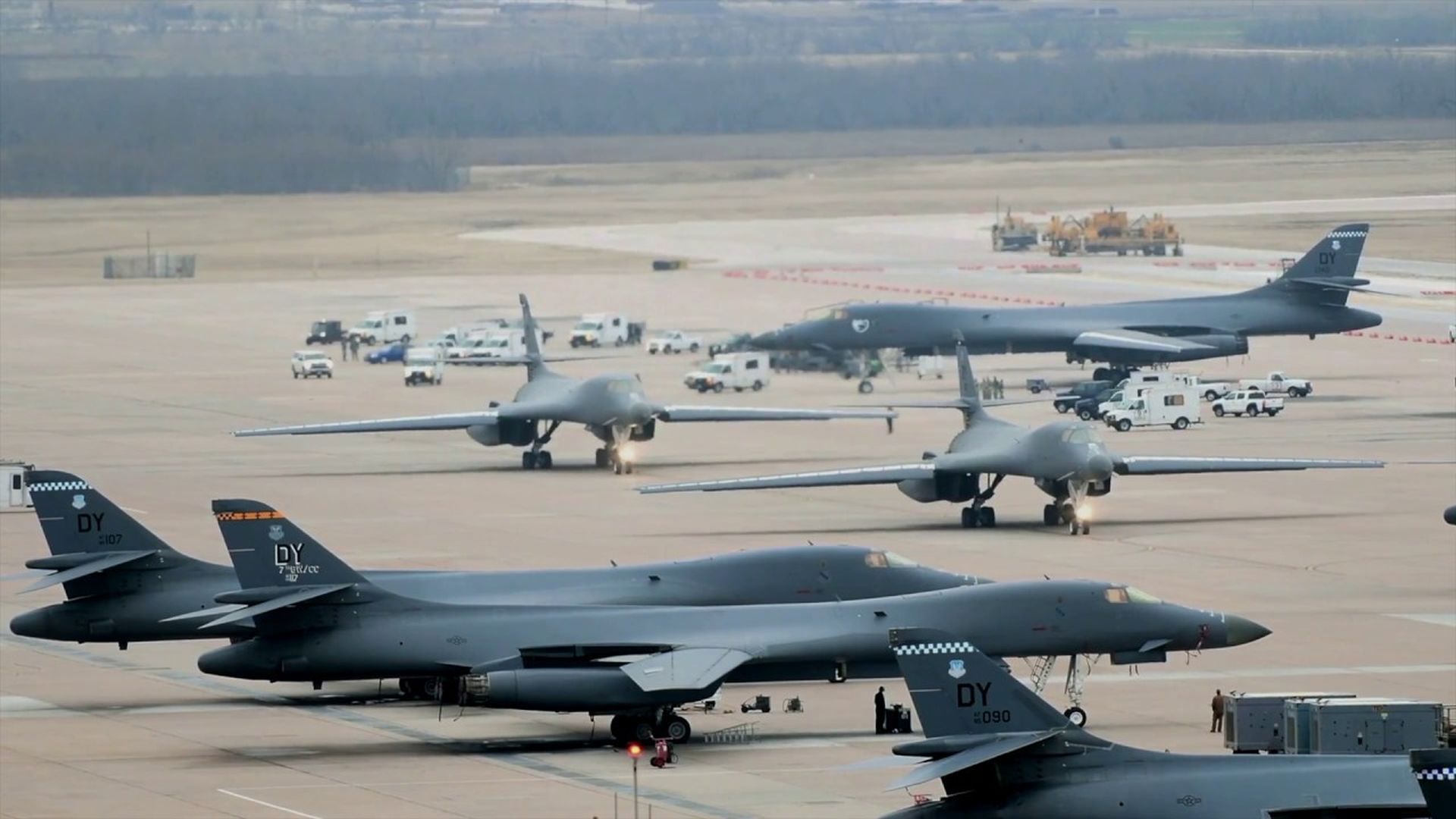
The US Air Force has launched a new readiness drive aimed at getting more B-52 Stratofortress and B-1 Lancer bombers available for operations, with early work cutting some critical parts delivery times from more than a week to as little as two or three days.
U.S. Air Force Global Strike Command has joined with Air Force Materiel Command and the Defense Logistics Agency for what it calls the North Star Readiness Campaign, bringing maintenance, supply, engineering and modernisation work under a single effort focused on increasing the number of mission-capable aircraft. The campaign comes as the United States simultaneously sustains an ageing bomber fleet and pushes ahead with major upgrades, while preparing for the introduction of the B-21 Raider.
Gen. S.L. Davis, commander of Air Force Global Strike Command, said: “The North Star Readiness Campaign is our commitment to ensuring the warfighter has the nation’s bomber force ready to go at a moment’s notice.”
He added: “This is a team effort. It brings together the operators at Air Force Global Strike Command, the acquisition and sustainment experts at Air Force Materiel Command, and our logistics partners at the Defense Logistics Agency to focus on one thing: operational readiness.”
A major part of the work is focused on the less glamorous problem of getting parts to aircraft quickly enough. Daily aircraft-on-ground meetings now bring together the Defense Logistics Agency, supply-chain personnel, base logistics units and flight-line maintainers to identify delays and move components between locations more quickly.
According to the U.S. Air Force, some lateral shipments which previously took a week or more can now be completed within two to three days. There has also been a substantial reduction in mission-impacting parts problems. The number of Mission Impaired Capability Awaiting Parts, or MICAP, issues has fallen from more than 450 at the start of the effort to around 160.
The U.S. Air Force says that reduction has allowed sustainment teams to spend less time responding to immediate shortages and more time dealing with backorders and identifying components likely to cause future readiness problems.
The B-1 is receiving particular attention around structural and avionics components, with the campaign seeking to improve parts availability while shortening depot maintenance cycles. Lt. Gen. Linda Hurry, commander of Air Force Materiel Command, said: “Our constant engagement with Global Strike leadership and joint logisticians has helped us reinvigorate the supply chain and return these airframes to the fleet faster after depot maintenance, increasing bomber capacity and capability.”
The campaign is also incorporating changes proposed by personnel working directly on the aircraft.
Chief Master Sgt. Shane Anderson, the campaign’s change management lead, said maintainers had developed a local playbook to improve phase maintenance, which he said had “drastically reduced maintenance timelines while strictly maintaining safety and security.”
The readiness effort runs alongside major modernisation programmes for the bomber fleet. The B-52 is undergoing a wide-ranging upgrade programme, while the B-1 continues to receive changes intended to sustain its conventional strike role.
The North Star campaign covers more than aircraft upgrades. Its immediate focus is on the practical problems that determine how many bombers can actually fly: spare parts, engineering support, depot throughput and the maintenance processes used on the flight line.










There have been B1s flying over Cornwall for several weeks. Some on flight radar, some not. A trio of A10s that had made the transatlantic hop were also amongst unusual sightings this year. Over in Northern France the fighter training/patrolling tempo has massively increased. Not a lot going on with UK jets or warships though
We very rarely see Lightnings on ADS-B, and not all Typhoon and other aircraft. They rarely have transponders on when working on ranges – other than when the Atlas does beach landings at Pembrey. So unless we have a network of people at every station relaying movements it’s guesswork… oh yes, the community of spotters does this!
Lightnings? We retired them in them in 1988… oh, those Lightnings, the ones which we can’t integrate our weapons onto… great buy, that one.
As Geoff wrote before me, what warships?
The Americans retired theirs in 1948. I think the F35 was named after that one, not ours! But correct me if I’m mistaken. I prefer names to numbers. I wonder what we’d have called the TSR2? Arnold?
What warships? 🤔
Beat me to it! Well done!
The US is going to need all the long range bombers it can get given how fast it is alienating every ally it has with an airbase. At this rate the USAF won’t be able to operate much beyond Bermuda.
The B-21 will have an operational range of 9,600 kms thus negating the need for the airbases in places like Londonistan. The US will be able to dump its feckless European “allies” who can’t even stand up to an enemy with 1/10th of its GDP and 1/3rd of its population thus correcting the biggest mistake in the history of US foreign policy -getting involved in the quarrels of stupid Europeans who are allowing their civilization to be overwhelmed by their cultural enemies.
9,600 kms is roughly 6,000 miles. Florida to Iran is roughly 7,000 miles. What were you saying?
Tankers (K/C-135 and KC-46A).
B-21 would never be based anyplace but Missouri. It’ll be a few years before it even gets photographed in another country.
No mention of the B-2 Spirit?
Different MRO programs.
I really don’t understand why – it just beggars belief but there is a certain Sri Lankan who buys off TEMU even though she has a Masters in Economics and knows that China is taking Lanka by stealth.
The Lankan orders and pays, parcel is packed, and labelled. Sorted on a plane into Bournemouth and delivered the next day.
It still takes the US airforce a couple of days to get a delivery?
Just saying…
The Lt Gen was almost named for her participation… Lt Gen Kinda Hurry…
Taxi!