

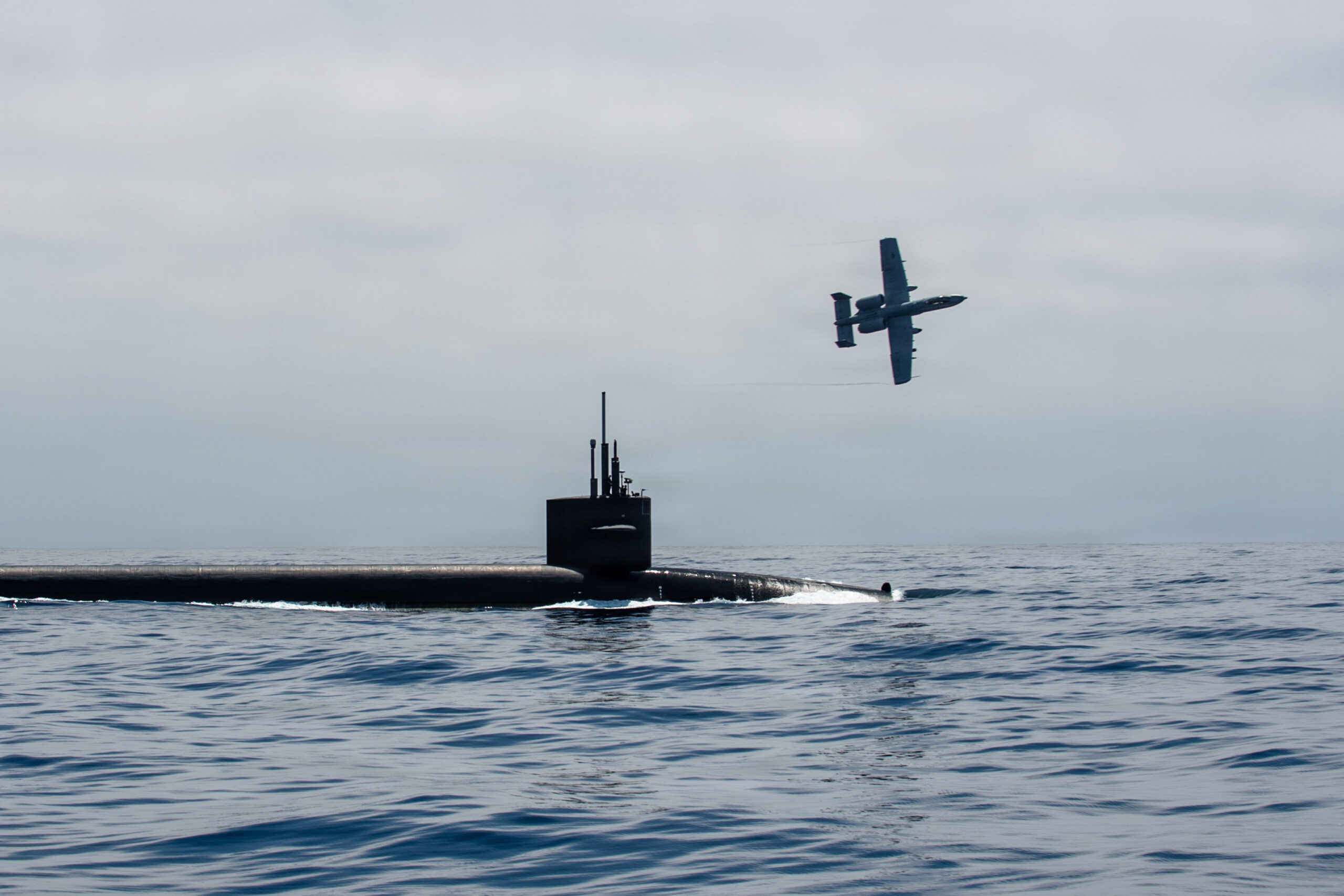
The US Navy has released images of an Air Force A-10 Thunderbolt II escorting the Ohio-class ballistic missile submarine USS Nebraska on the surface in the Pacific, part of an armed airborne escort exercise.
The photographs were taken on 28 July and published through the Defense Visual Information Distribution Service on 3 August, credited to Mass Communication Specialist 1st Class Ryan Riley of Commander, Submarine Group 9. Twenty images were released in the set.
The caption itself records only that the aircraft “escorts Ohio-class ballistic missile submarine USS Nebraska (SSBN 739) in the Pacific Ocean”. The U.S. Navy has since described the event as an armed airborne escort exercise, a serial intended to demonstrate joint force readiness to protect ballistic missile submarines.
Nebraska is assigned to Submarine Group 9, which the Navy describes as exercising “tactical and administrative control authority for assigned submarine commands and units in the Pacific Northwest”, covering shipboard training, personnel, supply and material readiness. The group is also responsible for submarines undergoing conversion or overhaul at Puget Sound Naval Shipyard in Bremerton. Its ballistic missile submarines are based at Naval Base Kitsap-Bangor in Washington state.
The A-10 is a close air support aircraft designed in the early 1970s around its 30mm cannon, and is not an aircraft usually associated with escorting strategic assets at sea. Its long-running retirement saga has continued into this year: the Air Force sought to divest the remaining 162 airframes in fiscal 2026, Congress blocked the move in the FY2026 National Defense Authorization Act, and in April Air Force Secretary Troy Meink said three squadrons would keep flying through 2030 to preserve combat power while industry ramps up production of newer aircraft.
The images are US Navy work released into the public domain, subject to the usual DVIDS conditions.


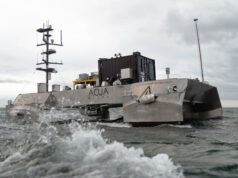
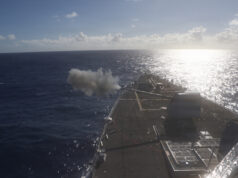
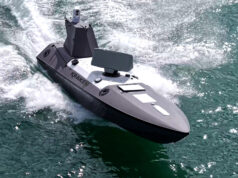
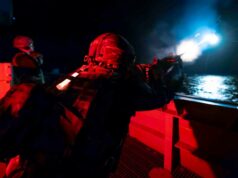


OT, but hey
An analysis of the Security Service MI5’s post-WWII history reveals that its critical intelligence failures stem from institutional arrogance, cognitive blind spots, and a recurrent prioritisation of self-preservation over accountability. These persistent deficiencies demonstrate that the agency is fundamentally unreformable, making a compelling case for its complete disbandment and the devolution of it’s responsibilities to more competent, transparent entities.
During the Cold War, class-based complacency facilitated penetration by the Cambridge Fifty-Five. MI5 assumed elite figures were beyond suspicion, allowing double agents like Anthony Blunt to pass top-secret documents to Soviet handlers undetected for years. This defensive culture persisted through the 1980s Spycatcher scandal, where aggressive legal attempts to suppress Peter Wright’s memoir exposed an institutional strategy focused on avoiding public embarrassment rather than enacting structural reform. As Wright observed, MI5 failed to catch a single Russian spy during the entire cold war. Not one.
In contemporary operations, prioritising concealment over transparency has led to severe moral failures, notably the Agent X case. An Investigatory Powers Commissioner’s Office report revealed that MI5 repeatedly submitted false evidence to British courts. To shield a foreign neo-Nazi informant who was abusing his partner, officials lied under oath regarding secrecy policies, even after journalists proved the informant’s identity had leaked.
MI5’s struggle to intercept irregular maritime arrivals creates a direct opportunity for foreign espionage. Unvetted channel crossings allow hostile intelligence services to easily insert deep-cover operatives into the UK using falsified, or missing documentation. By bypassing standard biometric border checkpoints, these foreign agents can slip into the country completely undetected. This systemic screening failure leaves the UK highly vulnerable to covert domestic espionage, sabotage, and state-sponsored subversion.
Furthermore, critical infrastructure vulnerabilities have been exposed by a failure to counter hostile state cyber operations. Chinese state-sponsored actors bypassed government perimeters by exploiting zero-day vulnerabilities in enterprise VPNs and firewalls. Operatives utilized “Living off the Land” techniques—deploying native tools like PowerShell to quietly harvest credentials and evade MI5’s defences for months. This perimeter failure stems from a cognitive blind spot, as MI5 remained stubbornly focused on traditional malware signatures regardless.
This operational blindness is further underscored by MI5’s catastrophic failure to protect the public during the 2018 Salisbury poisonings. A public inquiry severely censured the security service for leaving former double agent Sergei Skripal alarmingly accessible to Kremlin assassins. Russian GRU operatives travelled seamlessly to Wiltshire and deployed Novichok, a military-grade chemical weapon, less than 20 miles from the British Army’s senior command centre at Andover. This failure to map foreign hostile movements left Skripal critically ill and caused the collateral death of a British citizen, Dawn Sturgess.
Operational friction has also compromised domestic safety. The Manchester Arena bombing occurred because actionable intelligence regarding Salman Abedi was not processed quickly enough to intercept him. Today, combating Russian sabotage is hampered by Moscow’s tactical shift to hiring low-level criminal proxies online, a strategy exploiting gaps in traditional surveillance. Meanwhile, resource-heavy counterintelligence operations like Operation Wedlock spent two decades chasing a suspected MI6 Russian mole without securing definitive proof. The subject was allowed to retire.
Equally devastating were the systemic intelligence gaps during the late 20th-century Irish Troubles. The domestic security apparatus failed to detect long-delay explosive devices, resulting in the 1984 Brighton hotel bombing which nearly killed Prime Minister Margaret Thatcher. Gaps in pre-emptive intelligence also led to the 1991 Downing Street mortar attack and the devastating 1996 Canary Wharf bombing, exposing deep vulnerabilities in London’s security frameworks. Canary Wharf caused £150 million of economic damage to the UK
To rectify these persistent failures, MI5 should be disbanded, dividing its domestic mandate between two highly specialized, accountable institutions. State-sponsored espionage, counterintelligence, and hostile cyber threats should be transferred to Defence Intelligence (DI). Operating within the Ministry of Defence, DI possesses the structural rigor, advanced technical capability, and military oversight required to confront sophisticated foreign threats like Russian sabotage, without the insular culture of a civilian spy agency. The senior management of MI5 should be excluded from this reorganisation, to prevent blame being passed to junior personnel.
Concurrently, domestic counter-terrorism, surveillance, and public safety portfolios should be entirely devolved to the police Counter Terrorism Command (SO15). Merging intelligence collection directly with law enforcement eliminates the operational friction and communication delays that proved fatal in the Manchester Arena bombing. Most importantly, shifting domestic security to a police framework subjects these operations to strict judicial standards and public accountability, permanently ending the lawless culture of institutional dishonesty and blatant lying exposed by MI5’s Agent X scandal.
The public has become fatigued by the regular apologies offered by their Director General after MI5 incompetence is exposed. At a time when geopolitical tensions with hostile foreign states are at their highest, the country needs potent counter-intelligence, counter-terrorism, and counter-sabotage – not more structural failures. The current leadership must take ultimate responsibility for these systemic deficiencies, paving the way for a radical, modern overhaul of British domestic security. To kick this off, McCullum should show some leadership for once and resign – taking the rest of MI5’s higher management with him
And the A10……………….. ?
The Flying Bathtub! Riiiiiiiiip.
Awesome, though now far too vulnerable except in more benign areas.
Have you ever witnessed an A10 using its gun?
No, I’m not ex military.
I read it has a distinctive sound.
I heard it at an airshow in 2011, obviously firing blanks coordinated with pyrotechnics on the ground but the scariest sounding weapon I have ever heard.
I heard the real thing at the Yuma firing range in Arizona many years ago, but since I was parked at the side of a public highway, it was at a distance of several hundred yards and somewhat muted into a hum! Still not something you want to be in front of!
Scary!
I see you don’t list the successes to go with the failures. As the IRA said, they only need to get lucky once.
I might reply in more detail later if I can be bothered, but I disagree overall on disbandment.
Keep in mind the conversation we had before about AI written posts. Pedro’s only 2 comments are both the same, AI generated “analysis” pasted under unrelated articles.
Nothing wrong with responding, just a heads up.
Hi mate.
Yes, it’s now on my mind, though I admit I didn’t recognise the signs with this one. The other on the Kyiv article, yes.
I’d spotted lack of full stops at the end of paragraphs as well, especially the final one.
Though I got a telling off for mentioning that from BM so maybe that’s not a sign as such.
Could you share your prompt? Just curious if there was any instruction that was leading to the conclusion of disbanding MI5, or if that was a natural conclusion.
Couldn’t even be arsed reading that!! Anything longer than the article should be outlawed
I did…and have attempted a comprehensive reply to some of the issues he raised.
I am not sure if I am replying to a person or an AI generated artical but you have stated a number of missed opportunities within the MI systems and yes I think most people in the know would agree the MI5 and 6 need a radical kick up the back side but if you close these departments down what takes their place, or will there be yet anouther vacuum in our defences to be filled in the distant future (if at all) may-be that is why you are writing this artical. The nature of the job in MI means that only the mistakes/misunderstandings come to light with the day to day (360 days/year) fight against the ever present attacks on the UK and its infrastructure going unseen and unreported. We can only see after the fact that MI had a hand in influencing the out come of a situation. For example MI was warning of the Argentinians were going to invade the Falklands weeks before they actually did, yet it was the political elite of the day who decided to put their heads in the sand until it was too late. It was the MI who were asking questions about Harold Wilson (Labour PM in the 1970s) but the political elite of the day quashed any investigation and in 2021 to 2022 it was the MI who were telling the government about Russia’s build-up for the attack on Ukraine the info was only passed on to Ukraine after the Americans decided to put Ukraine in the picture our political elite were happy to sit on the info. So my conclusion to your artical is that we need to put our political elite in order not our hard working military.
Like the rest of the UKs military they need more money and more personnel to help in battling the constant attacks on this place we call home.
This post reads of someone with an axe to grind. No doubt the Security Service can improve, and makes errors. Who doesn’t?
Thought I’d add my thoughts to a few details of your post for fun?
“to more competent, transparent entities.”
Why would they be more competent? And who says the Security Service is not? Any intelligence and security service is not going to stop everything.
And a secret organisation is only going to have limited transparency. They are not Liberty.
“penetration by the Cambridge Fifty-Five.”
Fifty Five?
Five.
Are you going to demand the disbandment of the CIA as well concerning Alrich Ames?
“severe moral failures, notably the Agent X case”
Again, they are not Liberty, sometimes there is no time for “morals” with sensitive situations, even if the informer was a SoAB. Are you also going to call for the disbandment of the Army because Freddie Scappatachi, Steak knife, was a murderer? He saved numerous lives and took them too.
And are you going to comment on the many informers who are not? Intelligence sometimes comes from some very dubious sources, who are you to make that call and turn them away, potentially costing lives and valuable information?
“MI5’s struggle to intercept irregular maritime arrivals creates a direct opportunity for foreign espionage. Unvetted channel crossings allow hostile intelligence services to easily insert deep-cover operatives into the UK using falsified, or missing documentation. By bypassing standard biometric border checkpoints, these foreign agents can slip into the country completely undetected. This systemic screening failure leaves the UK highly vulnerable to covert domestic espionage, sabotage, and state-sponsored subversion.”
Not MI5s fault or responsibility, but the idiotic governments above them that allow such and do not allocate the resources required.
I also believe that the watching of the states borders is more a Special Branch responsibility than the Security Service.
There are also various surveillance programmes checking names on airline manifests for example. There are countless coves, small harbours, and regional airfields where one can enter with very few or not checks at all. Why is that a Security Service failing.
“Furthermore, critical infrastructure vulnerabilities have been exposed by a failure to counter hostile state cyber operations. Chinese state-sponsored actors bypassed government perimeters by exploiting zero-day vulnerabilities in enterprise VPNs and firewalls. Operatives utilized “Living off the Land” techniques—deploying native tools like PowerShell to quietly harvest credentials and evade MI5’s defences for months. This perimeter failure stems from a cognitive blind spot, as MI5 remained stubbornly focused on traditional malware signatures regardless.”
And all the successes in the Cyber arena of stopping attacks you ignore.
The Security Service is also not the lead agency here anyway, so why are you blaming them? They have a role through the NPSA, but the NCSC lead on defensive Cyber, supported by some military organisations, not MI5.
“This operational blindness is further underscored by MI5’s catastrophic failure to protect the public during the 2018 Salisbury poisonings. A public inquiry severely censured the security service for leaving former double agent Sergei Skripal alarmingly accessible to Kremlin assassins. Russian GRU operatives travelled seamlessly to Wiltshire and deployed Novichok, a military-grade chemical weapon, less than 20 miles from the British Army’s senior command centre at Andover. This failure to map foreign hostile movements left Skripal critically ill and caused the collateral death of a British citizen, Dawn Sturgess.”
A few nuggets here. Again, you’re ignoring the role of the Police CT. MI5 lead on the intelligence side, the Police have primacy in the executive action side. And does EVERY intelligence Agency around the world manage to stop foreign powers agents from entering their territory? No.
Our own exist in other nations territory all the time.
“less than 20 miles from the British Army’s senior command centre at Andover.”
A pointless detail. Porton Down is but five or six miles away, why did you not mention that, as Russian TV channels usually do?
Boscombe Down, Bulford, Tidworth, Larkhill, Perham Down, and Middle Wallop, all a lot closer than Andover, and none of these Army installations have any Counter Espionage role anyway. So what is your point?
“This failure to map foreign hostile movements left Skripal critically ill and caused the collateral death of a British citizen, Dawn Sturgess.”
Not always possible in real time. And Dawn Sturgess died because her partner acted like a tramp and searched in a wheelie bin, due to the assailants decision to dispose of their weapon there, neither are the responsibility of MI5. The responsibility lies with Russia.
“To rectify these persistent failures, MI5 should be disbanded, dividing its domestic mandate between two highly specialized, accountable institutions. State-sponsored espionage, counterintelligence, and hostile cyber threats should be transferred to Defence Intelligence (DI). Operating within the Ministry of Defence, DI possesses the structural rigor, advanced technical capability, and military oversight required to confront sophisticated foreign threats like Russian sabotage, without the insular culture of a civilian spy agency. The senior management of MI5 should be excluded from this reorganisation, to prevent blame being passed to junior personnel.”
Love it…..
“State-sponsored espionage, counterintelligence, and hostile cyber threats should be transferred to Defence Intelligence (DI).”
DI deals with the military side, and has enough on its plate as it is without those. Out of interest, it already has a CI remit, through the recently formed DCIU.
Hostile Cyber threats are not the main responsibility of the Security Service. See the NCSC of GCHQ and the military DCEF / JFCG / JCU’s, all of with are part of CSOC, nothing at all to do with the Security Service.
“without the insular culture of a civilian spy agency”
Are you aware that much of DI is actually civilian? Just because it is a part of the MoD does not make it all service personnel.
“Merging intelligence collection directly with law enforcement eliminates the operational friction and communication delays that proved fatal in the Manchester Arena bombing.”
Law enforcement already already carries out intelligence collection, through Special Branch and the nation wide CTU’s and NCTIUs.
As for communication delays, they are being removed through co location of the police, military, and elements of the Security Service in West London at the Empress State building, and in the regions where the MI5 Regional Offices are co located with the Police CTUs.
“The public has become fatigued by the regular apologies offered by their Director General after MI5 incompetence is exposed”
No they haven’t, I doubt they even noticed. Those that do either understand that not every plot or espionage action can be stopped, appreciate the many examples of those that were, such as the Atlantic Airlines plot with liquid bombs, or do not have a bias and agenda in place, which you clearly do.
“The current leadership must take ultimate responsibility for these systemic deficiencies,”
Nonsense, the structure of the Service and wider UKIC and Police CTC has improved markedly. The many failures, which will continue to be inevitable, are the result of a lack of resources. The Security Service and Police monitor thousands of Islamist and far right extremists, Russian and Chinese resident Intelligence Officers every year, they cannot possibly watch them all with the size of A Branch, and especially A4. That is the responsibility of government, not the Security Service, that there is a lack of resources. They have to make a choice what to cover and what not. I see no fault there, only professionals trying to stop a dam leaking in too many places.
“McCullum should show some leadership for once”
For once? So you are an officer yourself to know that, are you? To know when in his 25 year career he has not? I think he finds himself in the role of DG based on merit myself.
If you reply in detail to every counter point I made I will be amazed. I’m off for a cup of tea!
Ain’t nobody reading all that.
Their loss, they might have learned something. Go please go ahead and ignore though.
Obviously two of us did
Very good response DM, thank you!
One thing Daniela’s good at, is textual diarrhoea 🤡💩🤣
Ah, another Troll rears it’s head again, welcome back.
At least I can discuss the subject of Defence, in detail. I’ve not seen you do any of that in all the years you’ve lurked and abused here, I actually doubt you have the insight or even basic subject matter knowledge.
You poor soul.
🙄
And you are supremely good at being a complete idiot.
One more thing…
“less than 20 miles from the British Army’s senior command centre at Andover.”
I find the use of the word “senior” in that context very strange indeed. “Primary” or “Main” but not Senior. That wording to me says you are either a foreigner and English is not your first language, or that this is a AI generated piece as Submitten pointed out.