

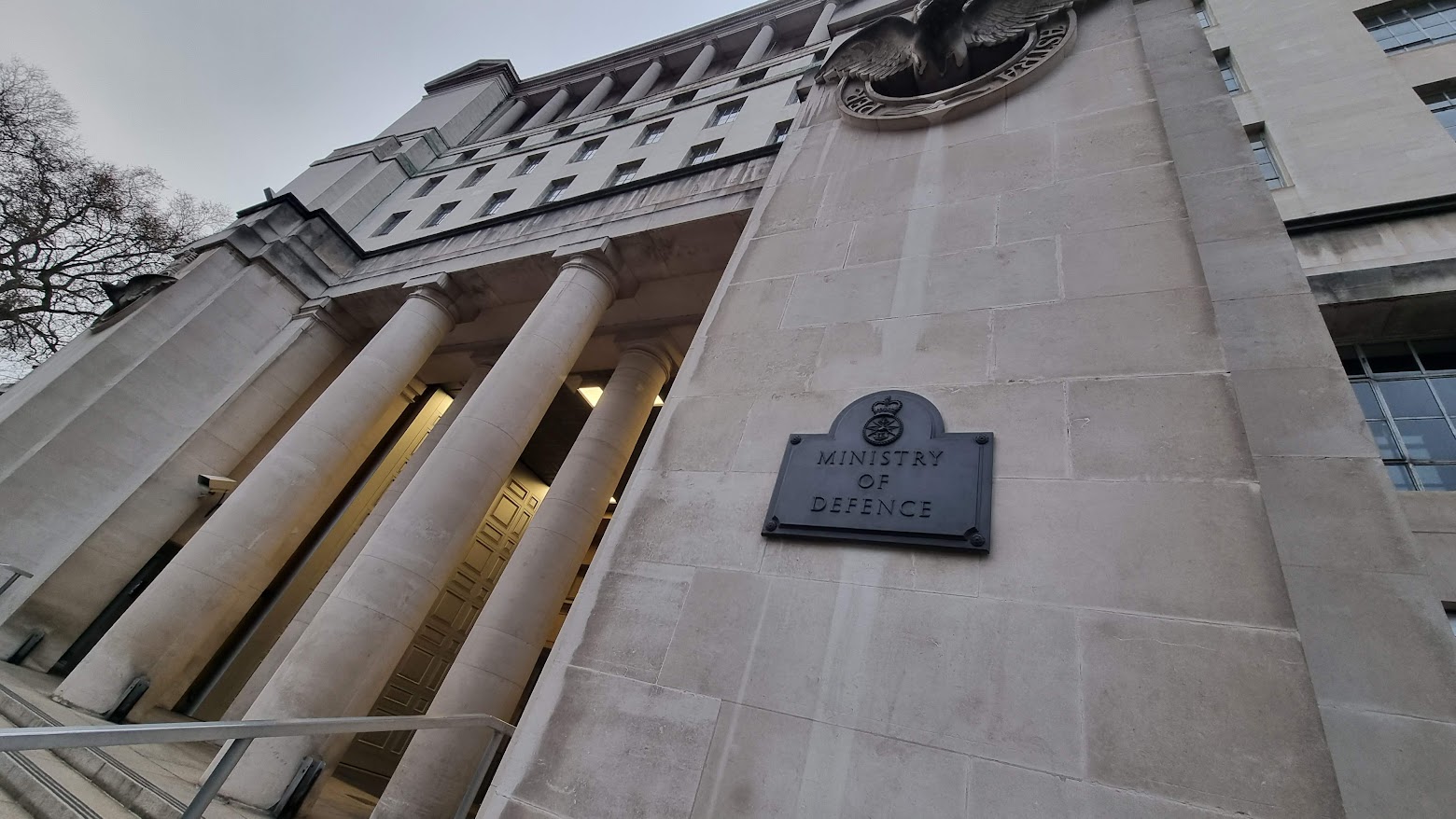
The Ministry of Defence is failing to recover a significant proportion of money lost to fraud and other forms of economic crime, potentially diverting resources away from frontline military capability, according to a new National Audit Office (NAO) report.
The watchdog found that while the MoD has improved its counter-fraud performance in the most recent financial year, it recouped less than half of what it spent on tackling economic crime over the past four years. Between 2021–22 and 2024–25, the department recovered an average of 48p for every £1 spent on counter-fraud work, well below the government benchmark of £3 saved for every £1 spent.
The NAO estimates that the potential exposure to fraud could reach up to £1.5 billion per year, with the majority of risk arising from defence procurement activity. Other areas identified include asset theft, personnel management issues, and the exploitation of information.
In its assessment, the NAO said the department’s response to fraud and economic crime remains fragmented, with longstanding structural weaknesses undermining effectiveness. These include the absence of a department-wide objective to reduce losses, unclear accountability between counter-fraud and defence policing bodies, and inconsistent investigation and reporting processes.
The report also highlights concerns raised through whistleblowing disclosures, which indicate that individual allegations can take a long time to resolve, or in some cases do not reach a satisfactory conclusion. The NAO concluded that, taken together, these issues mean the MoD could manage fraud and economic crime “far more effectively”.
Although the department receives hundreds of allegations each year, relatively few result in detection, disruption, or recovery. The NAO noted that the MoD lacks full assurance that cases handled outside its core counter-fraud and policing teams are dealt with appropriately, and that it does not centrally record how police services investigate fraud against the department.
Sir Geoffrey Clifton-Brown MP, Chair of the Committee of Public Accounts, warned that the scale and complexity of defence spending amplifies the risks.
“With high expenditure, complex procurement and a workforce split between the Armed Forces and the Civil Service, the MoD faces particular challenges against the significant threat of economic crime and misconduct,” he said.
He added that as defence spending rises towards 2.5% of GDP by 2027, exposure to fraud risks is likely to increase further.
“The MoD’s current response to fraud and economic crime is disjointed and inefficient,” Clifton-Brown said. “It is likely that the level of fraud investigated, recovered and prevented is considerably less than the loss incurred.”
The NAO identified several steps needed to strengthen the department’s approach, including setting a clear objective to reduce overall fraud losses, appointing a senior official to act as the MoD’s lead representative when it is the victim of economic crime, and establishing a single accountable body to coordinate investigations across counter-fraud and police teams.
Other recommendations include improving case triage, consolidating case management systems, expanding the use of data analytics, and publishing a more detailed estimate of total fraud losses.
Gareth Davies, head of the NAO, said the department could generate meaningful savings if it improved how it tackled fraud.
“The MoD could make significant savings if it better managed its losses from fraud and other forms of economic crime,” he said. “Using this resource more effectively would require the MoD to reform the way it goes about tackling fraud and economic crime, but would enable it to achieve real savings that could be used to enhance the country’s defence capability.”












I was hoping someone would comment on this as I don’t understand it. “potential exposure to fraud could reach up to £1.5 billion per year” What does that mean? where did the £1.5bn figure come from? The NAO goes on to say:
“The MoD reports that its potential exposure to fraud can reach up to £1.5 billion a year, mostly from procurement. But, as it acknowledges, this is only a broad estimate that does not take into account the effectiveness of its controls.”
It almost sounds like a political number to me. Perhaps someone in the anti-fraud area wants more budget. So when the NAO goes on to say “The MoD should set a department-wide objective to bring down the overall level of estimated financial loss due to fraud and economic crime.” Why not just pull a smaller number out of nowhere next time? Or factor in the reality of controls.
The NAO goes on to say “The MoD could make significant savings if it better managed its losses from fraud and other forms of economic crime.” However I can see no evidence as to how big the actual losses from fraud are. As long as MOD is working on “could be up to” it’s hard to justify the existence of these significant savings. Especially if marginal expenditure on fraud brings back less than 100% return, and that’s likely to get even lower once the low hanging fruit are accounted for. All this statement is doing is handing the Treasury an excuse to continue underfunding the department to the tune of tens of billions a year. So if this is a bid by the anti-fraud area for more money, I predict it’s going to be counterproductive.