

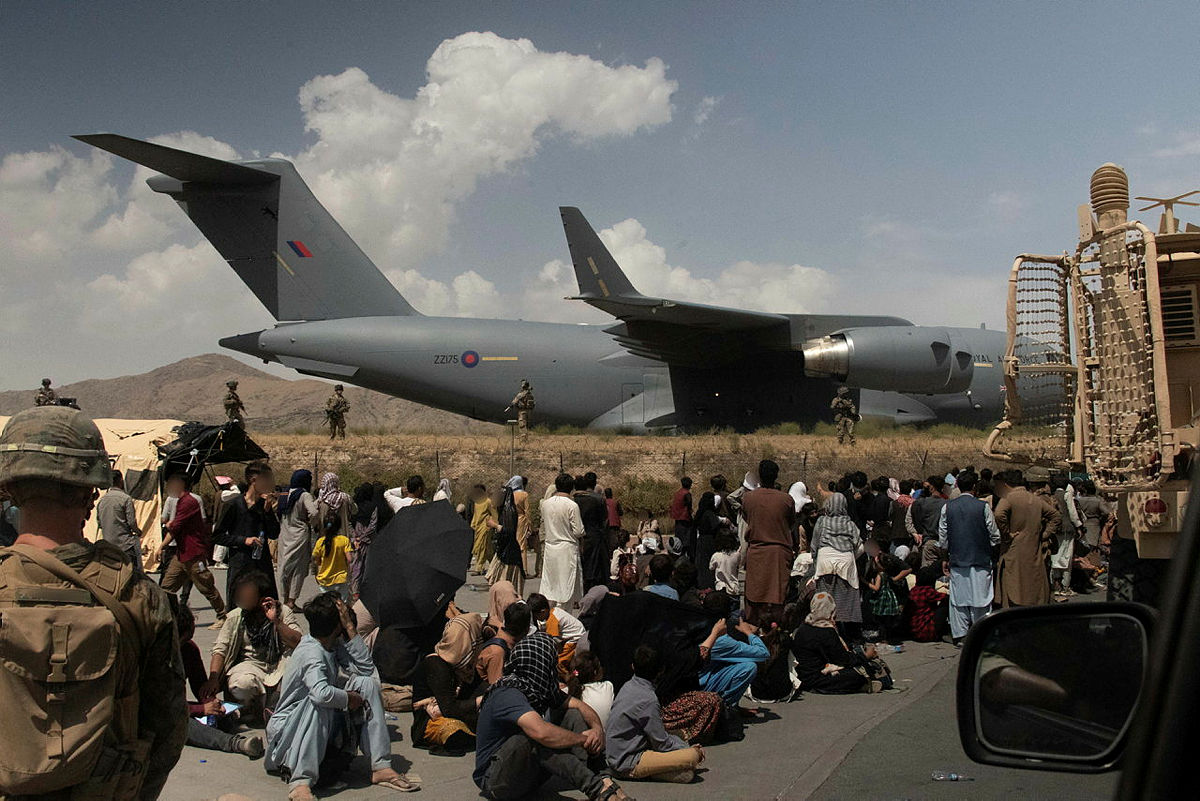
The UK Afghan resettlement programme still lacks key elements of control and coordination, with weaknesses in data, housing provision and programme management risking its successful completion, according to a National Audit Office report.
The audit identifies what it describes as urgent gaps in programme management, including limited cross-government data and weak oversight of delivery, despite the consolidation of schemes into a single Afghan Resettlement Programme in 2024.
While acknowledging progress, the NAO warns that structural issues remain unresolved. Poor data on individuals and their needs continues to hinder planning, while a shortage of suitable housing has emerged as a critical constraint, contributing to higher-than-expected levels of homelessness among those resettled.
Between April 2021 and December 2025, 37,950 people arrived in the UK under Afghan resettlement schemes. Thousands remain in the system, with 29,655 people still awaiting eligibility decisions as of November 2025.
The government expects the programme to cost £5.7 billion through to 2032-33, of which £3.1 billion has already been spent. A further £2.6 billion remains, meaning the majority of long-term delivery and integration activity is still ahead.
The NAO found that the schemes were established rapidly under pressure following the Taliban takeover in 2021, but said the resulting structure became fragmented across departments and stages of resettlement. This complexity, it noted, persisted longer than necessary and contributed to inefficiencies and poorer outcomes.
Although the transition to a unified Afghan Resettlement Programme has improved coordination in some areas, the report concludes that it has not yet resolved fundamental delivery risks. These include uncertainty over future demand, limited understanding of integration outcomes, and ongoing reliance on transitional accommodation.
The watchdog said the government must now complete the core components of effective programme management, including better data, clearer oversight and stronger coordination across departments.
“Government departments have worked together in challenging conditions to resettle thousands of Afghan citizens who were at risk of reprisals from the Taliban,” said Gareth Davies, head of the NAO.
“Although progress has been made under the new Afghan Resettlement Programme, the government has more to do to successfully resettle the affected people in the UK.”
The NAO also called for scenario planning to assess barriers to completing the programme, closer monitoring of recent policy changes such as limits on time in temporary accommodation, and clearer measures of successful integration.











A mere £5.7 billion
yeah steep, that is £150k per person, or £600k for a family of 4.
granting asylum is fine, paying them not so much esp when they were already paid while in Afghanistan for services given.
my 2 cents
At the peak we had a maximum of 10000 soldiers in Afghanistan but provided asylum to nearly 4 times that number associated via ARAP so about 600 Afghan soldiers plus 37000 others. All given the queue jumping ARR scheme at £5.7 billion with a super injunction to hide it from the public under the guise of the data breach, a data breach later admitted that the Taliban would know anyway. Last year we had a daughter of one on Newsnight campaigning to get her Grandmother on the scheme as it infringed her rights in her view not to have all their family brought over. You wonder why people don’t trust governments anymore.
All courtesy of the Defence budget I believe.
Indeed Daniele
Yet another well thought out “plan” from HMG..
Either they worked for us or they didn’t.
What a joke. It’ll end up being 100k people, i’ll put my house on it. Absolute piss take. Bringing the worst people on planet earth into Britain. Looks like we had more interpreters than soldiers in Helmand! They hated us while we were there, and they were the most useless soldiers imaginable. What a joke country we are.
Absolute shit show, from start to finish oops not finished it’s hardly started. The vast majority of these Afghans had zero or bare minimum interaction with NATO/UK forces, most are chancers who have seen an opportunity to bluff the UK, and with the low quality of politicians we have had in successive governments, it is working! The lads from CF333 and ATF444 (the triples) deffo deserve and require resettlement here, along with a small number of regular ANA and the interpreters, but that list is not 40 friggin thousand, even if you count immediate family. It’s all a bluff and cuff and because HMG (Tories) got it wrong rather than admit it they doubled down and compounded the error by continuing the relocation of these people. Hence its covert nature feck all to do with opsec! Yet again we are being mugged off and any voices raised in opposition are as per normal shouted down and people get labelled!