

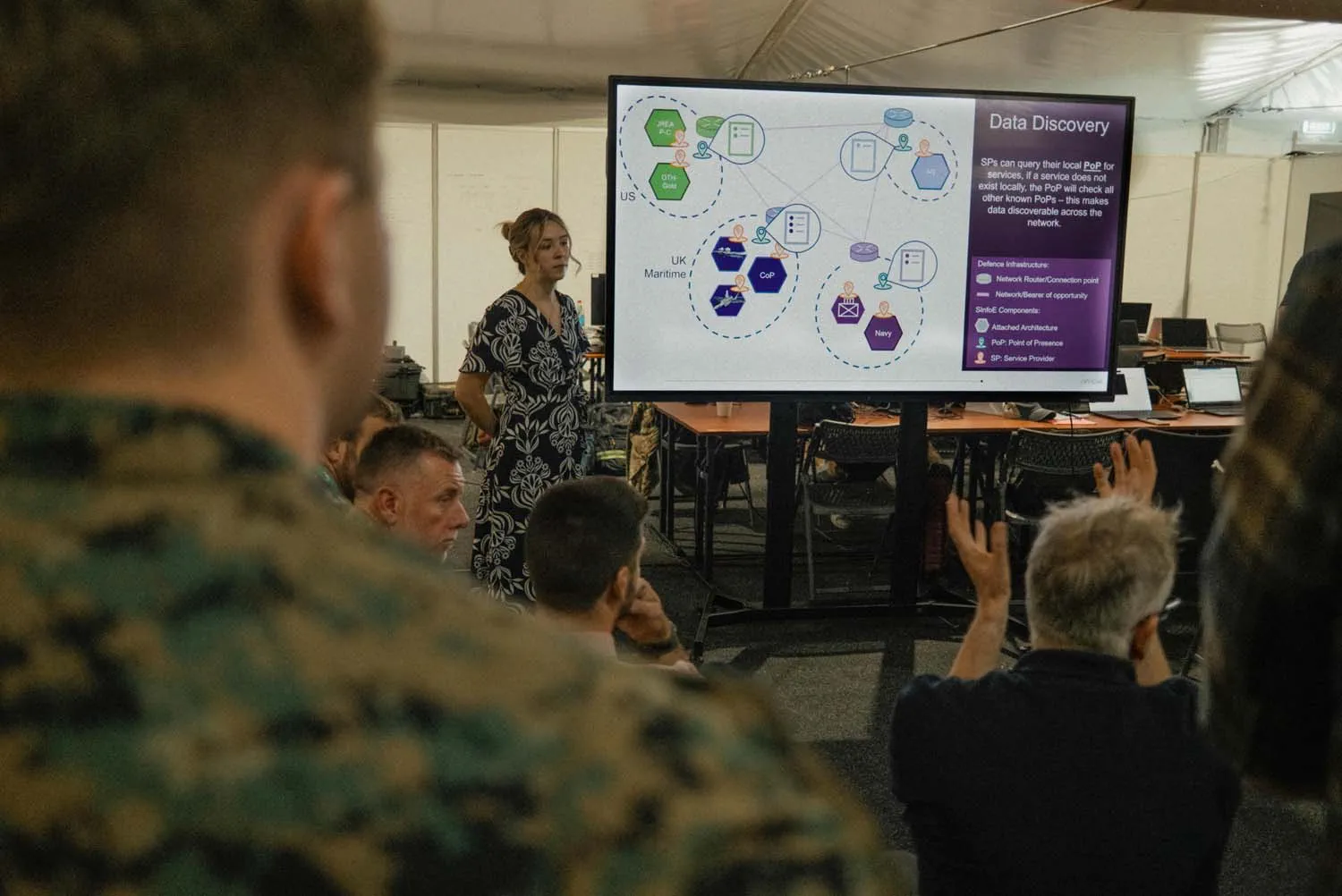
AUKUS partners are set to expand trials of uncrewed and autonomous maritime technology in 2026, building on a series of exercises held last year aimed at improving joint deterrence above, on and below the sea.
In a Royal Navy update published this week, the service said further live training scenarios will take place over the next 12 months under AUKUS Pillar II, with the focus on developing a more integrated trilateral fleet of uncrewed systems. The work is being delivered through the Maritime Big Play programme, which aims to rapidly test and integrate autonomous technologies into wider maritime forces.
The programme will concentrate on developing shared command-and-control software, establishing a common autonomous baseline across the three nations, and creating a joint test and reference environment capable of simulating real-world operational conditions.
According to the Royal Navy, the work is intended to reduce duplication between partners and improve how the UK, US and Australia operate increasingly diverse uncrewed systems at scale. Planned experimentation will support anti-submarine warfare, maritime strike missions and seabed warfare.
Captain Keith Taylor, the Royal Navy’s Maritime Big Play Senior Responsible Officer, said: “Maritime Big Play is enabling AUKUS nations to turbo charge the development of robotic and autonomous systems.”
He added: “Working tri-laterally brings together expertise from across the three nations and accelerates the readiness of these technologies to be incorporated within our forces.”
The announcement follows a busy programme of testing in 2025, with trials taking place in Australia, Poland, Portugal and the United States. During Exercise Talisman Sabre, an extra-large autonomous underwater vehicle located in the UK was remotely operated by personnel in Australia, demonstrating the ability for AUKUS nations to assume command of each other’s assets from across the world.
At the REPMUS exercise in Portugal, personnel tested command-and-control scenarios for multiple uncrewed platforms, while during the summer AUKUS partners and Japan trialled a secure communications pathway allowing an uncrewed aerial system to be launched remotely from thousands of kilometres away. Once airborne, the system collected targeting data to improve situational awareness.



There is no doubt AUKUS pillar II has been a massive success. It’s generated staff positions and jollies to Australia at a prodigious rate and led to the creation of multiple four letter acronym “programs” all designed to produce the required padding for ex officers looking for a consultancy gig in the MIC.
I think its greatest achievement thus far was someone in Australia controlling a drone in the UK.
Truly revolutionary capability in 1993 but not much of an achievement in 2025.
Australia is continuing to develop drones with Boeing just like it did before AUKUS with no UK participation.
The UK is developing a hypersonic engine with the US not involving Australia just like it did before AUKUS.
All long range weapons the UK is now developing are with European partners, the US is no longer involved and the UK appears to be removing any US input.
Hope for something tangible, but not holding breath!!!! Like Jim said, more opportunity for shed load of new acronyms.
Yes lots if jolly good money for the AI industry to produce power points.. no large reliable platforms that can travel 10,000 km loiter in the OA for a month boarding tankers, warning off gray ops and acting as a clear deterrent communicating intent and then if the ballon goes up showering the enemy with strategic effectors and closing down a choke point..
But I’m sure the Little AI boats will be good at all that so no need for actual warships and crews….
might want to look at Ghost Shark then
And ghost shark can do exactly zero of the things I have described above.
You’ve become as cynical on the toy boats as me!
Welcome 😒
Yep.. I have no issue with the use of drones as adjuncts to warships but using them to replace warships is nonsensical.
A bit like Government it seems. Crewless, or is that Clueless.