Author: George Allison

  • Britain orders hundreds of air defence missiles

    Britain orders hundreds of air defence missiles

    The Ministry of Defence has signed new contracts with Thales in the UK for hundreds more Lightweight Multirole Missiles, an order intended to rebuild stockpiles and support the air defence of British forces in the Middle East, according to the department.

    The contracts, announced on 1 June 2026, are worth a combined £36 million. According to the Ministry of Defence, deliveries will begin in the coming months and run through 2026. The most recent agreement was placed by the National Armaments Director Group in May and follows a further order for the same missile in April.

    The Lightweight Multirole Missile, known as LMM, is designed and built by Thales at its Belfast facility, where the work supports around 700 jobs. The department said the orders form part of a wider effort, run with the National Armaments Director Group, to strengthen resilience in munitions supply chains so that the UK can sustain operations alongside allies.

    The LMM is a lightweight precision-guided weapon developed for use against a range of targets including small aircraft, fast boats and, increasingly, uncrewed systems. It has been adopted across all three British services, and is fired from the Royal Navy’s Wildcat helicopters as well as from ground-based launchers.

    According to the Ministry of Defence, the missile has been used to defeat drone attacks in the Middle East, with more than 100 drones shot down using the weapon, including by RAF Regiment gunners operating the Rapid Sentry air defence system.

    Defence Secretary John Healey described the orders as the government’s industrial partnership with the defence sector in practice. “Our UK defence industry is the backbone of our Armed Forces. This is our new partnership with industry in action,” he said. “We’re getting UK-built kit into the hands of our forces faster as we support good skilled jobs and drive growth across the UK. These interceptor missiles are battle-proven – successfully used in action by our RAF sharp shooters over recent months.” He added that the missiles would help British forces keep the UK and its partners more secure in the Middle East and beyond.

    The contracts come as the UK has increased its military presence across the Middle East, with the Ministry of Defence reporting more than 1,000 personnel deployed in the region, among them fast jet squadrons and specialist counter-drone teams. British air defence assets have also operated from UK bases in Cyprus, where Wildcat helicopters carrying the missile have been used in the defence of bases and allied forces.

    The LMM was originally developed for the helicopter-launched role before being adapted for ground and naval launchers, and its growing use against drones reflects a wider shift in air defence priorities. The proliferation of cheap uncrewed aircraft has placed a premium on interceptors that can engage them at low cost relative to larger surface-to-air missiles, and the LMM sits in that category.

  • US Navy picks seven firms for drone vessel trials

    US Navy picks seven firms for drone vessel trials

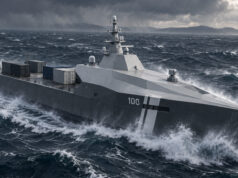
    The United States Navy has selected seven companies to take their medium unmanned surface vessel designs forward to at-sea testing, the next stage of a marketplace effort aimed at fielding autonomous warships drawn from commercial technology, according to the Department of the Navy.

    The seven firms named on 29 May 2026 are Sea Machines, Leidos, Saronic Technologies, Galliano Marine Services, PacMar Technologies, Birdon and Huntington Ingalls Industries. Each will advance to the testing phase of the Medium Unmanned Surface Vessel marketplace, part of what the Navy describes as its MUSV Family of Systems development.

    Under the arrangement, a company whose vessel completes the at-sea test will receive 15 million dollars and become eligible for follow-on production. The Navy said the testing would begin next month and should conclude by October 2026, a timeline that gives the competing designs only a few months in the water before results are assessed.

    The service framed the marketplace as a deliberate change in how it buys unmanned ships. Rather than commissioning bespoke designs through traditional channels, the approach is intended to draw on mature commercial solutions already in existence, with the aim of fielding the technology more quickly. According to the Navy, the model also opens the work to smaller and non-traditional shipyards that might not otherwise compete to build elements of the future fleet.

    The programme sits under the Portfolio Acquisition Executive for Robotics and Autonomous Systems, whose stated mission is to deliver what the Navy terms hedge capabilities, expanding naval power and operational persistence while imposing dilemmas designed to slow an adversary’s tempo and freedom of action. The “hedge” framing reflects a broader US Navy argument that large numbers of comparatively cheap, attritable unmanned platforms can complement a smaller force of expensive crewed warships, adding mass without the cost and build time of conventional hulls.

    Medium unmanned surface vessels occupy the middle of the U.S. Navy’s unmanned ship plans, larger than the small craft used for harbour and littoral tasks but well below the displacement of a frigate or destroyer. The intended roles centre on intelligence, surveillance and reconnaissance and on carrying sensors or payloads over long endurance, freeing crewed ships for tasks that require people aboard.

  • Belgium cleared to buy Joint Strike Missiles for F-35

    Belgium cleared to buy Joint Strike Missiles for F-35

    The United States has approved a possible foreign military sale to Belgium for AGM-184 Joint Strike Missiles and related equipment, a package the US State Department values at up to 236 million dollars.

    The US State Department made the determination on 18 May 2026, with the US Defense Security Cooperation Agency notifying Congress under transmittal number 26-52. According to the notification, Belgium has requested the missiles themselves along with spare and repair parts, training aids and devices, test and multi-purpose missile equipment, classified and unclassified software and support, technical publications, transportation support, and US government and contractor engineering, technical and logistics services.

    The AGM-184 is the US designation for the Joint Strike Missile, a long-range, low-observable precision weapon developed by Norway’s Kongsberg. Designed for both anti-ship and land-attack roles, the missile is notable for being sized to fit inside the internal weapons bay of the F-35A, allowing the aircraft to carry it without compromising the stealth shaping that external stores would degrade.

    Its combination of low radar signature, a sea-skimming and terrain-following flight profile and a range of several hundred kilometres is intended to let a launching aircraft engage targets from well outside the reach of many shorter-range defences.

    Two principal contractors were named: Kongsberg Defence and Aerospace of Kongsberg, Norway, which builds the missile, and RTX Corporation of Arlington, Virginia.

  • MoD sets out forces compensation claim waiting times

    MoD sets out forces compensation claim waiting times

    The Ministry of Defence has set out how long it takes on average to process claims under the War Pension Scheme and the Armed Forces Compensation Scheme, in a written parliamentary answer published on 28 May 2026.

    The figures were given by Parliamentary Under-Secretary of State for Defence Louise Sandher-Jones in response to a written question from Stuart Anderson, the Conservative MP for South Shropshire, who asked how long applications take to complete under each scheme. The minister pointed to the department’s annual statistics, published on GOV.UK, and supplied clearance times for the 2024-25 financial year. Clearance time is measured as the number of working days between the MoD receiving a claim and the decision being finalised and notified, so the elapsed calendar time is longer once weekends and public holidays are counted.

    Under the War Pension Scheme, first claims took a median of 200 working days and a mean of 198 in 2024-25, according to the department. Second and subsequent claims ran to a median of 194 working days against a mean of 200. Claims from widows and widowers were settled considerably faster, at a median of 59 working days and a mean of 61. Appeals showed the widest gap between the two measures, with a median of 156 working days but a mean of 255, indicating that a smaller number of protracted cases pulled the average well above the midpoint.

    The Armed Forces Compensation Scheme figures followed a similar pattern. Injury and illness claims took a median of 122 working days and a mean of 152, while survivors’ claims ran longer at a median of 178 and a mean of 235. Reconsiderations were completed in a median of 118 working days against a mean of 122. Appeals again stood out as the slowest category, at a median of 315 working days and a mean of 416, the longest processing time in either scheme.

    The two schemes cover different periods of service. The War Pension Scheme deals with injury, illness or death attributable to service before 6 April 2005, while the Armed Forces Compensation Scheme applies to service on or after that date, and both operate on a no-fault basis administered by the MoD on behalf of veterans and their families. Because the older War Pension Scheme is closed to new periods of service, its caseload increasingly reflects long-standing conditions and bereavement claims rather than recent injuries.

    The minister said updated figures for 2025-26 are due to follow. War Pension Scheme statistics for that year are scheduled for publication on 2 July 2026, while the corresponding Armed Forces Compensation Scheme data is currently expected in autumn 2026, both on GOV.UK.

  • Russian subs threaten North Sea cabling, MSP warns

    Russian subs threaten North Sea cabling, MSP warns

    The security of North Sea energy infrastructure and the defence costs of any constitutional change were raised on the floor of the Scottish Parliament during a debate on Scotland’s energy on 28 May 2026.

    The points came from Scottish Labour MSP Michael Marra during a debate held on a Scottish Government motion in the name of Stephen Gethins, the Minister for Europe, External Affairs and Energy, titled “It’s Scotland’s energy.”

    While the debate centred on where energy decisions should be made and on the make-up of the country’s generation mix, Marra used part of his contribution to link energy security directly to defence of the assets that underpin it.

    Marra argued that subsea infrastructure in the North Sea must be treated as a defence priority. “We know that our North Sea assets, in which Russian submarines have threatened cabling in recent weeks, must be a defence priority,” he told the chamber. He set that threat against the constitutional question running through the debate, arguing that “the extraction of Scotland from the UK defence capacity would require those further costs to be met at a time when investment must increase rather than decrease.”

    The exchange grew sharper when Gethins intervened with a single-word challenge, asking “Why?” after Marra said he found it difficult to follow ministerial arguments about security of supply that placed it inside Europe but outside the United Kingdom. Marra answered by pointing to the North Sea assets and the threat to cabling as the reason, talking about the protection of that infrastructure as bound up with the wider defence relationship across the United Kingdom.

    A series of incidents involving subsea cables in European waters over the past two years has prompted the UK and allied navies to step up patrols and surveillance around critical seabed infrastructure, and the North Sea, dense with energy links and interconnectors, sits at the centre of that.

  • Number of UK airports hit by aviation fuel supply issue

    Number of UK airports hit by aviation fuel supply issue

    Glasgow and Edinburgh airports were affected by a jet fuel supply issue over the weekend that led some flights to divert for refuelling, the UK Defence Journal understands.

    The problem emerged on the evening of 31 May 2026, with both airports reporting that a supplier was working to resolve an issue affecting several airline customers. TUI services leaving Glasgow were routed through Prestwick to refuel, while some Edinburgh departures bound for Paris and Dubai stopped at Manchester to take on fuel.

    Several airlines also loaded additional fuel at their outbound airports before positioning aircraft to Scotland for overnight stays. An overnight delivery was made, and affected airlines resumed departures from both airports the following morning.

    Neither Glasgow nor Edinburgh is connected to the Exolum pipeline, which supplies Heathrow, Gatwick, Stansted and Manchester, as well as a number of Royal Air Force stations. Jet fuel for the two Scottish airports is instead brought in by road.

    A spokesperson for Glasgow Airport said:

    “A short‑term staffing issue has affected one of the fuel suppliers used by airlines at the airport, with work underway to return stock levels to normal. There have been no related flight cancellations, and the airport remains fully operational.”


  • UK surveillance aircraft flies Baltic surveillance mission

    UK surveillance aircraft flies Baltic surveillance mission

    A Royal Air Force RC-135W Rivet Joint carried out a signals intelligence mission over the Baltic region on 27 May 2026, flying from its home station at RAF Waddington and topping up from a United States Air Force tanker before heading east.

    The aircraft, registration ZZ666 and using the callsign RRR7227, was tracked on publicly available flight-monitoring data departing Waddington and routing across the North Sea toward the Low Countries before continuing on toward the Baltic. Before pushing east, the Rivet Joint took on fuel from a USAF KC-135 Stratotanker in an air-to-air refuelling area off eastern England.

    Tracking placed the aircraft over the Baltic at around 14:00 UTC, holding at roughly 36,000 feet as it worked an area that runs up toward the Baltic states and the approaches to Russian territory around Kaliningrad and St Petersburg.

    The RC-135W is the RAF’s premier signals intelligence platform, a heavily modified Boeing fitted with sensors that detect, identify and geolocate emissions across the electromagnetic spectrum. The aircraft intercepts communications and radar signals and passes the resulting intelligence to commanders and allied partners. According to the Royal Air Force, the type is a dedicated electronic surveillance aircraft that can be employed in all theatres on strategic and tactical missions, with sensors that, in the service’s words, “soak up” electronic emissions from communications, radar and other systems.

    Flights of this kind have become a regular feature of NATO’s posture along its eastern and northern frontiers since Russia’s full-scale invasion of Ukraine in February 2022. The missions are deliberately conducted in international airspace and are routinely visible on civilian tracking sites, a transparency that serves both an intelligence and a signalling purpose.

    The Baltic in particular has drawn sustained allied attention, bordered as it is by NATO members and by Russian territory at Kaliningrad, and crossed by undersea cables and pipelines that have featured in recent security concerns.

    The RAF operates three Rivet Joint aircraft, all flown by 51 Squadron from RAF Waddington in Lincolnshire, having acquired the fleet from the United States under the Airseeker programme to replace the retired Nimrod R1. The type entered British service in 2014 and reached a decade of operations in 2024. It is run as a joint UK–US enterprise, with the two air forces collaborating on training, maintenance, test and evaluation, and the exchange of intelligence, an arrangement that lets the small British fleet draw on data gathered by the much larger American RC-135 force.

  • British built Banshee drones fly as targets at Balikatan

    British built Banshee drones fly as targets at Balikatan

    Jet-driven aerial target drones flew as simulated adversaries during the live-fire integrated air and missile defence serial at Balikatan 2026, giving US and Philippine air defence teams moving targets to track and engage.

    The event took place at Naval Station Leovigildo Gantioqui in Zambales, Philippines, on 28 April 2026. According to US Indo-Pacific Command, its J7 Pacific Multi-Domain Training and Experimentation Capability, known as PMTEC, supplied remotely piloted aerial drones to represent adversary aircraft or cruise missiles, providing live targets for the combined force to detect and engage. The command said the use of the drones improves technical proficiency and builds collaboration between the two nations’ air defenders.

    Qinetiq has supplied Banshee targets to operators in more than 40 countries, and the US Army’s Threat Systems Management Office fields a tailored variant designated the MQM-185B, integrated with its Army Ground Aerial Target Control System.

    QinetiQ markets the Banshee as a means of replicating the kinds of threats air defence units expect to face. According to the company, the twin-jet Banshee Jet 80+ reaches airspeeds of around 200 metres per second, can operate up to 30,000 feet, and is able to fly low-level sea-skimming and terrain-following profiles to emulate cruise missiles and fast jets. The wider Banshee line spans the propeller-driven Whirlwind and the Jet 40+ and Jet 80+ variants, each able to carry a range of payloads for maritime, air-to-air and land-to-air training.

    Demand for such targets has grown as Western forces seek to rehearse against the threats now seen in active theatres. QinetiQ has said recent Banshee use includes generating drone-swarm scenarios that mirror attacks observed in Ukraine and the Red Sea, and in 2025 the company marked the production of its 10,000th Banshee airframe.

    Balikatan is a long-running annual exercise between the Armed Forces of the Philippines and the US military. US Indo-Pacific Command describes the drill as a demonstration of the alliance between the two countries and of a combined force intended to support regional security, with the 2026 edition again drawing the two militaries together across multiple domains.

  • BAE, PGZ win UK-Poland award for 155mm ammo work

    BAE, PGZ win UK-Poland award for 155mm ammo work

    The British Embassy in Warsaw and the British Polish Chamber of Commerce have jointly named Polish Armaments Group (PGZ) and BAE Systems as recipients of the “British-Polish Collaboration Award,” recognising the two companies for an industrial partnership delivering outcomes for Polish national and European security, according to the company.

    The award, launched in 2025, is intended to mark contributions to the trade and investment relationship between the two countries, with winners chosen by a jury drawn from senior figures at the Embassy and the BPCC. PGZ and BAE Systems were honoured specifically for their work on the production of 155mm artillery ammunition, an effort that combines British technical input with Polish manufacturing to expand domestic output in Poland.

    The recognition follows a defence partnership agreement signed by Poland and the United Kingdom in London earlier in the week, deepening ties that have grown steadily as both governments have prioritised closer security cooperation across Europe.

    Dame Melinda Simmons DCMG, His Majesty’s Ambassador to the Republic of Poland, said “The economic partnership between the United Kingdom and Poland is stronger today than ever before. The second edition of the UK–Poland Business Awards demonstrates how dynamically and on multiple fronts our cooperation is developing — from growing direct investment and trade to joint initiatives in energy transition, new technologies, and security. The recipients of these awards perfectly illustrate the ambition and potential of our cooperation.”

    The 155mm round has become one of the most sought-after munitions in Europe since the start of Russia’s full-scale invasion of Ukraine in 2022, with allied states moving to rebuild stockpiles and lift production rates that had fallen during decades of lower demand. Poland, which shares a border with both Ukraine and the Russian exclave of Kaliningrad, has undertaken one of the largest military expansions on the continent over the same period.

    Miroslaw Janicki, Director of BAE Systems Poland, said “We are honoured to be recognised in such a positive way alongside our friends at PGZ. As Poland’s proven defence partner, BAE Systems remains dedicated to the mission of helping to ensure national security through the provision of 155mm artillery ammunition in great quantities and high quality to meet our nation’s objectives.”

    The two firms entered into a strategic partnership in September 2025 to build a new 155mm artillery ammunition manufacturing facility in Poland. According to the company, that arrangement also opens the door to wider collaboration on a broader range of munitions and components, alongside the manufacture of energetics, supported by knowledge and technology transfer between the partners.

    Adam Leszkiewicz, President of the Management Board of PGZ S.A., framed the arrangement as a two-way exchange. He said “We are delighted that the British Embassy and the BPCC appreciate the collaboration between Polska Grupa Zbrojeniowa and BAE Systems, as evidenced by today’s award. This is an example of collaboration with a foreign partner – on the one hand, we are benefiting from BAE Systems’ vast experience and know-how, and on the other, we are opening a path to the British market, where we can introduce our explosives production technologies. I am confident that this collaboration will continue to develop in a direction beneficial to both sides and, above all, the Polish Armed Forces and the Polish defence industry.”

  • RAF lead NATO sub-hunting drill in High North

    RAF lead NATO sub-hunting drill in High North

    The Royal Air Force Poseidon P-8A force, based at RAF Lossiemouth, took a leading role in Exercise Dynamic Mongoose 2026, providing the UK’s air power contribution to one of NATO’s principal anti-submarine warfare exercises, according to the RAF.

    Running from 18 to 29 May, the exercise was directed by NATO Maritime Command and drew together surface ships, submarines and aircraft from the UK, Norway, the Netherlands, Portugal, Germany and Denmark across the North Sea and the High North. According to the RAF, the aim was to sharpen the alliance’s ability to find and defeat underwater threats in waters off Norway and Iceland, a region the service describes as strategically vital to both NATO security and wider global stability given the critical shipping lanes and undersea infrastructure that run through it.

    Crews flew sorties in which the Poseidon acted as both hunter and hunted, working through scenarios intended to mirror the pressures of real operations. Anti-submarine warfare is among the most demanding tasks in modern air operations, and one P-8 aircrew member, quoted anonymously in the release, captured the difficulty of the work. “It’s like trying to find a needle in a haystack,” the crew member said. “Do it alone and it’s incredibly difficult; but together, sharing small pieces of intelligence, you build the bigger picture of what’s happening below the surface.”

    To carry out that tracking, RAF P-8 crews used detection tools including sonobuoys and Electronic Signal Underwater Sound devices to simulate engagements against submarines. The RAF said each sortie offered live training in tactical flying, tracking and communications under pressure, producing what it characterised as a force better prepared for operations where coordination and speed of decision-making matter most.

    The exercise also drew on closer ties between the UK and Germany. A German Navy P-8A Poseidon detachment operated from RAF Lossiemouth during the period, an arrangement the RAF linked to the Trinity House Agreement signed by the two countries in November 2024. A Bundeswehr representative, quoted in the release, said the deployment was valuable for building interoperability.

    “This deployment offered an outstanding opportunity to conduct intensive maritime operations alongside allies and strengthen interoperability,” the representative said. “In today’s challenging security environment, unity, trust and cooperation among P-8A nations are essential for credible defence.” The representative added that the support provided at RAF Lossiemouth reflected the spirit of the agreement and contributed to the exercise’s success.

    Dynamic Mongoose is held annually in northern European waters and rotates through host nations and operating areas, bringing allied maritime patrol aircraft, frigates and submarines together to practise tracking and prosecuting subsurface contacts. For the RAF, the message from this year’s iteration was that integration, interoperability and shared intelligence offer decisive advantages in the contest beneath the surface.