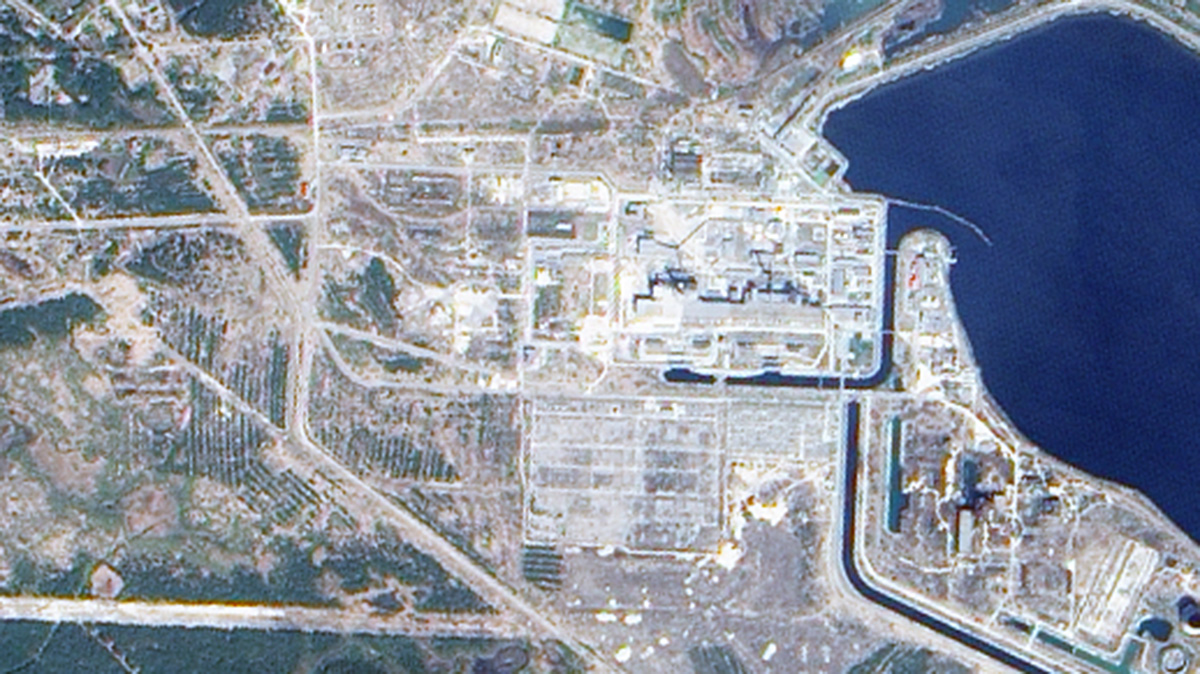
Britain is putting £17 million towards repairing the protective shelter over the Chornobyl nuclear power plant, which was punctured by a Russian drone strike last year, according to the government.
The money forms part of an international programme coordinated by the European Bank for Reconstruction and Development alongside the Ukrainian government and G7 donors, and will pay for work to restore the structure’s confinement and ventilation functions and protect its intended lifespan. Corrosion threatens to undermine decades of international investment and create longer term environmental and safety risks if the damage is left.
John Healey, the Chancellor of the Exchequer, said: “As the full-scale invasion of Ukraine by Putin continues, our commitment to the Ukrainian people is unshakeable. We are curtailing the war chest funding Putin so desperately wants and backing the reconstruction of Ukraine that has suffered at the hands of his barbaric attacks.”
Ed Miliband, the Foreign Secretary, said: “Our message to Putin is clear, we stand shoulder to shoulder with Ukraine and will do so until they prevail. Working with our allies, we are strengthening Ukraine’s security, raising the cost of Russia’s aggression and working towards a just and lasting peace.”
The structure in question is the New Safe Confinement, the arch built over the remains of reactor four and the Soviet-era sarcophagus around it, which was slid into position in 2016 and handed over in 2019 after an international effort costing around €1.5 billion. It was designed to hold for a century while the reactor underneath is dismantled, and its outer skin and ventilation system are what keep moisture out of the space where that work has to happen. A drone strike that breaches it turns a sealed structure into one that corrodes.
Attacks on Ukrainian energy infrastructure have continued through the autumn at a heavy rate. Between 5 and 11 October Russia carried out more than two hundred strikes on electricity infrastructure and a further seventeen on oil and gas facilities, six of them after President Trump announced an energy ceasefire on Sunday. On 13 October Russia fired thirty-nine ballistic missiles at Ukraine in one of the largest such attacks of the war, much of it aimed at energy targets, leaving six hundred thousand civilians without power.
Britain has been involved in nuclear safety at the site for years. It was a founding donor to the International Chornobyl Cooperation Account in 2020, when that account took over responsibility for safety in the exclusion zone, and has given €8 million to it, making it the third largest individual donor behind Norway and France.
The Foreign Secretary visited Kyiv last week for the first time since taking office and announced £54 million of winter support, including £20 million in energy funding. The Prime Minister hosted President Zelensky in Downing Street on Wednesday, where he set out a further package of Lightweight Multirole Missiles built by Thales in Belfast.