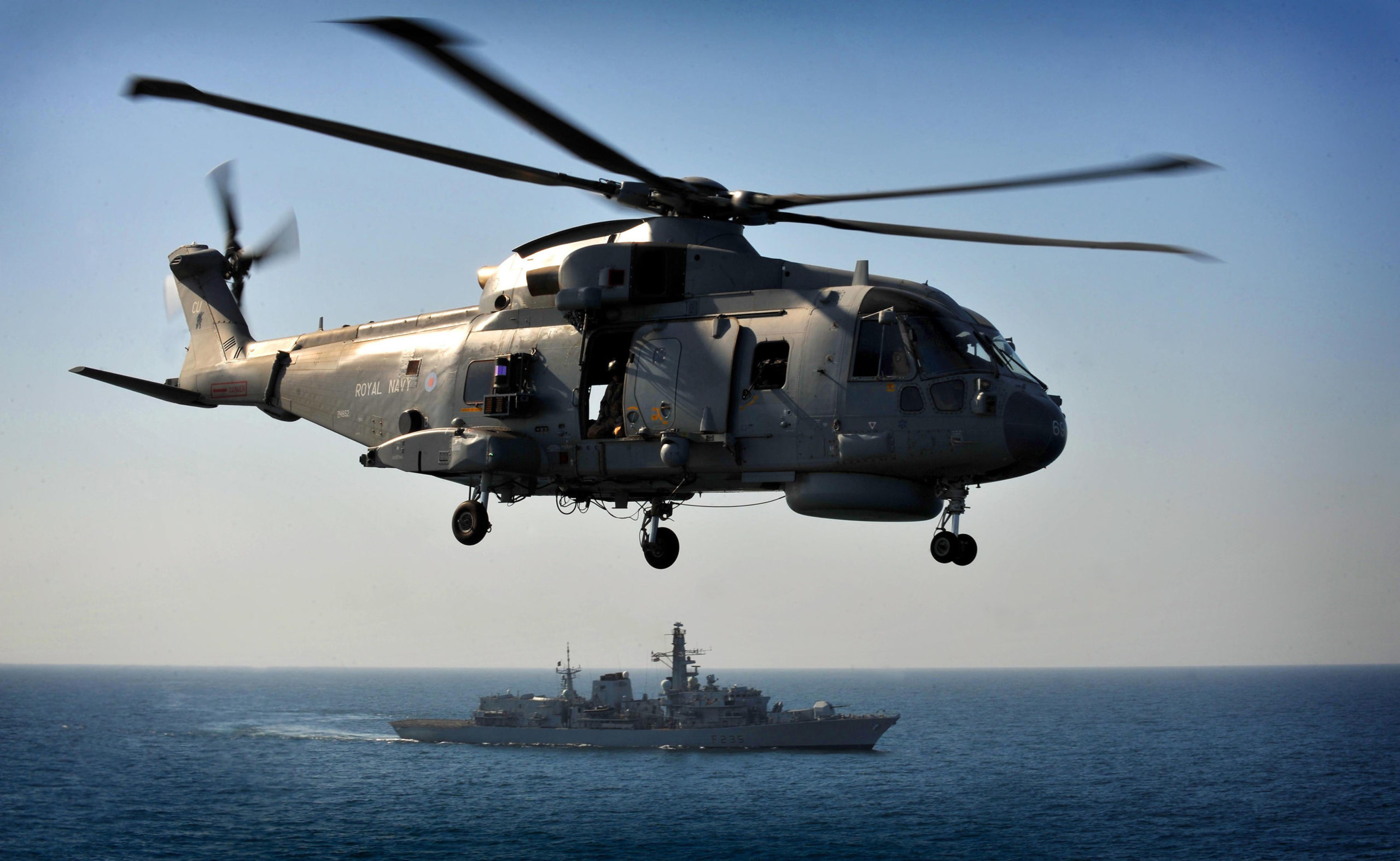
The firms that designed and upgraded the Royal Navy’s Merlin helicopters are lined up for a £233 million single-source contract, to be signed no earlier than June 2027, to make the modifications that will keep the fleet in service to 2040, according to a transparency notice.
The contract covers the demonstration and manufacture phase of the Merlin Out of Service Date Extension Programme, known as OSDEP.
The programme exists because the Merlin fleet was due to retire around the end of the decade, with the Mk2 planned to go in 2029, and the Ministry of Defence wants it to keep flying to 2040. Earlier phases studied what modifications the aircraft need to stay safe and supportable, and this phase pays for those modifications to be proven and then produced.
The transparency notice, published on Thursday, signals the department’s intention to award the contract directly. Nothing has been signed. Work would run from June 2027 to March 2035, and options could extend it to March 2040. Including VAT, the contract is worth £279.5 million.
The notice records the supplier as “not yet selected”, but its justification for skipping competition names Lockheed Martin UK as the Merlin Mk2 Design Authority. It states: “Assessment Phase activity included a review of whether the OSDEP requirement could be delivered through competition or required a single source approach. This concluded that Lockheed Martin UK Ltd (LM) hold the exclusive technical know-how, engineering expertise and manufacturing capability necessary to deliver the required modifications. LM are the recognised Design Authority for the Merlin Mk2 platform and is responsible for certification and continued airworthiness.”
It adds: “Any attempt to introduce an alternative supplier would require replication or transfer of Design Authority capability and associated certification frameworks. This would result in disproportionate cost, delay, and unacceptable technical and safety risk.”
Leonardo appears alongside Lockheed Martin in the paperwork, and a separate pipeline notice published the same day, under the same reference and value, described the requirement as “OSDEP DEMONSTRATION AND MANUFACTURE Leonardo UK”, and the final notices carry the title “D&M LH”, which appears to stand for Leonardo Helicopters. The Yeovil firm builds the Merlin airframe, while Lockheed Martin UK led the mission system upgrade that turned the Mk1 into the Mk2, and the paperwork suggests the two will share the work.
Both companies worked on the earlier stages, and in August 2024 the department awarded Lockheed Martin UK and Leonardo Helicopters UK a £1 million contract for the OSDEP assessment phase, which examined the technical upgrades and structural modifications needed to keep the fleet flying to 2040, as we reported at the time. That followed a concept stage in which the two firms identified and mitigated obsolescence issues in both the Mk2 and the Commando Mk4/4a.
In March 2025, Maria Eagle, then a defence minister, told Parliament the programme was on track. She said: “The Outline Business Case was approved in October 2023,” adding: “A Review Note was approved in December 2024.” The Full Business Case was forecast for early 2027, which fits the signing date now given. The programme was progressing towards a 2040 retirement.
The Merlin Mk2 entered service in 2014 as an upgrade of the 1990s Mk1 and is the Royal Navy’s main anti-submarine helicopter, flying from RNAS Culdrose and deploying aboard frigates and carriers. It carries Sting Ray torpedoes. It also carries the Crowsnest airborne surveillance system for the carrier strike group, whose delay affected Carrier Strike capabilities.
The Commando Merlin Mk4/4a, flown by the Commando Helicopter Force at RNAS Yeovilton, was planned to retire in 2030 and was covered by the earlier OSDEP work, though the direct award justification refers only to the Mk2 platform.
Our explainer sets out when the Royal Navy’s Merlins were due to retire, and Britain and Norway have since signed a naval helicopter pact.