

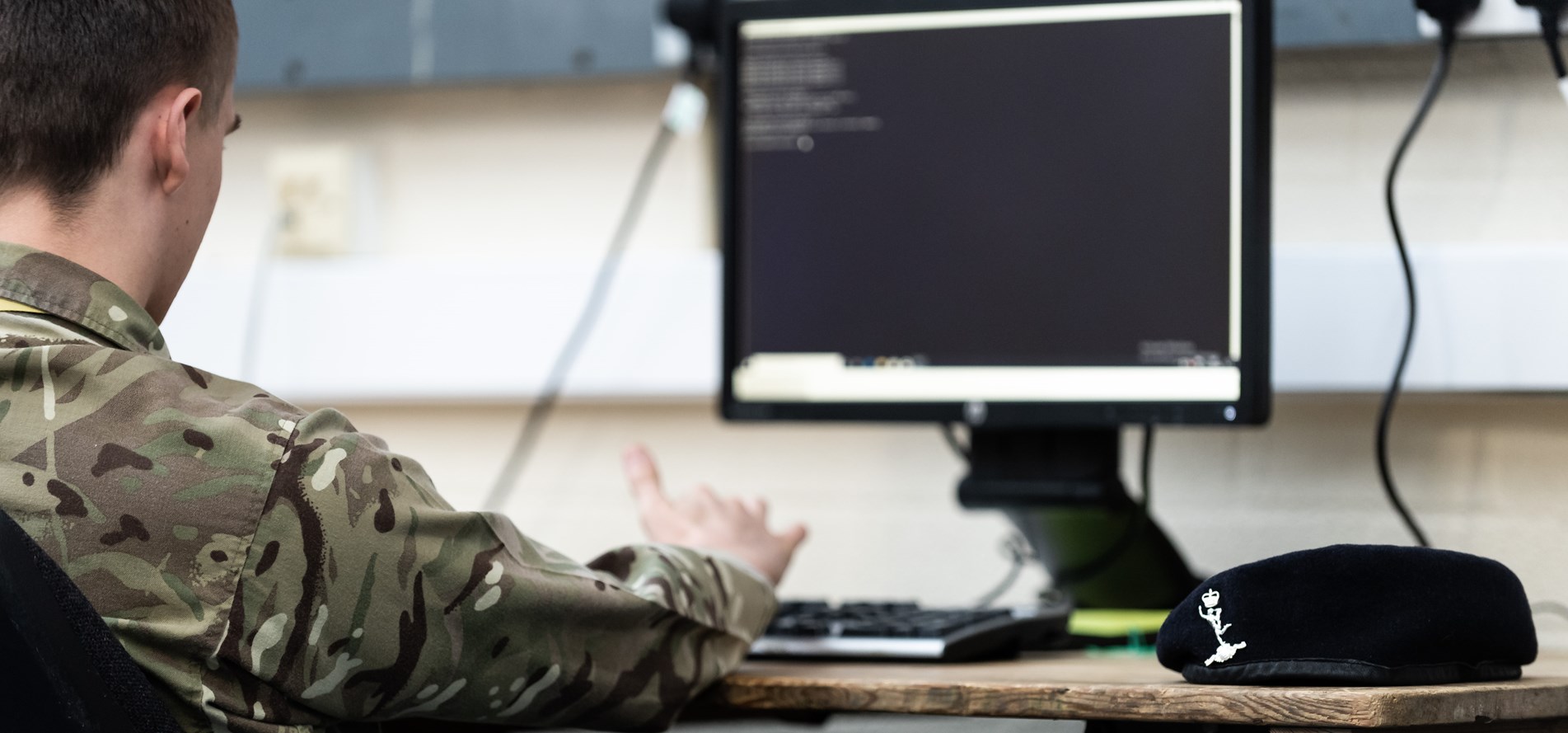
A Labour MP has pressed his own government to speak to the public on the true scale of Russian hostile activity in Britain, with Graeme Downie saying the UK is already in conflict with Moscow even if ministers won’t say so themselves.
The Dunfermline and Dollar MP tweeted about his concern on the matter after a New York Times investigation found Russian-linked hackers were behind the ransomware attack that crippled Jaguar Land Rover last year, and says he’s been raising it for months, including in the Commons just last week, in the hope of getting more made public. In his words:
“For months, I have called for the UK government to make more information about this attack public, including in the Chamber just last week, so the British people can see we are already in a conflict with Russia.”
The Times investigation, citing people close to the case, says the FBI, the National Crime Agency, the National Cyber Security Centre, Microsoft and Google’s Mandiant unit all worked on it, and that their conclusion is the breach traces back to a Russian-linked group, though what’s still unclear is whether the hackers were acting on direct Kremlin orders, on their own, or with the state simply looking the other way. Microsoft reportedly flagged the suspected group to JLR within days of the attack.
The numbers are big: around 800 of JLR’s computer systems went down, production stopped for more than five weeks across plants in the UK, India, Brazil and Slovakia, and a 200,000-strong supply chain was left hanging, with the damage to the British economy put at up to £1.9 billion and the government ending up stepping in with a £1.5 billion support package to keep the carmaker afloat.
None of this is entirely new, since the Telegraph was already reporting Russian involvement as an “active line of enquiry” back in October, after no ransom note ever showed up, which investigators took as a sign this wasn’t standard criminal ransomware, while a government spokesperson at the time wouldn’t be drawn beyond saying the UK “will continue” calling out malicious cyber activity where the evidence holds up.
Downie didn’t stop at the hack, and in a follow-up post talked about cyberattacks, poisonings, damage to subsea cables, and a foiled arson plot against the Prime Minister’s car as all part of the same picture. He wrote:
“Cyber attacks, poisonings, subsea cables, a planned arson attack on the Prime Minister’s car. This is not ‘sub threshold’ or ‘grey’ activity. These Russian attacks directly impact ordinary British people every day. We should tell them that and protect them.”
The arson reference is to Roman Lavrynovych and Stanislav Carpiuc, convicted earlier this month over a string of arson attacks on properties and a car linked to Sir Keir Starmer, with reporting since suggesting the pair were directed by a Russian-speaking handler over Telegram as part of a wider Moscow-run sabotage and disinformation campaign, though UK authorities haven’t gone that far in court and formal attribution to the Russian state hasn’t happened.
Former defence secretary Ben Wallace has called the arson campaign a “deliberate and definite escalation against the British state,” one that in his view would have needed sign-off from somewhere near the top in Moscow.
Ministers still won’t use the word conflict, but add it up, a £1.9 billion hit to one of Britain’s biggest carmakers, two convictions over an arson plot against the PM’s own car, and questions still hanging over subsea cable damage, and Downie isn’t the only one at Westminster wondering why the government keeps reaching for “grey” instead.








Russia have always been hacking the UK, I watch it every day.
They use Brazil and other countries that have weak cyber security problems as the attacking nodes. All the UK needs to do is learn to secure their systems better, sadly there seems to be a lack of that ability here
Strangely, it won’t improve the DIP one iota. Only a physical attack on British soil or dependency will turn the ship of state around.
I hear the DIP will be published on Tuesday and has been ‘upped’ by a further £1bn.
Hello Graham, good to hear about Tuesday. I do believe the new PM will have to make tough decisions to enable the UK’s defences to be improved and won’t have the luxury of batting it to the back of the room like so many PMs before him. Luckily, the poor state of UK defence is now becoming an international subject spurred on by Trump and his gang, and this can only be a good thing. I do believe both Starmer and Reves didn’t have the experience to keep the anti-defence lobby within the Treasury at bay and rolled instead of standing firm; we will never know.
OK…. So what will we do… Nothing… Maybe paint a merchant ship Grey and tell putin it’s a warship…. Ffs wake up Britain.
I’d hardly call our special forces deployment to Ukraine as “nothing” 🤷🏻♂️
Let us be clear – Starmer is expected to announce next week a Defence Investment Plan with CUTS of £14-15bn compared to the UK Defence Equipment Plan 2023 – and will try to pass this off as actually being a major increase. Congratulations on Healey for refusing to toe the line, it’s worth repeating a key sentence in his resignation letter: “I am being forced to make decisions that would reduce the readiness of our forces and increase the risk to personnel on operations, and could make the country less safe”. He also stated that upon examination, £3.5bn of the budget that he was offered proved to be just Treasury “smoke and mirrors”; a reallocation of existing expenditure by other departments to the MOD cost centre in order to inflate the supposed defence budget without actually adding a penny.
Why can’t UK/MOD launch a retaliatory attack against Russia as a warning. Surely we must possess the cyber warfare capabilities to do so?
I believe we do, yes.
Im certain we have done in the past
Ummm … nominate this article as the most unsurprising news account suring this decade of 21st century. Mad Vlad endured the perceived humiliation of the USSR’s bloodless loss to ENATO in CW I, followed by years of relative irrelevance of the RU role in global geopolitics. Finally, when a pathway of recreating the RU empire by subjugating the UKR is executed, the damned Brits opposed this action. In addition, after incurring ~1.5Mn casualties (including ~500K KIA) in UKR, Mad Vlad is probably motivated by payback/revenge toward multiple ENATO powers. Meanwhile, in the UK, it has been politically convenient to ignore RU provocations in order to minimize the prospect of defence spending competing w/ an expanding welfare state. Future UK defence/political course will be under constant negotiation and review.
… during…🙄
👍
I am sure there are people in this country (including this site) who would love for us to be at war with Russia but frankly we have more immediate threats to worry about than the overhyped threat of the Kremlin
They launch cyber attacks at us then do the same back, enough with the war talk
Its called “The Great Game”, a historical thing. Only the great bit in Britain is not a factor anymore. Too busy importing the flotsam, paying for it to sit on its arse until its triggered. Run down defence but make lots of noise about being on a war footing….
Said it before, only when the lights go off after a massive attack on infrastructure will Joe Public and the political idiots wake up.
Then being a balanced kind of person, I could point out that by waging proxy war against The Bear does have consequences. A fact that seems to be lost on most.
👍
Our military interdiction on 14 June – where 42 Commando and the National Crime Agency boarded and detained the Cameroon-flagged vessel Smyrtos – was designed to act as a major deterrent. While ship-tracking intelligence reveals it had a significant immediate impact, Russian tankers are continuing to test the UK’s resolve.
Within 80 minutes of the Royal Marines boarding the Smyrtos, at least six sanctioned Russian tankers aborted their journeys, performing sharp U-turns back toward Scandinavia or diverting widely around Ireland.
Despite that initial panic, maritime intelligence tracking (via “The Insider”) confirms that at least 11 tankers tied to Russia’s shadow fleet have safely transited through the English Channel since the raid. While the UK and allies like France – which recently seized a fourth shadow tanker – are stepping up enforcement, the sheer volume of Russia’s 700-ship shadow fleet means dozens of vessels are still attempting to route around Western bans
High-profile vessels like the Russian-flagged crude carrier Progress have openly sailed straight through the Channel to see if British forces would launch another high-risk boarding operation. Three additional shadow fleet tankers are currently tracked heading toward the Channel. The only thing Russians respect is strength. We should seize another Russian ship to reinforce respect for our resolve. Anyway, the extra crude would be appreciated at Grangemouth.
IT security is a big problem for the UK on all fronts.
Yes Russia, Iran, China are clear security problems.
The less spoken off problem is the volatile moods of the US President and UK/EU relations with the USA. We depend too much on US based companies for our IT for comfort and EU/UK security and economic long term stability.
The EU has started to do something, with France especially setting the pace. We need a EU/UK answer to Windows etc and AI quickly.
Thankfully Open Source is global and not controlled by any country or company
It’s a handbag war. It’s been going on ever since I can remember, and I am 60.
It’s as much About actually getting the population to accept reality.
At present I’m seeing so many views that are essentially anti UK in our population, there is so much anti UK social media that many people believe:
1) Russia is just defending itself from Ukrainian fascists, EU expansionist technocrats and really wants to be our friend if we just stopped be such a NATO member.
2) The threat of Russia is being made up by our political classes to keep us in line.. this comes from both the far right who promulgate a belief that the socialist are using it as cover and the far left who think the same sort of thing.
3) the existential enemy is actually people crossing the channel in dinghy’s not Russian SSN or grey warfare
4) Russia is so overwhelming that we would not have a chance and should give up and play nice.
There are a surprising number of people who seem to believe dialogues that come out of Russia, especially when the are re enforced by the US administration.
well ukraine is choc a bloc with neo-nazi’s, (and gangsters), it’s a fact zelensky has just had to duck a meeting on post-conflict ukraine, held in gdansk, because of the anti-ukraine feeling being generated in poland by his honouring a brigade responsible for polish massacres at the end of WW2, apparently they were so bad even the germans were disgusted !
it’s taken him the best part of 5 years to understand what we’ve done !!!!!!!