

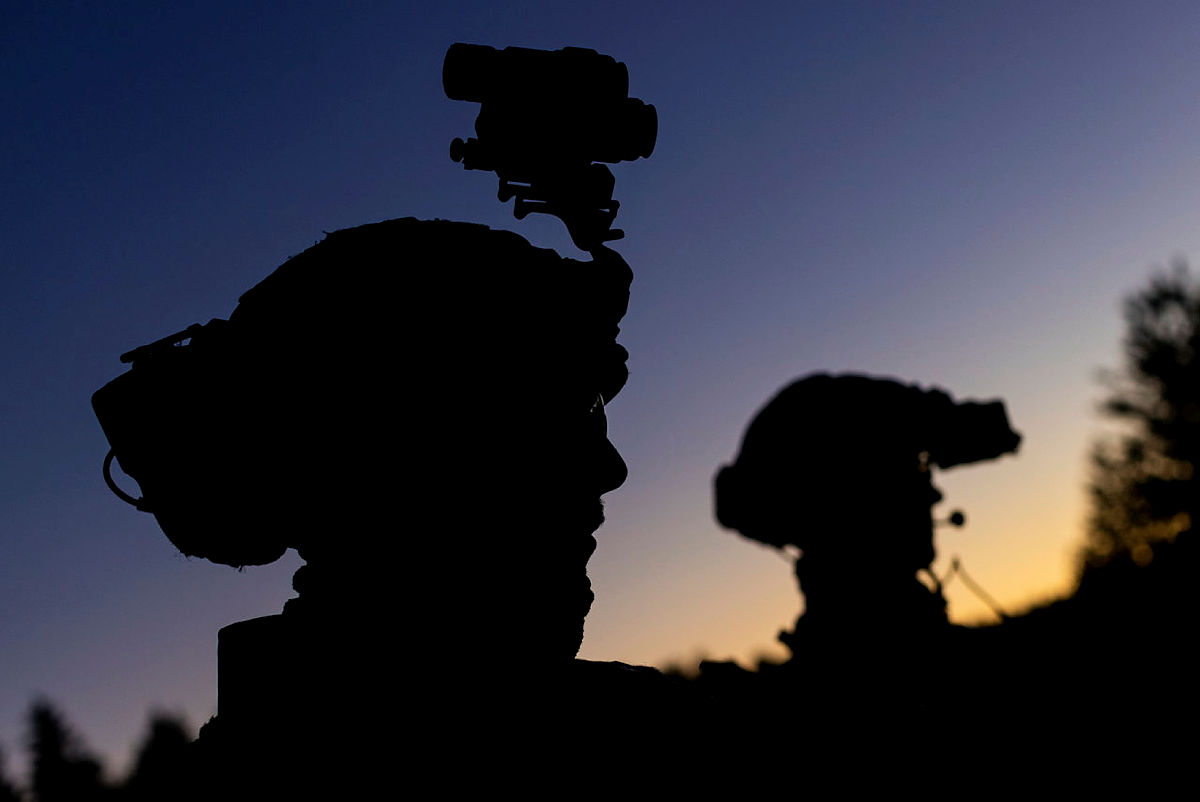
The Defence Investment Plan gives the UK’s Special Forces a 12 percent funding uplift over four years and equips its high-readiness troops, 16 Air Assault Brigade and the Commando Force, with new communications, drones and night-vision kit.
The plan described the Special Forces as the “tip of the spear” for defence, integrated by design and able to reach the most demanding targets across every domain, both discreetly and covertly, and said the uplift would keep them equipped, maintained and held at readiness with the highest-end capabilities, able to act at speed, deter and outmanoeuvre peer adversaries, protect British interests, recover citizens from abroad and support the civil authorities at home.
It added that further investment in the Special Forces and related capabilities is planned between 2030 and 2035 to extend their global reach and awareness.
“The SDR identified that the UK’s Special Forces act as the ‘tip of the spear’ for Defence: integrated by design and able to reach strategically significant targets in the most challenging places, operating in all domains, both discreetly and covertly. Defence will continue to enhance the Special Forces, ensuring UK sovereign choice by maintaining this strategic capability at the very highest level. The UK’s Special Forces will receive a 12% uplift over the next four years. This investment will ensure they have the highest-end capabilities, are maintained, equipped and held at readiness to act decisively and at speed, preserve sovereign choice, deter and outmanoeuvre peer adversaries, protect UK interests, recover citizens abroad and support civil authorities.
To continue conducting these types of operations, it is important that the security of UK Special Forces personnel, equipment, tactics, techniques and procedures is maintained. There are therefore strict rules governing the publication of information relating to the Special Forces, and details of investments in these capabilities are classified. Between 2030 and 2035, the Government plans to invest further in the Special Forces and related capabilities. These investments will provide enhanced global reach and awareness to protect UK interests and assure their unique role.”
How that money will be spent is, by design, largely hidden from view, since the plan noted that strict rules govern what can be published about the Special Forces and that the detail of the investment is classified to protect the people involved and the equipment, tactics and techniques they rely on. The headline figure of a twelve per cent rise is therefore close to all that can be said publicly, which makes the commitment harder to scrutinise than almost any other in the plan, even as it signals that this most secretive corner of British defence is being expanded rather than trimmed.
Alongside the Special Forces sit the country’s high-readiness forces, chiefly 16 Air Assault Brigade and the UK Commando Force, which the plan describes as a core part of Britain’s ability to respond to a crisis anywhere in the world, deployable at short notice for everything from evacuating civilians to outright warfighting. Their recent record bears that out, with both formations sent to Sudan and the Middle East to bring out non-combatants as those crises flared, and with a team from 16 Air Assault Brigade parachuting in to deliver medical supplies and clinicians to the remote South Atlantic island of Tristan da Cunha.
The equipment going to these forces is set out in rather more detail than the Special Forces’ own. The Commando Force has fielded a networked communications system called EVE, and 16 Air Assault Brigade is bringing in a similar one known as CAIN, both described as tactical radio networks at the leading edge of military communications, while the brigades’ firepower is to grow through drones and uncrewed surface vessels, many of them trialled and delivered through the new Defence Uncrewed Systems Centre.
The plan also funds continued investment in personal weapons and in target acquisition equipment such as upgraded night and thermal sights, together with new counter-drone capabilities to shield troops from the cheap aerial threats that have come to define recent fighting.





They aren’t really saying the the air assault brigade and the commando force have different radio systems are they?
Always the same, as DSF is classified it’s impossible to access.
Interesting they talk of global reach yet the SF enablers are being removed.
Hercules gone.
Lynx AH9 of 657AAC gone.
MCT Flight in Lynx Wildcat Force, soon to be gone.
Dauphin remains, might go when too few AW149 are bought in. WHO WOULD HAVE GUESSED THAT!
Chinook of 7 Sqn remain, 14 ER versions on order. Meanwhile, Chinook force is being reduced further with vague promises of Chinook Capability Tranche 2 buys in the future. If. Perhaps. Maybe, they ever get ordered.
Perhaps the SAS and SBS should learn to flap their flipping arms…..
“If Man had been meant to fly…… “😁