

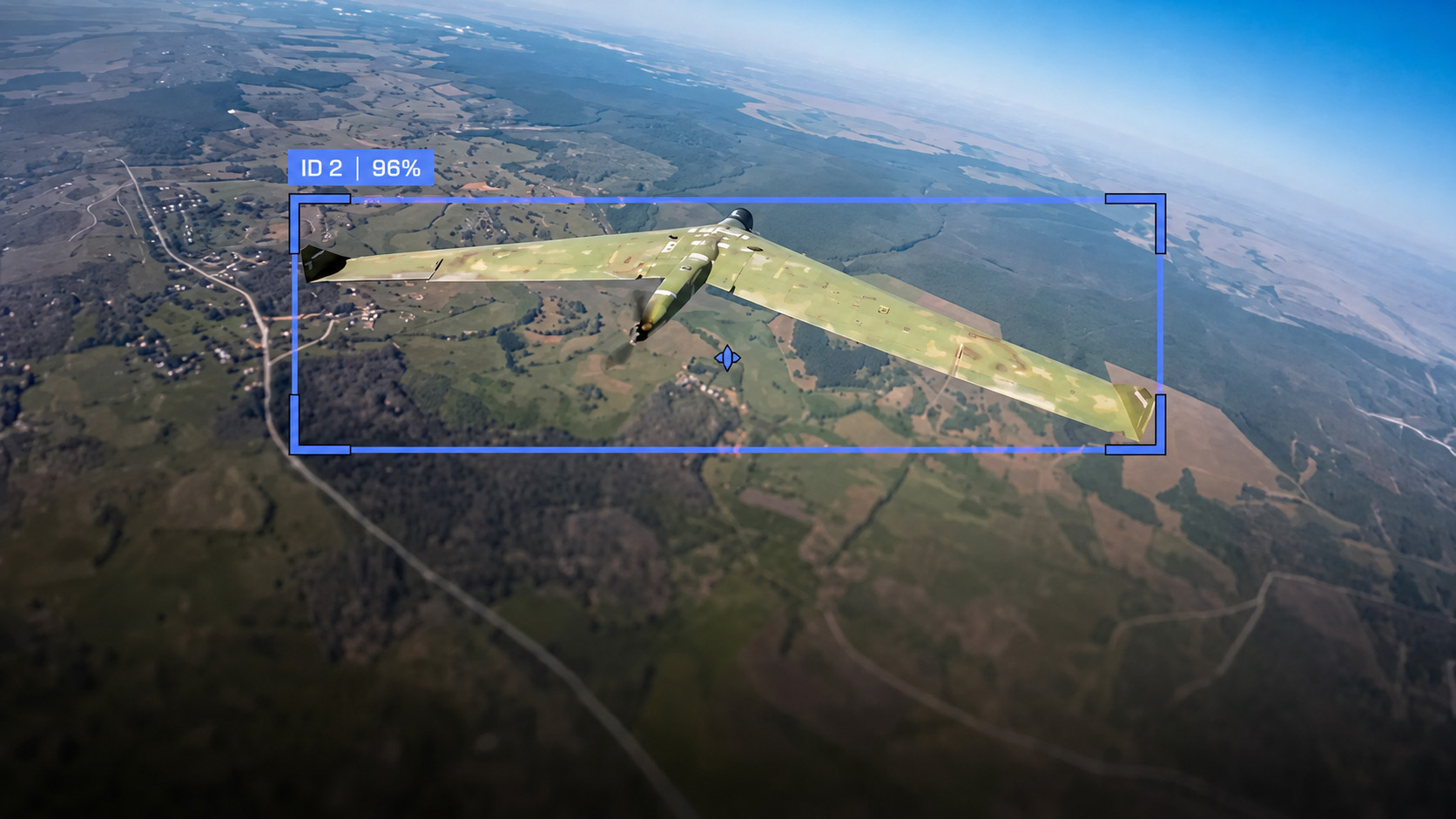
Ukraine says its forces have neutralised more than 260,000 Russian drones since the start of 2026, while the General Staff separately claimed 1,835 operational-tactical UAV losses during its latest 24-hour reporting period.
Ukrainian forces have neutralised more than 260,000 Russian fixed-wing and multirotor drones since the beginning of 2026, according to figures released by Ukraine’s Ministry of Defence, while the country’s General Staff has separately claimed another 1,835 Russian operational-tactical UAV losses during the latest daily reporting period.
The two figures come from different Ukrainian reporting systems and should not be treated as directly equivalent. In an 11 August update, the Ministry of Defence said more than 260,000 engagements against Russian fixed-wing and multirotor UAVs had been verified through Ukraine’s DELTA combat system since the start of the year. A separate General Staff update published on 15 August placed its cumulative estimate of Russian operational-tactical UAV losses since February 2022 at 461,484, including 1,835 during the preceding 24 hours. Both sets of figures are Ukrainian wartime assessments and have not been independently verified.
According to the Ministry of Defence, around 195,000 Russian fixed-wing UAVs and 66,000 multirotor drones have been destroyed since the beginning of 2026. The ministry said: “Since the start of the year, Defence Forces units have neutralized more than 260,000 fixed-wing and multirotor UAVs. All target engagements have been verified in the DELTA combat system.” The recorded engagements were subsequently verified by the Innovation Development Fund of Ukraine’s Ministry of Digital Transformation.
Ukraine says the rate of drone interception has also increased during the year. The number of Russian fixed-wing UAVs recorded as destroyed reached 40,438 in July, compared with 27,711 at the end of May. In the multirotor category, verified engagements increased from 14,071 at the end of June to 19,945 during July. Kyiv argues that the data allows individual engagements to be tracked and successful counter-UAV approaches to be identified and expanded more quickly.
The Ministry described DELTA as the digital core of its battlefield command-and-control system, saying: “All engagements against enemy UAVs are verified in the DELTA system, which serves as the digital core of modern battlefield command and control and is one of the technological solutions key to our advantage over the enemy.” It added that the system enables the circumstances surrounding each successful engagement to be recorded, allowing counter-drone methods judged to be effective to be scaled across Ukrainian formations.
The scale of the claimed counter-UAV activity was reinforced by the General Staff’s separate daily loss assessment on 15 August. According to a Ukrainian Ministry of Defence news update, Kyiv estimated that Russian forces lost 1,835 operational-tactical UAVs during the latest reporting period. The ministry summarised the day’s figures by stating: “Total russian military losses on August 14, 2026: 1,370 personnel, 1,835 UAVs, and 62 artillery systems.”
The same General Staff assessment claimed five Russian tanks, three armoured fighting vehicles, 62 artillery systems, two multiple-launch rocket systems and three air defence systems were lost during the period. Ukraine also recorded 522 vehicles and fuel tanks and 12 unmanned ground vehicles. Kyiv’s cumulative personnel figure stood at approximately 1,465,810, although the update does not describe that number as a death toll or provide a breakdown between killed, wounded and other personnel losses.
Ukraine’s Ministry of Defence has separately reported extensive offensive use of unmanned systems by its own forces, claiming Ukrainian drones have struck more than one million Russian targets since the start of 2026. In that dataset, Kyiv says approximately 193,500 Russian personnel were killed or seriously wounded. That figure is also a Ukrainian assessment and represents a different measurement from the General Staff’s broader daily personnel-loss total.




It goes to show just how ineffective drones and to a lesser extent ballistic missiles are on their own in an offensive role. Russia has been firing tens of thousands of munitions at Ukraine and achieving very little. Drones are far more useful to a defender than an attacker.
Most drones can only carry explosive in the few kilogram range where as aircraft can routinely carry many tonnes of explosive.
In an air campaign drones appear to be most useful in spoofing defences or providing continuous ISTAR capabilities
Yes but at the same time drones are causing 70-80% of the Ukrainian casualties on the battlefield.. so yes Ukraine is intercepting 80% of Russian drones, but those 20% not intercepted are doing 80% of the killing and maiming..
In reality a 4kg blast frag will kill you just as dead as a 155mm shell.. drone can chase you though a building or trench…. Russia has a massive airforce overmatch..
As for Russia up to 90% of its casualties are caused by drones….
Just for context Russia is planning to produce about 7.5 million FPVs drones and warheads a year…. No airforce can match that sort of sortie capability.. infact every single Russian aircraft would be required to sortie 1000s of times a year to match that.
Yes, drones are incredibly effective at a tactical level but at a strategic level they are not the wunderwaffe the media makes out. It’s quite difficult to cause strategic levels of damage with such small and relatively expensive (compared to bombs) weapons.
Outside nukes very little really is strategic. Wars are always won and lost by troops on the ground. Although that is rapidly changing to a point where drones do that job also.
If you look at the US dropping hundreds of thousands of bombs on Iran and not really achieving anything of signficance or the very little achieved during say vitnam. Drones have just replaced carpet bombing.
But and this is important, may wars have been won and lost at the strategic level as well.
It all depends on how far away the enemy is… a good example of strategic wars were the Sino British opium wars.. victory was through strategic means ( strangulation)..
If the UK and Russia ever came to blows and NATO crumbled politically it will be a strategic war pure and simple… which nation can take and give more damage pure and simple.. no armies worth mentioning.. just AirPower, naval power, missiles drones and political power…
The world has changed completely since the opium wars. That couldn’t be acheived again in the modern era.
I guess you could count the venezula war as strategic as removing the head of the government made them change their mentality.
In really we have far more ways to hurt another nation..
In reality the next major war is likely going to be a strategic war, because at some point the U.S. and china are going to go for it and there is no way on earth either of those nations is being knocked out by an army.. it will be a war of strategic platforms and capabilities played out by 2 impossibly powerful nations 10,000kms apart… once it starts it’s possible it will last a lifetime if both nations have the stomach to take the punishment.
For the UK every war is a strategic war.. it’s how the UK has alway made war.. the army is in reality nothing more that a strategic capability the UK sends thousands of miles to threaten an enemy… it’s one of the reasons the British arm struggles so much, because it is a missile the UK fires in support of an ally, it’s never going to undertake an invasion or fight off an invasion across a boarder as a traditional army does, therefore it can only be of a size that the Uk can fire it off as a strategic weapon.
I can’t see the US and China ever going to war directly with each other, as neithet nation could win that without destroying their own nations economy. Proxy wars are far more likely. It’s why I can’t see the US getting involved in Taiwan if it ever kicked off.
I’m not sure to be honest.. I don’t think the U.S. will accept Chinese dominance of the western pacific and china will not back down from that.. I think the two nations are on a collision course.. neither will back away from.. destruction of your economy has never stopped any nation from fighting existential wars.. the UK threw itself into 3 in 150 years.
I don’t think the US can stop china, and they know it.
Any war in south east Asia would be in china back yard with them having far easier supply lines. The US would be fighting at extreme range and once the body bags started arriving home the US would have Vietnam style protects of not our war. If they were serious about defending Taiwan they would have big logistics bases there.
The days of the US dominating the world are coming to an end, with Ukraine/Iran just being the latest of their failure to influence things. Whether that will result in a better or worse world, time will tell. I suspect worse, for all their faults and wars for oil, the US has created relative stability in the major powers around the world.
“Yes, drones are incredibly effective at a tactical level but at a strategic level they are not the wunderwaffe the media makes out. It’s quite difficult to cause strategic levels of damage with such small and relatively expensive (compared to bombs) weapons.”
Ridiculous. Russia sends an attack of 1000 drones against London from a large container ship 100nm away, how many will be intercepted?
Agreed. This is the balance now. If you’re efforts to defeat the UAS/OWA threat take greater resource than it takes your opponent to put them up, you’re fighting a losing battle.
Matching weapon to target effectively and efficiently must be a real challenge.
A truly amazing figure a portent for any future wars.
Yep, when you compare to the few dozen of drones the UK has in its inventory. NATO has some catching up to do.
NATO and the UK would have big problem if they tried to match Russian production rates at this time. We don’t have anywhere to be them, sadly, Russia has Ukraine. That’s why the MoD have stated that are working with SME’s to build the capacity to rapidly scale up production in the event we find ourselves with the space to put millions of drones!
Lets hope we don’t.
Cheers CR
True
I can’t see an armed conflict between NATO and Russia happening but I can see Russia testing NATO and potentially doing another little green men operation that NATO will have to agressively react to or that would be the end of NATO.
I can’t see Russia starting a war against a united NATO, but it might fancy it’s chances trying to pick off one of the Baltic States after a suitable time to recover from its misadventure in Ukraine and having sown sufficient discord amongst NATO countries. Russia’s apparent appetite for pushing it’s luck is where one variable of the danger lies.
European NATO countries have seriously neglected their ability to deter Russia conventionally. Rearmament is urgently needed to make the point that it just isn’t worth the effort, but to rebuild the deterrent effect after years of letting the Russians and Putin get away with ever greater risks we will need to effectively over match them significantly in all main conventional capabilities and hope that either the US stays with NATO and or China stays focused on the Far East. Neither are 100% certain.
We live in dangerously uncertain times and therein lies the potential for miscalculation, the other variable in the Russian risk equation…
Cheers CR
time will tell if NATO has learnt it’s lesson or not, probably not. If it stops any form of little green men attacks on its easten border with force, then Putin will have no choice to stop. If it doesn’t then yeah I can see him having a go at grabbing more territory. However that isn’t going to be any time soon, as the Ukraine was isn’t going his way and is no closer to ending.
Right now I am more concerned about north Korea. They have a massive army and are slowly increasing their deployment in Ukraine. If they go for it in numbers then the war could end quickly, a few hundred thousand troops, artillery, missiles added to the war and Ukraine would struggle badly.
Yeh, Ukraine is doing NATO a big favour and staying in the fight. I have a lot of sympathy for them when they say they are fighting for Europe / the West. They are, and the time they are buying us with their resistance and suffering should not be wasted.
As for North Korea your post is the first I have seen about this, so a quick google and I see a number of papers are reporting 30 to 50k North Korean troops to be deployed to Russia. One article on the Guardian site gave a rundown of some recent announcements and statements. It included a point on the deployment of North Korean troops, highlighting that at least on Ballistic Missile unit is deploying close to Ukraine, so not good news at all.
I am sure NATO countries are well aware, whether they can effectively respond is another matter.
Cheers CR