Ukrainian air defences destroyed more than 4,700 drones and missiles during September while repelling large-scale Russian attacks, and neutralised more than 48,000 tactical uncrewed aerial vehicles over the same month, according to the Ukrainian Ministry of Defence.
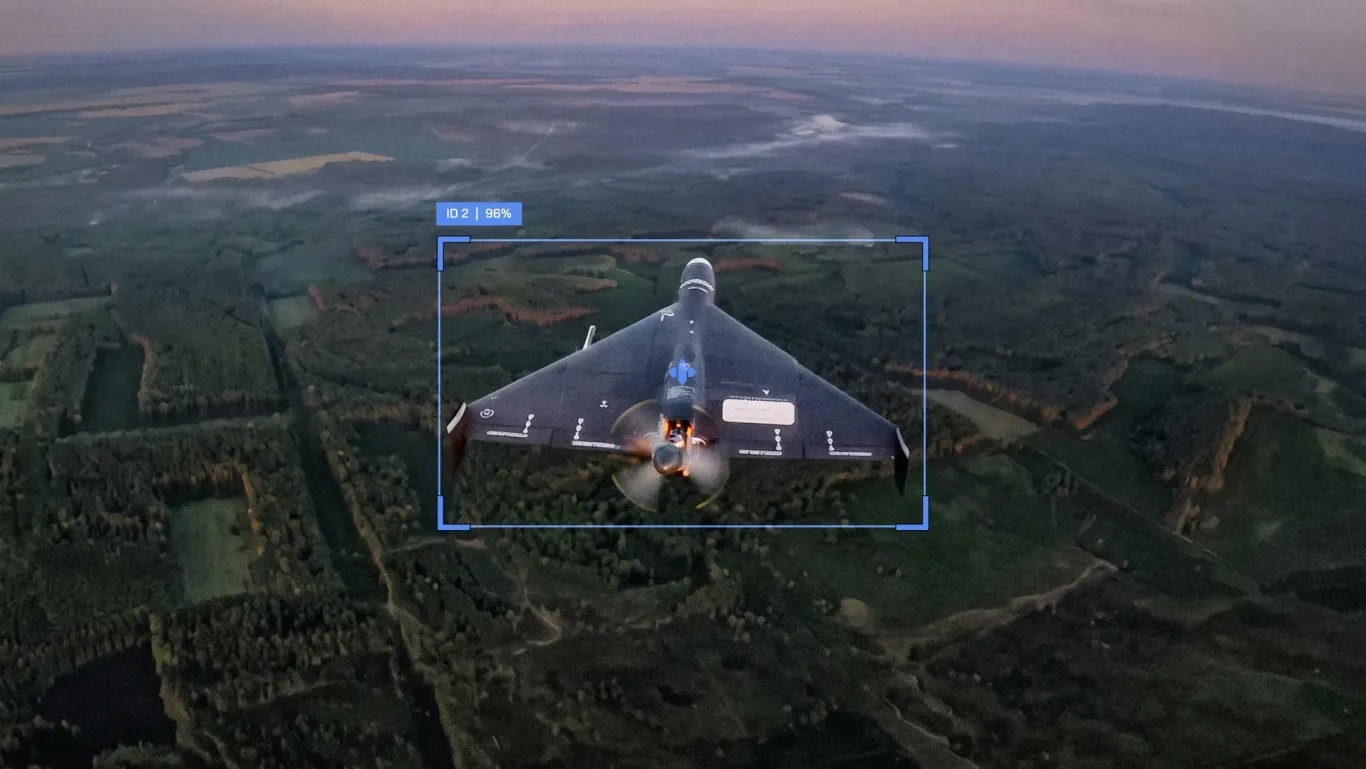
The figures, attributed to the Air Force of the Armed Forces of Ukraine, break down into a pattern dominated overwhelmingly by one-way attack drones. Shahed-131 and Shahed-136 types accounted for 2,722 of the interceptions and the jet-powered Shahed-238 for a further 1,935, with 1,009 reconnaissance drones and 719 Lancet loitering munitions also brought down.
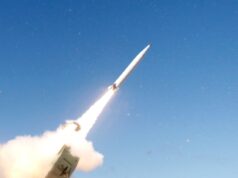
Missile interceptions made up a far smaller share of the total, with Ukrainian defences stopping 24 Kh-101 cruise missiles, 12 Kalibr cruise missiles, eight Iskander-M and KN-23 ballistic missiles, six Iskander-K cruise missiles, six Kh-59 and Kh-69 guided air-launched missiles, and eight Zircon anti-ship missiles. Another 86 S8000 Banderol missiles were destroyed.
The ministry said the targets were destroyed “through the efforts of aviation, surface-to-air missile forces, electronic warfare and unmanned systems units, and mobile fire groups of the Defence Forces of Ukraine.”
On where the difficulty now lies, the department said: “Ballistic missiles remain a challenge for Ukraine’s air defense. At the same time, the enemy is increasingly using jet-powered drones that fly at speeds of around 400 km/h, reducing the time available to detect and intercept them.”
It added: “In addition, the enemy sends small groups of several jet-powered drones to different regions. To counter such targets, Ukraine uses aviation, among other means, and is developing innovative interception capabilities.”
Jet-powered Shaheds were shot down at nearly thirteen times the rate of every Russian missile type combined, which is a measure of how far the campaign has shifted away from missiles. A propeller-driven Shahed cruises at around 180 kilometres an hour and can be engaged by a gun truck, a helicopter or a cheap interceptor drone. At 400 kilometres an hour the engagement window halves, mobile fire groups lose much of their usefulness, and the problem starts to look more like intercepting a cruise missile than swatting a lawnmower.
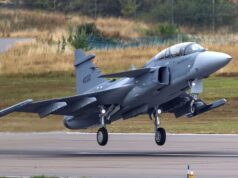
Sending them in small packets to widely separated regions compounds the problem, because a defence designed around massed raids on a few cities has to be spread thinly to cover dispersed single-target attacks, and the aircraft Ukraine is using to run down the fast drones are the same F-16s and Mirages it needs for other tasks.
Evgeniy Khmara, the Ukrainian Defence Minister, raised munitions supply for the F-16 force in a recent conversation with German Defence Minister Boris Pistorius, saying deliveries help ensure their effectiveness in shooting down Russian drones. The two also discussed protection of critical infrastructure and the need for more air defence assets including interceptors for the IRIS-T system.
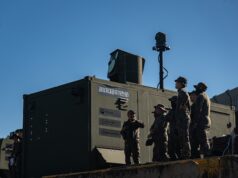
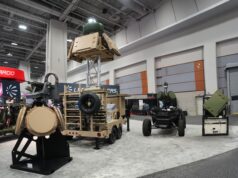
Britain’s contribution to this problem has been concentrated on the cheap end, which is where the arithmetic works. The Lightweight Multirole Missile, built by Thales at Belfast and known in Royal Navy service as Martlet, has been supplied in quantity for counter-drone use, and the company confirmed this week that it has quadrupled production capacity at the site. Gravehawk, the British and Danish funded system that puts Soviet air-to-air missiles into a shipping container with a British sensor fit, was developed specifically to give Ukraine more launchers without waiting for Western interceptor stocks.