

The British Army has invested £300 million in attritable and consumable systems over the past six months, placing 10,000 small drones into soldiers’ hands, the UK Defence Journal understands.
General Sir Roly Walker, the Chief of the General Staff, set out the figures during his keynote at the RUSI Land Warfare Conference 2026 in London, an event the Army said drew army chiefs or their representatives from 42 countries. He described the spending as the product of Project AKSA, the programme driving a shift toward what the Army calls a 20:40:40 fighting system, three rings from which it intends to draw its modernised lethality.
This year’s emphasis, Walker said, fell on the attritable 40 per cent of that system: funding it, fielding it, training with it and deploying it. The money had not only been committed and contracted but delivered, he told the conference, and alongside the drones, thousands of autonomous systems were flowing into units. Fifty operational-level electronic warfare systems and a brigade’s worth of counter-uncrewed aircraft equipment, both proven in Ukraine, had also entered service, according to the General.
Project AKSA pairs every brigade with multiple industry partners and pushes development down to individual formations, an approach Walker described in the speech as a bottom-up revolution in warfare development. “From the factories to the foxholes,” he said of the closing distance between soldiers and the firms building their equipment, adding that tacticians and technicians were becoming harder to tell apart. The programme had moved the Army from episodic experimentation to continuous adaptation, he said, with capability trialled, refined and fielded inside a single financial cycle.
Walker linked the effort to lessons drawn from Ukraine, where, the General said, capability development was increasingly happening at the front rather than in the rear. The networks supporting these systems had been reinforced in parallel, with the £100 million of radios placed on contract in January now in the hands of the force. Soldiers themselves were shaping demand and working directly with industry, he said, rather than receiving equipment specified for them in the rear.
Underpinning AKSA is Task Force RAPSTONE, which Walker described as the Army’s entrepreneurial engine, combining intensified warfare development with rapid acquisition and channelling hundreds of millions of pounds each year. The General set out an aim for half of the Army’s annual capital expenditure to go on the most survivable and sophisticated 20 per cent of its systems, with the remaining half funding the other 80 per cent, a balance he said should be unmistakable by 2030.
He put the total addressable market for remote and autonomous systems at more than £100 billion over ten years, and pointed toward a future in which uncrewed ground vehicles accompany every crewed vehicle into the field, with the mission modules and software they carry, rather than the platforms themselves, holding the greatest value.



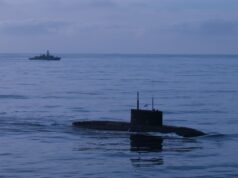


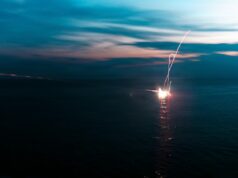


So we fielded 8,000 at the end of April and two months later we increased that by 20% to 10,000 and that the same time supplied 10,000 drones a month to Ukraine. In addition we knocked out a sovereign world leading AI driven targeting web which can target these things hundreds of times faster than human planners can.
We also knocked out three separate low cost 500km+ cruise missiles plus BAE Nyan which is already in operational service without the OSINT “experts” even noticing and
I’m sure someone will come along shortly to tell me how that’s all bad and that challenger 3 is crap compared to Centurion and France is three times better than us for half the money 😀
It’s a start but the question is whether this is long term capability or just a once and done. Jamming tech gets better every day and so counter jamming tech in the drones need to improve constantly, meaning needing a stream of replacement incoming to replace outdated ones.
Callen Lenz Nyan is an interesting one.
The short clip released by the Army looks different to the Callen Lenz Nyan that appear on a simple Google images search.
When it comes to procuring armoured vehicles France is not quite 3 times better than us for half the money.. but it’s not far off, you pretty much hit it on the head.
If you look at the last 20 years excluding MBTs the French has ordered and or had delivered
VBCI IFVs 630
VBMR Griffon 723 with a further 1150 by 2030 for 1872
VBMR serval 296 with a further with a further 674 on order for 978 by 2030 with another 1060 purchased by 2033
EBRC Jaguar 84 delivered with a total of 300 by 2030
That’s 1706 armoured vehicles delivered in under 20 years and a total of 4849 planned or ordered. For a total cost of about 12.5 billion
The MOD has splashed 15 billion over the last 20 years from that it’s got some 580 wolfhound/mastiff types , an order of 623 boxers of which 100 have been delivered and 589 Ajax for a total of 1792
Ireland is finalizing on a purchase of 400 armored vehicles form KNDS France with deliveries expected to finish by 2030 for €800 million to €1 billion:
VBMR Griffon
VBMR serval
EBRC Jaguar
Caesar 155 mm Howitzer
Yes KNDS seem to deliver at speed and price wise for a modern good APC at 1.5 million pounds a pop is hard to argue.
It’s one hell of an upgrade from 70 Mowag Piranha APC and 8 Mowag with 30mm cannons.
400 APCs, armoured cav vehicles armed with 40mm cannon and anti tank missiles as well as 155mm self propelled guns will essentially mean Irish defence forces will actually be able to field a proper combined arms heavy brigade.. a pretty appropriate force for a nation the size of Ireland.
Ireland is looking at a whole island contribution for security. Over 7 million people on the whole island to protect.
Combined arms as you said is key here for Ireland.
There is anti drone, mobile mortars and anti air ability mixed with improved networked command and control in this package.
Caesars are indeed a mass improvement to the artillery forces.
It will be interesting to see a breakdown in the numbers of units that will be ordered. The Caesars. I heard, could be 6-10 ordered.
As ever you have a common and likeable tendency to exaggerate Jim. But France is indeed more capable on less money Champ.
I was actually being sarcastic 😂
Pissed again, dogsbreath – and its all crap anyway
Sarcasm Is another trait often missed on here.
😊
Agreed. They actually have a procurement system that appears to work well. Look at their new SSNs. One new boat being commissioned every two years our 7 astutes have taken over 20 with one still to be delivered. Plus it appears the French ones are actually operational
It is a good news story but lets not forget the MOD (apart from the procurement process) have not been involved in getting any of these items to the “frontline” and operational.
If they had been I would suggest a majority would still be in development awaiting various changes from the MOD Navy/Army/offensive arm of virgin atlantic
80:20 rule. Moving towards complete development & delivery life cycle of six months maximum.
Also looks like as time progresses the costs will be driven down and the numbers are driven up.
Very good. Progress is being made.
Long way to go when Russia is using 5000 per day
Over a wide frontage, though.
The British Army is not facing that sort of front line.
Yes but remember these are disposable assets that don’t age well.. do we want 100,000 in a warehouse.
We are better getting the right amount to train up all our formations in their use.. and expend that amount in training.. developing a spiral industrial capacity..
I don’t really care how many drones the army has.. as long as they are fully trained, have perfected their doctrine around near surface warfare and we have the industrial capacity to build them thousands a day if needed.
Yup, we ability to upgrade and then produce one way drones every 2/3 months when an opponent finds counter measures
do we want 100,000 in a warehouse…👀
A current discussion I’ve seen on Twitter by an active soldier is discussing the use of drones and what the British Army should do
And I will quote him –
“Hence, you build **** loads of drones over varying signal ranges, fibre, and other clever systems, and then you already have a wide range covered.
Now you can implement changes as they progress because you already have the basis.”
“Get the tech guy to swap frequencies”
“Also, the ability to retrospectively modify current drones to suit niche or new situations is incredible.”
At present drones are in a massive state of flux.. Ukraine are planning within the next 1-2 years to move the range of near surface units from 20km to 100km.. essentially you blow your budget and fill your boots now, they will be out of date and build for a different war in 2 years.
“Drone”.
That word covers a mighty large spectrum of different specs and sizes.
Anything from basic Cardboard one way effectors, through FPV’s and all the way up to high end ghost Bats and the likes.
5000 Russian Drones might just not be In the same ball park as 5000 UK Drones.
DM’s list below Is a good place to start.
Good stuff.
But, details!
Who.
Where.
What.
The pairing of each Brigade with multiple industrial partners sounds interesting.
The “Brigades worth of CAUS also sounds good, depending what they spin as a Brigade.
The first official webpage for 9 DRSB has appeared. It listed the “Brigade” as having a solitary Regiment, 39 RA, so these statements need studying.
Intriguing stuff overall hope to learn more.
Hi M8 Have I missed something along the way I knew we were funding drones for the Ukraine but where did this spending get announced for the Army ? It’s like just dropping in we have bought £100 million worth of extra KS-1 rifles and forgot to tell anyone till after we issued them to the Paras.
Maybe the DIP was announced when we’re asleep 😎
11 Brigade has re-rolled into a Drone heavy formation, so probably a load of them went there. Additionally some battalions that have the latitude (Paras, Rangers) have started investing into unit level drone assets. I suspect the reason it’s gone under the radar is because it’s a lot of small purchases that add up to a big number, rather than hiding a single big program.
It’s the bigger OWEs like Nyan and Modini 250 Dart that I’m most interested in.
Which Batteries, what scale?
Troops or Battery?
I’d hope all the MLRS Regiments have a Battery, much like the Exactor Battery in 26.
The smaller FPVs are of course impossible to quantity by unit.
There was really good article in Chacr last year about how they were transforming 11 brigade and essentially turning it into 1st divisions near surface capability. It was a bit of a mix of had to find a way 11 brigade could be useful, when its infantry elements had been gutted of manpower and the fact that they could see near surface capabilities were essentially changing the face of land warfare.
The article is pretty clear that once near surface capabilities move from the 20km range band to a ubiquitous 70-100km range band essentially old fashioned combined arms arms becomes impossible.. the authors state that at that point traditional artillery and operational/opportunistic manoeuvre becomes impossible in any realistic form.. and that essentially they state that traditional capabilities will actually become the support elements of near the near surface formations.
All well and good but the simple fact is that drones are fires and can’t take ground, which ultimately means they can’t win the war. Ukraine can strangle Russian Logistics all it likes, but if it can’t pressure the front with an advance then it means nothing. So ultimately manoeuvrer won’t go away, it’ll just be the domain of whoever suppresses enemy drones.
Which i suppose is where mec infantry essentially becomes a support arm.. the 20 in the 40/40/20 mix.. the 40 consumable and 40 attritional essentially fighting the near surface battle and once that is won allowing the 20 manovere.
This has been underway for a while, mate, with more detail added by the CGS now.
OWE’s already in service with the EFP BG in Estonia. I want to see them more widely distributed throughout the Army.
As far as I know, quick outline re Drones:
Black Hornet Micro Drone &
Parrot Anafi Micro Drone, both for Infantry.
Numerous FPV types introduced at unit level, confirmed here by Bob.
159 Kestrel and 106 Eagle MUAS for 32 RA.
Tekever AR3 EVO’s also bought for 32 RA.
Callan Lenz Nyan OWE with 26 RA, hopefully eventually other RA Regs.
Modini 250 Dart OWE also with 26.
Anduril Ghost Micro Drones with 11 Bde, paired with Anduril Bolt M OWE also for 11 Bde.
Other types with UKSF.
Excluding the already in service EOD Robots, UGVs are a lot thinner at present, just 15 Mission Master and 15 X Universal Carrier Platforms, assume all with ATU / 2 Yorks. Not seen any armed beyond one with a RWS.
they’ve learned all this from the ukrainian’s, who learned it from the russian’s, maybe, they should have just gone to russia first !
No because they got theirs from Iran and Ukraine got theirs from Turkey, but unlike Russia Ukraine is packed full of some very smart little Techie BODs.
FYI the Ukraine was pretty well the Armaments and Tech provider from the USSR, all their large Warships, Antonov Transports and most of their Jet engines, Electronics and Missiles were built there.
That’s what they want it back, Russia can’t conquer Europe without Ukraine. Also why the Nazi’s wanted it.
how on earth did russia get their lessons from ukraine, and ukraine get their lessons from turkey, what your saying simply doesn’t make sense ?
Same way the Yanks invented the Bazooka and the Germans copied it as the Panzerschrek and Everyman and his dog copied the Jerrycan !
The lessons are about strategy and tactics, as for technology of drones, that’s been around for decades on all sides
12,000 drones?
One days worth of munitions on the modern drone battlefield
There are obviously different types though.
According to some of the Brigades in Ukraine…It can take 150 FPVs or more to stop a company-sized mechanized assault
The smaller groups that are infiltrating generally take less FPVs to stop
Depending on what they can get delivered i suppose.. Logistics keep the battle going
It also depends on what can be fundraised for. My group did 3 drones per week $600 each, with batteries
Topping up any other deliveries
Crunch the numbers, and it’s a huge amount
It would be interesting to know what the level of training is like with drones. The battlefield has changed completely with them and every soldier needs to understand how they work to understand how to avoid them and to fight with them. I can’t help suspecting it’s only a fraction of the front line troops fly drones on a weekly basis let alone monthly.
There is a pretty good article in Chacr about the future of land combat and how near surface capabilities are going to essentially be the primary combat arm.
For the authors essentially the move from a 20km range band for near surface capabilities to a 70km range band ( something Ukrainian is aiming for within a year) will essentially see the end of traditional combined arms manover warfare opportunistic manoeuvre became impossible and essentially traditional heavy brigades and artillery will become support elements to the new near surface forces and formations.. essentially what they are turning 11 brigade into.
Chacr?
I’d read something relevant to the ranges you detailed further up, makes 105mm too short legged now, maybe why 120mm mortar is being looked at, ours might be towed behind a Jackal E.
The Centre for Historical Analysis and Conflict Research
It’s the British Army think tank. It produces the British army review, which is essentially the British armies quarterly academic journal. Every major thought that’s going through the army will appear.
The British army review 195 majored on 2 areas..
1) What Russia thinks of the UK and Britain army… it does not think about the British army at all in one sense, because it losses the equivalent of the entire British army in a matter months and on the battlefield of Europe the British army would be pretty irrelevant .. it considers Britain to be laughingly weak and yet all at the same time the biggest threat to the future of Russia and the boggy man to scare children… a cross between John wick and grimmer worm tongue.. and so in another sense is always looking at what the British army is thinking.. because it assumes the British will be training and getting someone else to do what its thinking about.. it’s also concerned about the ARRC because it will be the ARRC that comes to retake any lost NATO real estate.. and the ARRC is more than anything the British army… so how it stops the ARRC deploying is on its mind.
2) was a big peace on near surface warfare and how that will be the dominant arm of any future land war as well as the 40/40/20 concept in relation to near surface warfare.
But a the issues are dead interesting and a must read.
I shared a piece on artillery the other day, yes, very good reads.
Yes, the Ukrainians want more extended-range munitions and drones because the expansion of the zone is pushing equipment out of safe range. Pushing each side’s artillery further back
Most tanks and artillery are hidden “deep” and come out to play, then go back in!
. This, in turn, means it’s saturated with even more drones.
And that stops any maneuver until it’s safer
And as you see, a very static front line with high attrition
It’s impressive how fast the world has changed. 3 years ago, if you talked about 10k drones you would be thinking predator drones and it would be an insane number. Now it’s no where near enough to last a month let alone a war.
That is why Royal Signals, Royal Engineers, REME, were embedded at or just behind the front line. Their flexibility, adaptability and expertise pays dividends.