

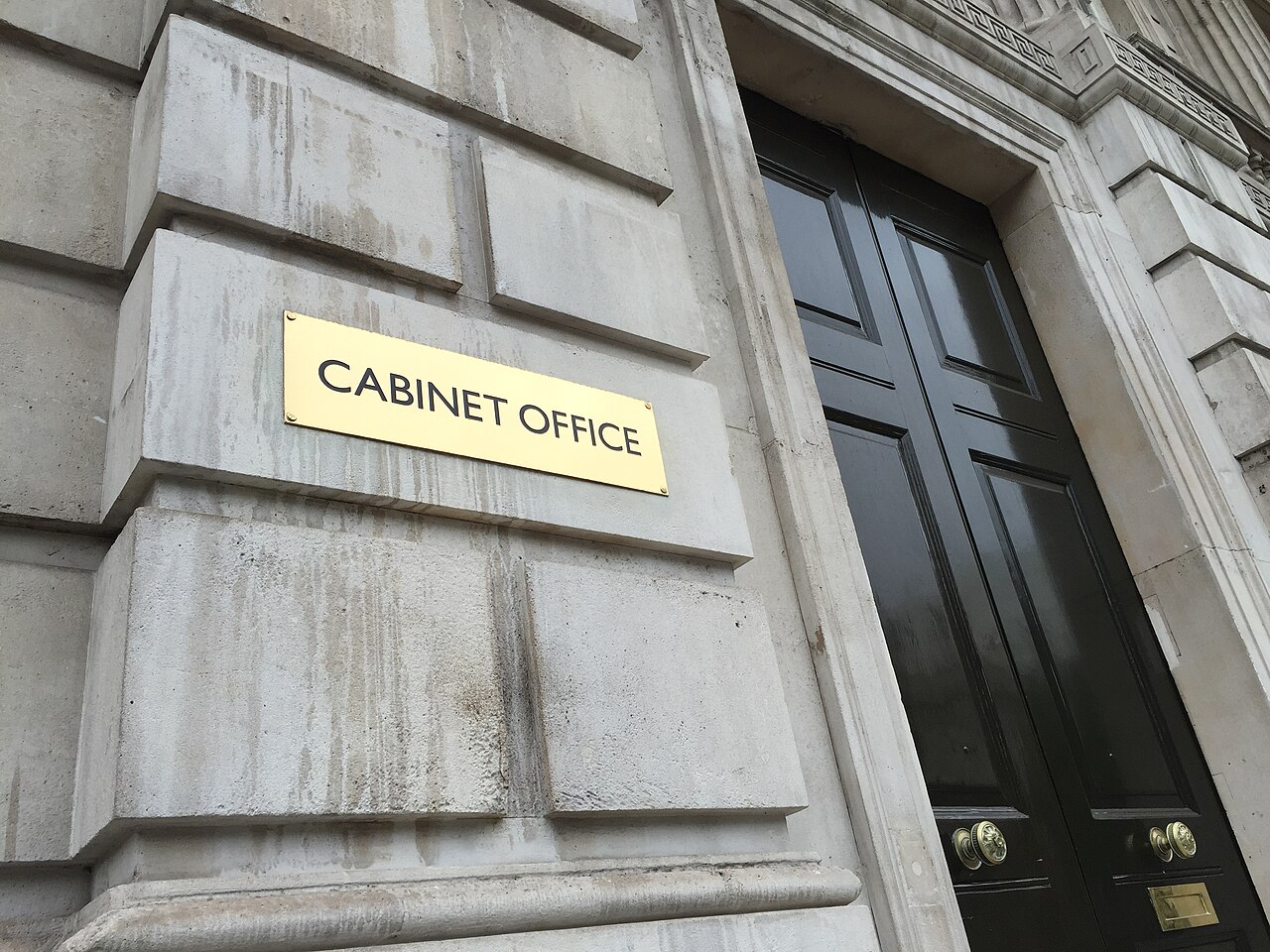
Companies bidding for central government contracts will be scored twice as heavily on the local benefits they deliver, with the social value weighting rising from 10% to 20% for contracts worth £5 million or more, according to the Cabinet Office.
The changes, announced on 5 August, apply to a market the government values at £90 billion a year. Bidders will be judged on their commitment to creating British jobs, tackling local skills shortages and supporting young people into apprenticeships and work placements.
First Secretary of State Louise Haigh said: “Every pound of taxpayer money should be spent in a way that benefits local communities, creating good jobs and giving young people the skills they need for the future.”
She added: “For too long, securing government contracts has been a tick box exercise that fails to deliver the positive change that people feel in their pocket and see in the places they live. We are doing things differently. These new rules will ensure the £90 billion that is spent each year through government contracts supports British jobs, skills and people in every postcode.”
Alongside the increased weighting, the government is scrapping other areas businesses previously had to demonstrate action on, and raising the threshold at which the requirements apply to contracts worth more than £1 million. The Cabinet Office said this is intended to help smaller, scaling and innovative businesses and civil society organisations that are often locked out of contracts by layers of red tape and burdensome requirements that larger organisations know how to navigate.
Bidders will be able to earn extra credit for creating local jobs paying above the legal minimum, for treating workers properly, and for offering training such as 45 days of work experience. Suppliers will also be assessed on support targeted at young people not in education, employment or training, care leavers and individuals with long-term health conditions.
For major contracts, departments will allocate a key performance indicator and publish annual progress reports, with suppliers measured against the commitments they made when bidding.
Cabinet Office Minister Mark Ferguson said: “We believe that if you benefit from something you have a responsibility to give back.” He added: “These changes will mean that businesses that benefit from the billions of taxpayer pounds spent by Government, will have to create more local jobs and opportunities for young people in their area.”
The rules apply to central government procurements and take effect from 1 January 2027, with detailed technical guidance due in the autumn. The Cabinet Office said public sector procurement spending rose from £288.7 billion in 2019/20 to £394.8 billion in 2024/25, an increase of more than a third in five years.
The measures form part of a wider package of procurement reforms which the government says will protect national security, cut waste and boost local economies, and which it links to its Modern Industrial Strategy and to building more resilient supply chains.
Among industry responses, Craig Beaumont, Executive Director at the Federation of Small Businesses, said: “Lifting the threshold to £1 million ought to see many more small firms winning contracts, as small businesses deliver huge intrinsic social value but they can often struggle to demonstrate this in procurement processes.”
Anthony Kirby, Chief Executive of Serco Group, said the company employed over 30,000 people across the UK, of whom more than 4,000 are under 24. “We stand ready to support this ambition: delivering high-quality public services, creating skilled jobs across the UK, and helping more people access the opportunities they need to build sustainable careers,” he said.
Stuart Togwell, Chief Executive of Kier Group, said the model was “a welcome step to ensuring public procurement supports lasting benefits for people, communities and businesses across the UK.”
Social value has been a formal element of central government procurement scoring since 2021, when a minimum 10% weighting was introduced under the Social Value Model. The framework sits alongside the Procurement Act 2023, which came into force in February 2025 and governs how public contracts, including defence and security procurement, are competed and awarded.
The weighting is already visible in defence competitions. The tender notice for the Ministry of Defence’s Light Mobility Vehicle programme, published on 31 July, states that Social Value and the Land Industrial Strategy will together account for between 10% and 20% of the overall tender for a contract estimated at £2 billion.
Image Howard Lake from Colchester, UK, CC BY-SA 2.0, via Wikimedia Commons












This is why defence procurement is so broken.
Such a good idea, no doubt the treasury will be spitting teeth over doing this. It’s bound to cut down on well paid consultancy gigs for senior military officers as well.
I wonder if the SNP will adopt this on Ferries and Buses or just continue to blame everyone else for Ferguson and Alexander Dennis.
Nope well.paid consultanting gigs just cost the government more because the social value element is added to the final price. Don’t be fooled this is just a supply chain tax in all but name.
Sheer lunacy. Subsidised jobs at defence’s loss.
Mate most nations are far more bias.. the US has it essentially set in law the government cannot buy anything not made by a US company unless the US product is 100% more expensive or not available.
It’s not quite what actually happens. In a country that has for at least a couple decades undervalued apprentices/technical qualifications and actively encouraged young people and others to follow academic routes we have found ourselves trying to reverse the trend in recent years in a piece meal fashion.
So business now employs dedicated social value managers/staff (that increase costs to the public sector) to specifically deliver social value targets – these can comprise targeting a number of training days, apprenticeships, employment of offenders, ex military, local spend, educational visits etc. the list is long. The public sector and its consultants now employ lots of people to set these targets, monitoring progress, setting and then scoring qualitative social value tenders for each public sector tender.
Whilst all via laudable the downside is the cost of all this bureaucracy – it is an industry we are paying for that actually takes money away from the very thing in purports to support and small business struggle to get involved because they can’t afford the cost of demonstrating what they do.
Go back not that far and business just naturally did these things because the Government mandated and supported training across the board.
When absolutely everything is assessed strictly on its cost today but not the long term benefits and procurement is switched on and off with ever changing demands you end up where we are today.
This announcement, however, well intentioned just entrenches an industry and cost we don’t actually need.
Spot on. And as for the procurement act which was suppose to make things easier and fairer for SME. Its a joke its nade things far more difficult The tick box list just got a lot longer not shorter.
If roughly 40-50% of a fully UK spend comes back in UK taxes, allowing for only 20% compared with buying it off the shelf in the US may just be a step in the right direction. Maybe it should be more. But we need to see the Treasury acknowledge that by putting the money back into Defence on top of the agreed budget.
Until that happens, that is where it always breaks down for me.
I want kit in the right quantities in the hands of the military more than some MIC company in profit with the forces short.
This is a step in the right direction, personally with government spend I would go even further and more follow the US, essentially the government must by a UK product unless it’s prohibitively expensive ( and the US uses a 100% more expensive guideline) or the US cannot produce it…
The US does not spend tax dollars outside the US unless it essentially has no choice. I would adopt this.
I would not go so far as the US but would instead look at about 50% more expensive being the limit as we know about 40% or more of a pound spent in UK industry comes back as increased tax base.
But I would also modify treasury orthodoxy in that if a department buys a UK product it gets a rebate on the increased costs.
In the end it’s no point having a well equipped military and no industrial base because you will end up losing the war… but you can have a totally shite military and if you have the industrial capacity and political will you will still win the war…
Nice in theory but the US has a more competitive defence industry. In the UK it would be like walking into a Land Rover dealer and saying im buying that car and never going else where by the way I really need it can’t do without now what your best price. That’s not the best negotiation tactic. I guess if your looking to apply Freidmans 4th way to spend money then its a win.
The reality of this policy is that it operates as a hidden compliance tax on contractors. In practice, suppliers simply select a generic option from a pre-determined list—such as providing specialized training, then either contract someone to deliver, or scheduling tasks around underutilised bench resource and then bundle those projected overheads directly into the contract pricing. The procuring public body subsequently monitors these commitments through a superficial box-ticking exercise, showing little to no substantive interest in the actual long-term outcomes. Furthermore, the claim that this framework supports small and medium-sized enterprises is completely disconnected from commercial reality. SMEs inherently hire based on immediate operational necessity to execute a contract efficiently, if that means securing a veteran with military experience or onboarding a junior developer or apprentice they do it they don’t need to pick from a list on contract tender. This entire administrative burden feels like a bureaucratic fantasy designed by ministers who lack genuine industry experience and do not understand how agile businesses actually scale.
Why not, in that case, just drop the pretence of competition entirely?
Select local champions based on open books and allocate cost plus 10% contracts?
Thereby simplifying the procurement process by slashing Whitehall staff no longer required.
Apologies…I wrote that whilst fast asleep; dreaming…
Monro, Rishi Sunak, when PM, did away with the Mobile Fires Platform (MFP) competiition that had been organised by the army. He directed that MoD should purchase the very expensive Boxer RCH-155 SPG. So expensive that HMT is only funding the procurement of 72 of them to replace what had once been a fleet of 179 AS-90s.
I think the Royal Artillery were quite keen on that solution but, inevitably, Telford, where a lot of the RCH-155 is fabricated, is a marginal seat that the Conservatives hoped to hold onto in 2014. They failed but are doing quite well in local council elections. So, as I say, that being the case with so many major MoD procurements, it’s probably time to drop the pretence of competitive tenders. British companies already, by law, are regulated to comply with thickets of overworked regulations similar to those mentioned in the article above.
Democracy: the least worst system of government…