

The SNP recently claimed that Scotland is being short-changed on defence spending, pointing to new figures showing lower spending per person compared to regions in southern England.
According to House of Commons Library data, the Ministry of Defence spent £2.1 billion with defence firms in Scotland in 2024–25. That works out to £390 per person. In contrast, the South West of England received £1,120 per person, and the South East £810. On the face of it, the gap looks wide. But those numbers don’t tell the full story, and using them to argue that Scotland is getting less than its fair share doesn’t really hold up.
This article is the opinion of the author and not necessarily that of the UK Defence Journal. If you would like to submit your own article on this topic or any other, please see our submission guidelines.
The first issue is that the numbers being quoted only cover procurement spending. That means contracts signed with defence suppliers for equipment, services, and development work. This is just one part of the defence budget. It doesn’t include salaries for military or civilian personnel, the cost of maintaining bases, or spending on infrastructure. These are significant, and Scotland sees a lot of it.
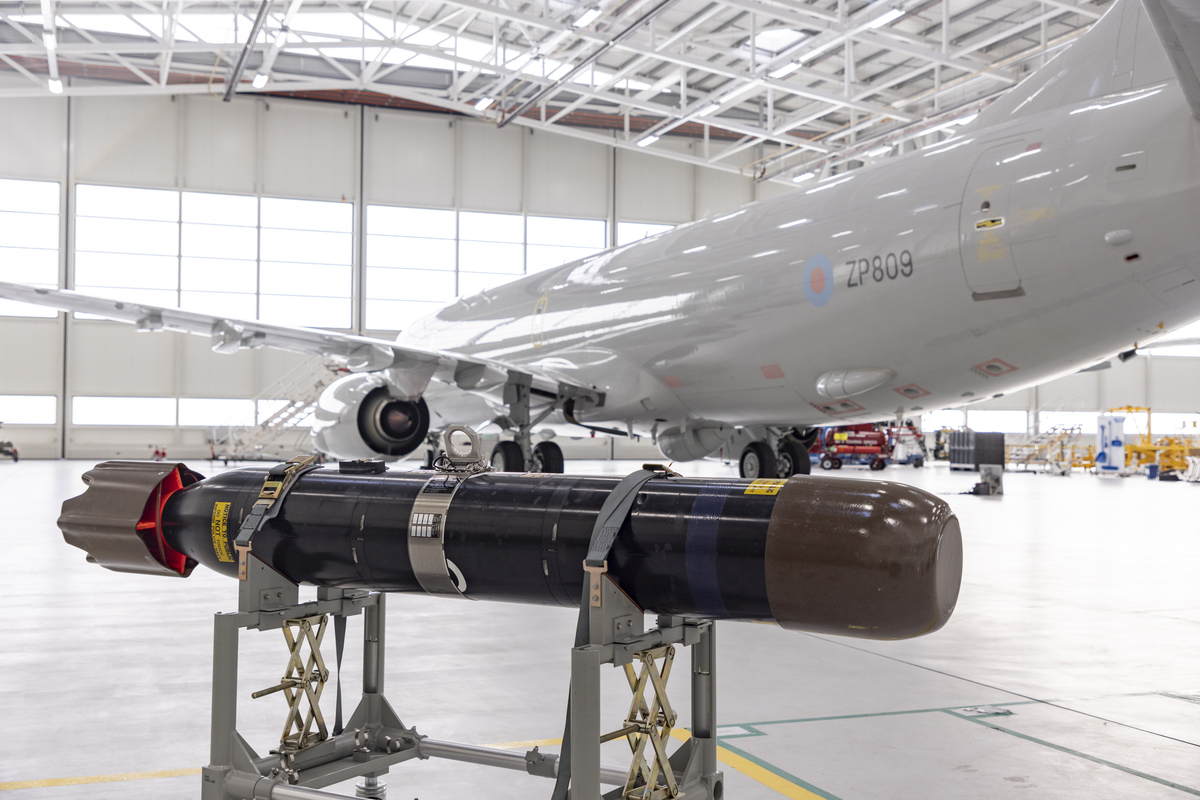
Take Faslane. HM Naval Base Clyde is home to the UK’s nuclear-armed submarines and is one of the most important military sites in the country. Thousands of jobs depend on it. There’s a long-term infrastructure programme there that’s costing hundreds of millions, including preparations for the new Dreadnought-class submarines. That money doesn’t show up in the procurement stats being cited. The same goes for RAF Lossiemouth, where major upgrades have supported new Poseidon aircraft and growing personnel numbers. These are long-term investments that have direct local economic impacts, but again, they’re not included in the per-capita procurement tally.
The second problem is that procurement spending is not shared out based on population. It follows where defence work is done. If a shipyard or missile factory or aircraft plant is in a region, then contracts for that work will count toward that region. If it isn’t, they won’t. That’s just a reflection of industrial geography. The South West has Devonport, one of the largest naval facilities in Europe, and sites tied to aerospace and helicopter production. The South East has clusters of defence tech firms and company headquarters. These places naturally generate more contract activity because that’s where capabilities are concentrated.
Scotland, in fact, does well in specific areas. Glasgow is one of the UK’s most important shipbuilding centres. The Royal Navy’s Type 26 frigates are being built on the Clyde, with billions committed across multiple orders. At Rosyth, Babcock is assembling the Type 31s. These are major programmes that sustain skilled jobs and long-term investment. There’s also radar and sensor development work in Edinburgh, and a network of smaller firms in the supply chain. If you look at Scotland’s specialisation in naval and electronics projects, it’s clear the country is a serious player in defence production.
Another thing to keep in mind is that these patterns don’t change overnight. Defence programmes take years to plan and even longer to deliver. The spending levels reported for 2024–25 are shaped by decisions going back well before the current government. The SNP framed this as a Labour problem, but the industrial balance they’re pointing to has been steady for decades. The fact that some parts of England show higher totals is not new, and it isn’t the result of recent political choices.
None of this is to say there’s no room to question how the UK uses defence spending to support industry across the regions. It’s fair to ask whether procurement policy could do more to boost capability outside traditional hubs. But that’s a different argument. Saying Scotland is being short-changed suggests a kind of systematic exclusion, and the evidence just doesn’t back that up.
The per-capita framing also oversimplifies what defence spending is for. Defence budgets aren’t designed to match headcounts or regional shares. They’re meant to equip the armed forces and maintain national security. Where the work happens depends on where the right skills, infrastructure, and supply chains are already in place. That’s why spending is uneven. It’s not some sort of conspiracy against Scotland.
Media coverage of the claim repeated the figures accurately, but without that context the story risks sounding more dramatic than it really is. The number £390 per head doesn’t reflect all of Scotland’s role in defence. It doesn’t count the strategic value of Faslane, or the investment in Lossiemouth, or the thousands of jobs tied to complex shipbuilding programmes. It also doesn’t account for the fact that many contracts are awarded nationally and delivered across multiple regions, making regional tallies somewhat artificial.
In reality, Scotland plays a central role in UK defence. It’s home to critical assets and manufacturing capacity. It benefits from long-term programmes and strategic basing decisions. The fact that procurement spending isn’t the highest in the country doesn’t change that. It’s a question of where the work is done, not how much any one part of the UK is “owed.”
If the goal is to strengthen defence industry in Scotland further, the case will be stronger if it’s based on future opportunity and capability development, not a claim of current injustice built on one slice of spending data. The defence sector is complex, interconnected, and shaped by long timelines. Arguments about fairness need to reflect that reality.










That’s an excellent brief but still probably too basic for SNP politicans to comprehend.
SNP? enough said. Muppets every one of them
Yawn, SNP telling porkie pies, nothing new here.
As a Scot, the first rule of Scottish politics is that nearly 100% of anything the SNP say is grievous mongering hypocrisy meant to wind up their base.
SNP? enough said. Muppets every one of them whatever is left of its base.