

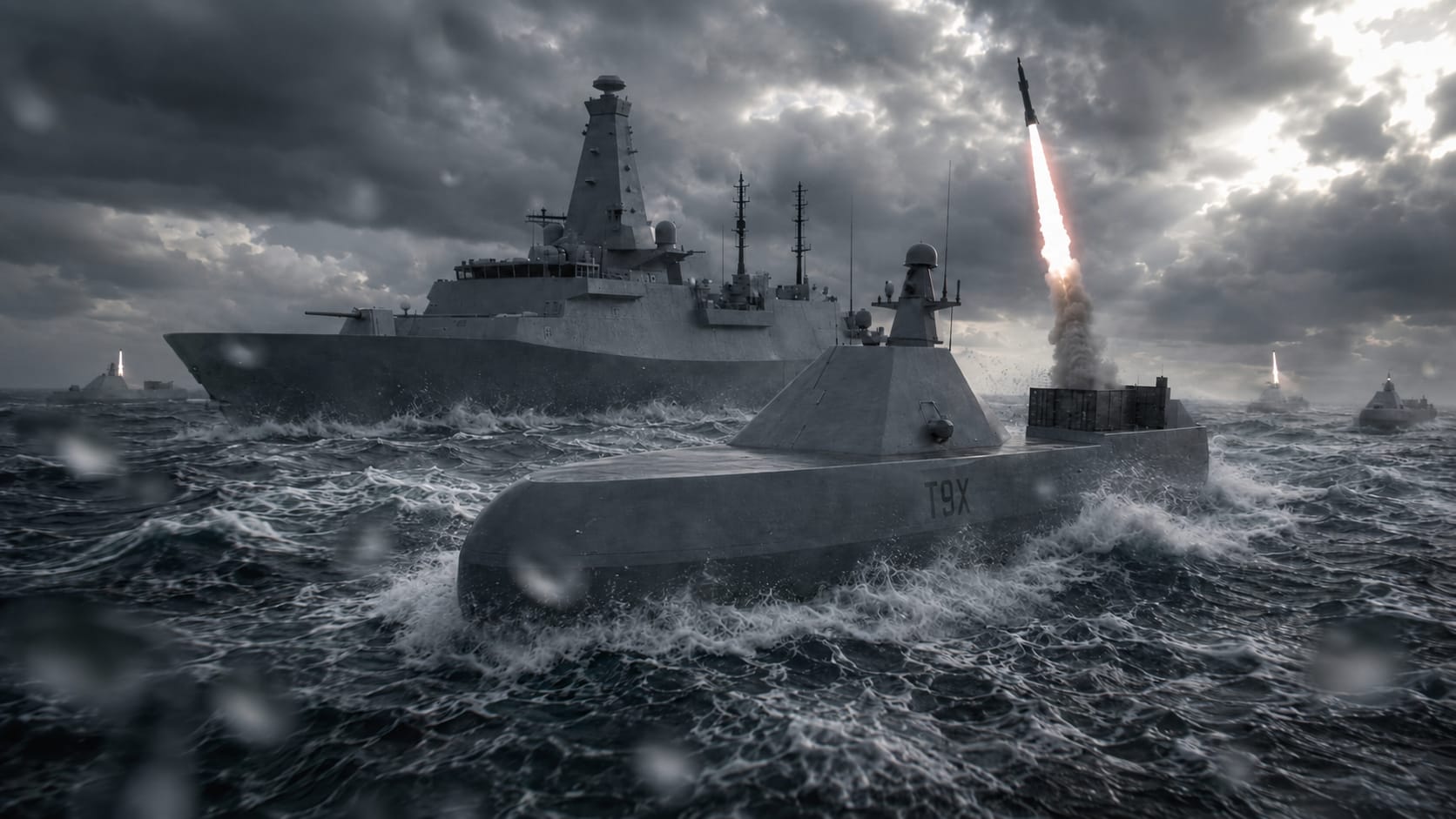
The Ministry of Defence is unable to say when the Royal Navy’s Hybrid Fleet will start being built, with construction schedules for the four new classes of uncrewed platform yet to be determined and the crewed Common Combat Vessels at the heart of the concept expected from the early 2030s, the UK Defence Journal understands.
The position was set out by Defence Minister Luke Pollard in a written answer to Conservative MP Stuart Anderson, who asked simply what date the Hybrid Navy fleet will be operational.
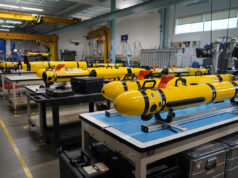
“The Defence Investment Plan has announced at least £1.3 billion investment in developing the Royal Navy’s Hybrid Fleet: comprising uncrewed missile platforms (Type 91), uncrewed underwater sense platforms (Type 92), extra-large uncrewed underwater vessels (XLUUV) (Type 93), uncrewed radar platforms (Type 94), as well as uncrewed aviation assets. The construction schedules for those platforms have not yet been determined. The future class of Common Combat Vessels (CCV) are expected from the early 2030s,” Pollard said, as quoted in the answer, adding that the new technologies “will complement the uncrewed mine hunting capabilities, aviation, and surface vessels already in service with the Royal Navy.”
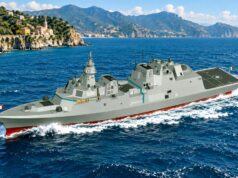
The answer is that the Hybrid Fleet has no construction date attached to it just yet, with the earliest fixed marker being the arrival of the Common Combat Vessels, the at least six air defence warships announced on 29 June, from the early 2030s.
For the uncrewed elements, the Type 91 missile platforms, Type 92 underwater sensing platforms, Type 93 extra-large uncrewed submarines and Type 94 radar platforms, no construction schedule exists, which follows from answers to Shadow Defence Secretary James Cartlidge this week confirming that the funding split between the platforms has also yet to be decided and will be developed in consultation with industry.
Readers will note, though, that the absence of dates reflects programmes at the very start of their lives rather than delay against a published schedule.



Wouldn’t it just be cheaper and operationally better to make the entire system one capable of underwater operation? The missile system could then approach by stealth, pop up, send the missiles within sight of the enemy coast/extreme picket distance, submerge again and back for RAS.
Underwater craft have very limited power and communications and make for terrible radar sensor platforms.
Worth fully exploring all the options wouldn’t you think?
I’ll be interested to know what size and tonnage we’ll be looking at a d with the delivery rate may be. Numbers will depend on price facilities for the product and the necessary supply chains being organised. As always I am of the opinion that design must have a premium set on production rates. Especially as the yde yards will be taken out of the project while the existing frigate orders are in build.
Would have thought numbers would also depend on how operational and cost effective they Prove to be in initial Service…
As small as possible. Less material, Labour & cost. Big enough to fit some kit on obviously. Plenty of them.
I’ve seen some smallish craft bringing back about 200 immigrants. That size possibly much smaller.
It’s not the size it’s what you can do with it that counts. 🙂
I believe the RN is looking at WW2 torpedo boat type production where simple craft are assembled in volume at a realistic cost. Not having to cater for a permanent crew could save weight and costs, though they may require provision for a small crew (override mode) in the event of a breakdown or operational needs.
Sensible.
Size matters to what you can do.
That’s what I like to see – thinking out of the box.
Safeguards?Sizes ?ames? prefix? Build time? So much to learn yet plus of course trials and actual design specs. I don’t like the the unmanned aspects, but I do accept ept that it’s the future, hope I’m around to see if.
Build the sloop out of reinforced polymer. One of the NATO nation currently operates a corvette with a composite upper deck structure l it is cheaper than steel. Easier to work with, stronger lighter and recyclable. As well as the Pioneer of unmanned warships the u. K can do likewise with construction.
Can we lease the Gosport ferry?
Not sure it could generate enough power to get dragonfire on it.
Could we fit a virtual Dragon?
Just strap some blonde actress to it and add in the dragon digitally afterwards 🙂
I like that ! 😁
as long as someone can make sure its plugged in.
Requisition it. In the name of the King.
Now THAT IS A GOOD IDEA. ADD THE BIRKENHEAD, torppiint aNEs AND CALL IT the HOME FLEET
Sometimes it seems this government is making a mockery of defense. It’s all empty promises, phantom ships, cuts, etc. Let’s hope another government comes in that at least doesn’t treat such an important issue as a joke. As long as these people are in power, nothing good can be expected, not even from the Conservatives, who also have no interest in defending the United Kingdom.
no different since every government since 1945.
Wasn’t it stated that the first LUSV would be here by 2027?
Lol as if! We’ll still be waiting for Glasgow and venturer.
“Early 2030s” 😂😂
Bollocks it will.
This is more like the MOD we know and distrust. I thought they knew what they were doing for a while.
They know exactly what they are doing. The process is clear day 1 to 3650 have already been printed out.
I guess that with T 45 availability set to improve and CAMM to be added, the timescale for AAW successor is not really urgent. But in order to maintain AAW capability, the CCV will have to be primarily air defence platforms, linked to T91 and T94.
T92, T93 are planned as ASW assets. It seems probable that they will augment T26. So linking these to T26 delivery dates( whatever they turn out to be) seems logical.
Or have I misunderstood the plan?
Firstly you think there is a plan. First mistake.
Secondly you need to delete all the processes and ask a bunch of contractors to build you a prototype or 6 which will achieve AAW and/or etc. etc.
Chances of them taking a risk like that. Probably nil.
🙂
T91 and t94 wont work as advertised and will be a money pit, the ccv will revert back to t32 and then we will get either a real destoeyer replacement maybe the bigger t83 or t46 a t45 sized replacement depending on how funding looks and the geopolitics the next few years. This is all frankly a waste of time but we might get some more frigates out of it, the 19 escorts goal was too small for peace time let alone how things are deteriorating.
36t0 it’ll be warp driven twitch photon torpedoes. Crossed by blocked with pointy ears from Pakistan a plan? Can’t see there even is one
as long as someone can make sure its plugged in.
They I suspect don’t know how their plans are going to Work ..
Like a lot of modern Management, Great on a PowerPoint not so easy in real life ..
As so much in SDR And DIP…Wishful rather than Thought driven….!
We’ll wait and see what works in real life and what doesn’t…!
Still think we’ll return to t45 extension and t83…
Or a PAAM destroyer drone linked to a PAAM missile barge network if they can get the CCTV to worked to a command and control vessel.
More of “Pollards Bollards”.
(I just made that up…) 😊
Is anyone making notes of all these promises ?
Doesn’t matter there will be a new PM by then. 🙂
Maybe, they are waiting for the collapse of Russia, just to see how much or little they have to spend on defence procurement
Won’t have occurred to them.
Besides they will find a way of spending it on something meaningless anyway even if the Russian were marching up Whitehall.
Ahh…. a nice new Red Carpet then !
Yep … that type of thing – yes. 🙂
The ‘early 2030’s’ Let’s say 6 years. It will be record for todays RN to have an entirely new first of class yet to be designed technologically sophisticated ship in service by then.
Wouldn’t it be prudent to have the T91 and T94 as optionally partially manned? What happens if they go bung in the middle of the ocean somewhere? Any tender type vessel to be a hand? Don’t want to waste millions on a buoy.
Hope there’s focus on keeping actual manned vessels still fully armed and kitted out and not demoting all themselves to drones.
Totally agree…
A minimally manned model would represent far less risk and allow far greater utility for independent action.
Certainly whatever core surface design, emerges from this, should mount a 40mm bofors gun.
When the MOD announced their plans for MUSV, they planned to publish “an ITT to contract a Commercial Mission Partner(s) (CMP) as part of the RN’s ‘Atlantic Net’ initiative in the near future.” Using leased, civillian crewed vessels as a first stage in order to iron out any wrinkles seemed an emminently sensible way to proceed, so naturally it has disappeared of the scopes.