

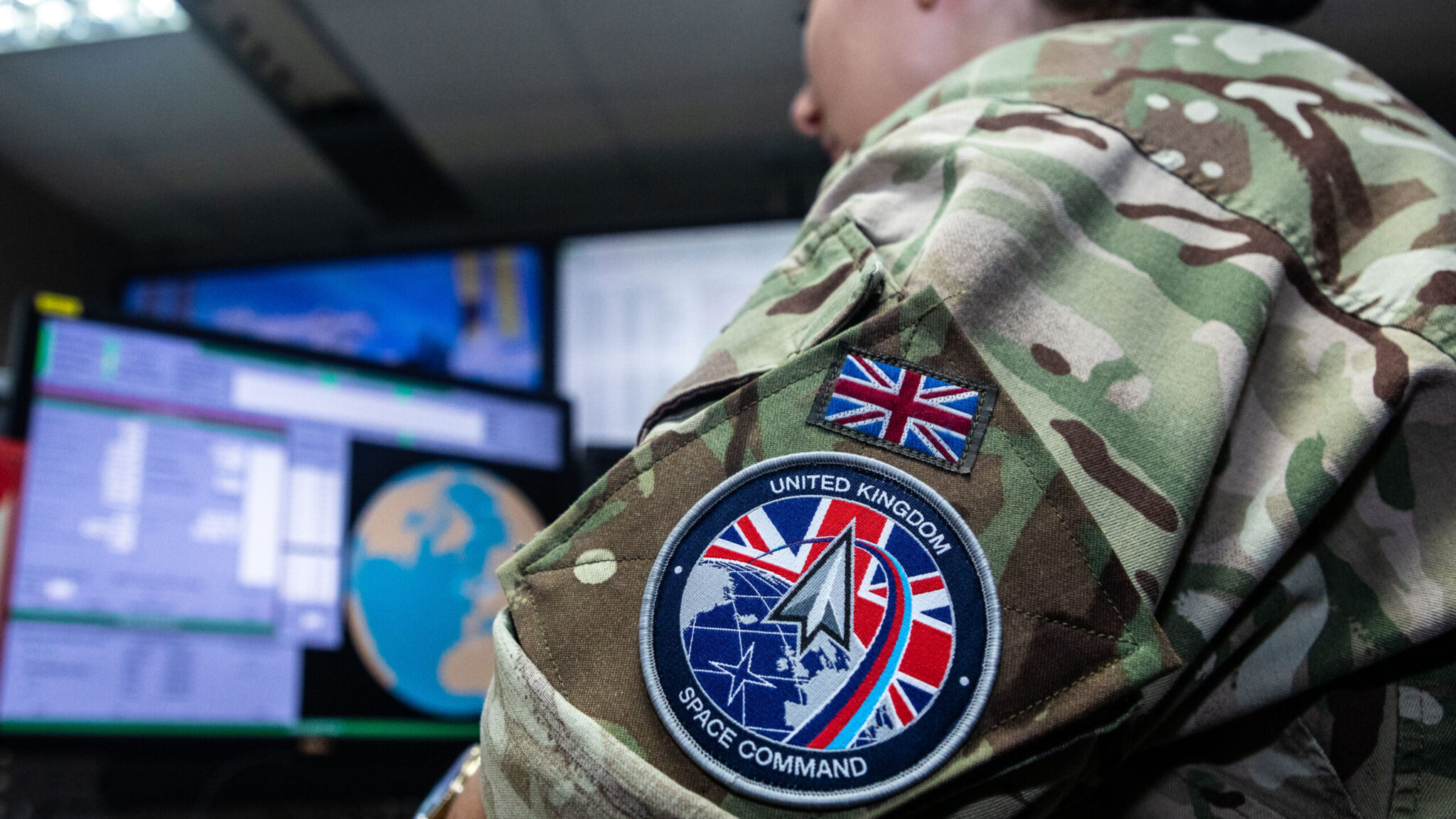
Control of space will determine security in this century in the way that control of the seas did in the nineteenth and control of the air did in the twentieth, the Defence Secretary will say today in a keynote address to the first UK Space Power Conference.
Wes Streeting is due to address the conference as the Royal Air Force announces the formation of No. III Space Effects Squadron, its first unit dedicated to disrupting, degrading and denying hostile activity in orbit.
He will say: “Britain has to keep pace in the new space race. Control of the waves was the essential ingredient in 19th century deterrence. That is why Britain built the finest naval power in history. In the 20th century it was control of the skies, and so we built a world class air force to protect us. This century will depend on control of space.”
On why the domain has become contested, he will say: “Our dependency on space is precisely why it is increasingly under threat from our adversaries. That threat is growing in scale, speed, and sophistication. And challenges in space increasingly mirror the geopolitics on Earth.”
Setting out what he takes his own responsibility to be, he will say: “My job is to make sure that our deterrence in space is as strong as it is on Earth, and to modernise our armed forces so that they are ready to deter and, if necessary, defeat any adversary, in any domain.”
The comparison he draws carries an implication about scale, given that Britain built the Royal Navy and then the Royal Air Force as the principal instruments of national defence in their respective eras, and applying that logic to space invites a question about how large a space force the argument requires, against current investment of £880 million between 2026/27 and 2029/30 in space-based intelligence, surveillance and reconnaissance and space control activities.
That sum forms part of the £7.8 billion committed to space until 2030 in the UK Space Strategy published earlier this month, of which more than £3 billion is directed at defence capabilities in orbit. The strategy also allocated £2.8 billion towards connectivity including the SKYNET military satellite communications programme, and £149 million to the European Space Agency’s Vigil mission alongside £85 million for the National Space Operations Centre.
Streeting said at the time that national security depends on freedom of action in space and, if necessary, the ability to protect British and allied space assets, and that as threats in orbit grow more sophisticated so must the ability to detect and respond to them.
The Strategic Defence Review stated that the ability to operate in, from and through space underpins British security, prosperity and daily way of life, and the department says challenges in the domain increasingly mirror those on Earth as hostile states develop capabilities to jam, disrupt or disable space assets.
Britain has formally ruled out destructive anti-satellite missile testing and continues to work through the United Nations Committee on the Peaceful Uses of Outer Space on norms of responsible behaviour in orbit.






Yet he is doing little about space control. No UK launch system with little if any money for Skyrora and no on orbit effectors.
Defend with ….?
It won’t be us controlling space, surely if this country is serious about this, where is the money?
I would always choose rockets over breakfast clubs. Unfortunately Labour has other priorities.
Yet again pie in the sky or orbit dreamers from a government that cannot even stockpile enough rifle ammunition, rather sad and just a little pathetic.
It wasn’t any better in the 80s and 90s. Get over it.
Streeting looked exhausted on lunchtime news and has aged since he took over MOD. He was floundering and flapping trying to defend the Chagos deal and criticise it in the same sentence and making no sense. He is out of his depth and really should be concentrating on small steps to improvement instead of all this Buck Rogers nonsense.
Thanks for the heads up – will try and find it.
He was never Batman, was he? More of a fleeting Robin.
I just want Al Carns in charge but out of principle, he won’t and you can’t really blame him. Carns will make a good PM once he navigates the corridors of power, however, his MPs may have a very different leaning to the current Labour shoIte show.
Carns is a true Drone Jesus believer, if he was given control over the department he could do immense damage in throwing away conventional capability.
A better PM candidate than Defence Sec.
Norway: ~$3,026 per person (spending about $566 more per person than the U.S.)
United States: ~$2,460 per personDenmark: ~$2,416 per person
Sweden / Netherlands / Luxembourg: Ranging from roughly $1,500+ per person
Finland: ~$1,497 per personGermany: ~$1,257 per person
United Kingdom: ~$1,146 per person
Alliance Average: The overall average across NATO members is roughly $1,496 per capita.
So, one commentator is not wrond and man from del monte, he say NO.
Control of the seas was achieved by ships floating about killing each other (which we were quite good at) What weapon systems are going to control space?