


Defence industry representatives have warned MPs that Scotland’s defence sector is facing acute skills shortages, with demand for specialist engineers and welders far outstripping current training pipelines and workforce planning.
Giving evidence to the Scottish Affairs Committee, Andrew Kinniburgh, Director-General of Make UK Defence, said the problem was not simply one of education policy but of long-term planning failures across government and procurement. He pointed to welding as a clear example of a skills gap that industry has been forced to plug through overseas recruitment.
“If we take welding, for instance, that’s an absolute classic case in point,” Kinniburgh said. “Babcock have just imported 300 welders from the Philippines to cover a short-term gap in their skills, but we would argue very strongly that that probably needs to be supplied from local labour.”
Kinniburgh said defence companies struggled to plan recruitment because of uncertain and fragmented demand signals from the Ministry of Defence. Major programmes often take a decade or more to move from design to production, requiring firms to invest in skills years in advance. “You’re designing a big, complex platform for ten years before you actually cut any metal,” he said. “We’ve got to get ahead of the curve so we’re not importing 300 welders at short notice.”
He argued that current procurement behaviour actively discouraged long-term workforce investment. “If it’s five ships, actually commit to those five ships up front,” he said. “Don’t release them one by one, because employers won’t take the risk of hiring 300 welders when they’ve only got an order for a single ship.”
Warrick Malcolm, Director of ADS Scotland, supported that assessment with data showing demand significantly exceeding supply across multiple engineering disciplines. He cited research indicating that demand for instrumentation and control engineers stood at 134 per cent, while only 32 per cent of firms planned to train for those roles. For electrical and electronic technicians, demand was 147 per cent against just 24 per cent training provision.
“The demand is far and away outstripping the current supply,” Malcolm said. He stressed that defence companies were willing to train but needed entrants with a basic technical foundation. “They’re not necessarily looking for oven-ready employees,” he said. “They are happy to train, but they need a basic level of understanding they can then turn into the bespoke skill set they need.”
Malcolm added that some firms were prepared to train more apprentices than they required themselves in order to grow the wider skills pool, but that this was increasingly difficult in a competitive labour market. Defence firms are now competing for engineers with renewables, infrastructure, healthcare and civil nuclear, all drawing from the same workforce.
The pressure is global as well as domestic. Malcolm noted that maintenance, repair and overhaul roles were particularly exposed. “One study said the global requirement for MRO engineers is around three quarters of a million,” he said. “Companies are competing in a global market for these skills.”
Asked whether governments fully understood the scale of the challenge, Malcolm said industry had supported a formal review of skills frameworks but was frustrated by the pace of progress. “We were supportive of the review and its intended outcome,” he said, “but dismayed at how long it’s taking. We don’t feel we’re getting an agile and responsive system yet.”
Kinniburgh warned that many of the most critical skills take years to develop and cannot be switched on quickly. “If you’re a highly rated nuclear welder, you’re seven or eight years before you’re fully qualified,” he said. “Then you’re into a global scrap for talent.” He added that prime contractors often ended up recruiting skilled workers directly from SMEs within their own supply chains, further hollowing out capacity.
“It’s a really tricky one,” Kinniburgh concluded. “And without proper long-term planning, it only gets harder.”







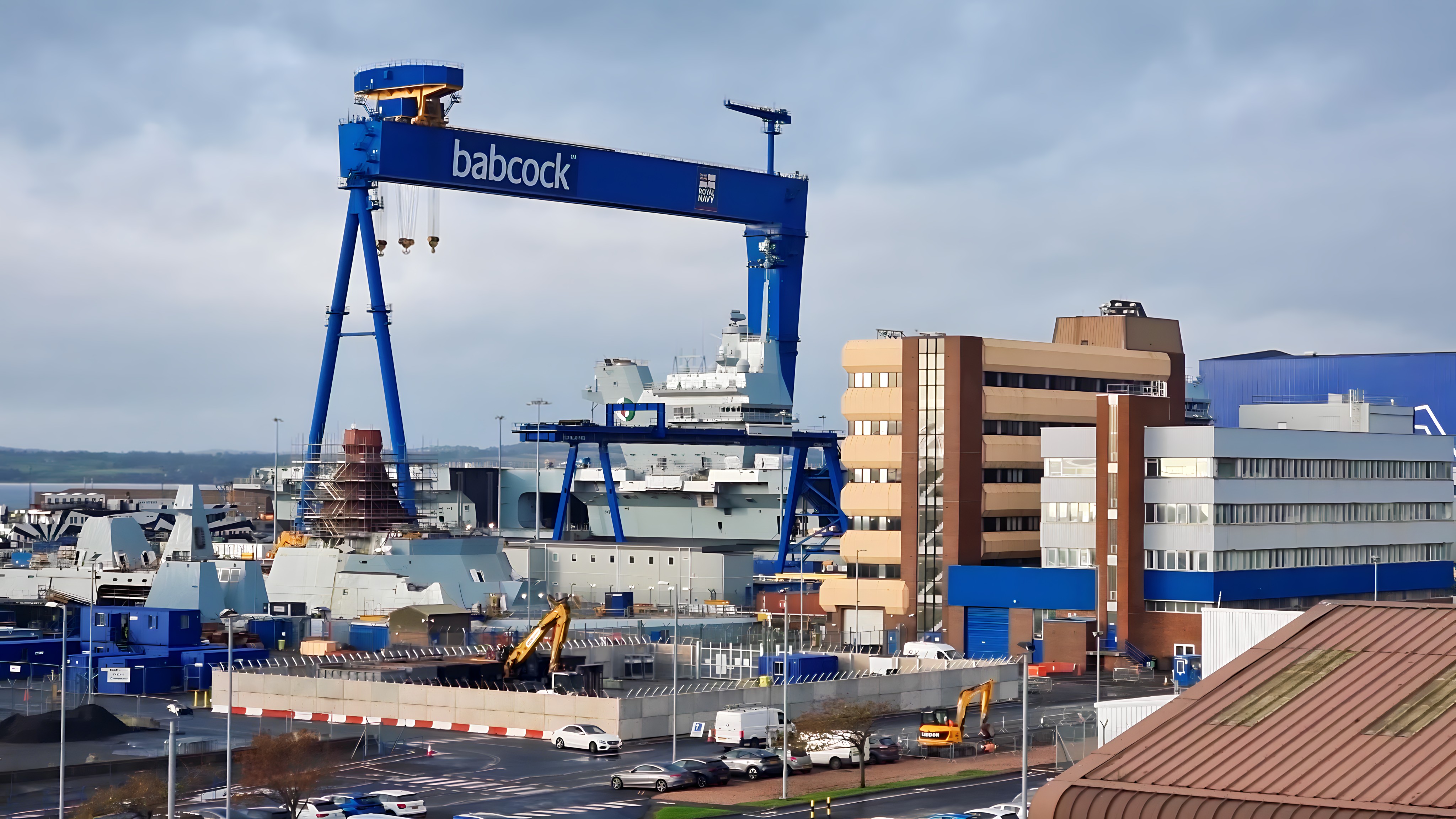




You do have to wonder if Scotland and the north west of England were the correct places for these industrial hubs.. Portsmouth and Southampton have far greater access to population density and strategic transport links.
This is not a dig at Scotland or Barrow.. let’s be honest these are not places with a lot to attract young talented to move to or have the population density needed, so I wonder if it was a strategic mistake.
I say this as a persons who was a strategic workforce lead for an industry that also requires years and even decades to mature staff groups (healthcare) and I’ve worked in that place of plenty ( the south east ) and a place in a arse end of nowhere.. and I know trying to manage skill shortages in places people don’t want to live and does not have a big population is just a way to get a metaphorical kicking.
Perhaps it’s time to make warships elsewhere in the UK.
Hardly a quick swap decision
Unemployment has gone up by around 30 per cent since July 2024 and is particularly bad in the 16 to 24 age range. Meanwhile, we are also suffering from a collapse in vacancies. We need our armed forces rebuilt and we need the people to rebuild them. If the government ever gets round to publishing it’s D.I.P. this has to be a priority. Not in 3/5/7yewars. NOW.
The rot set in when some bright spark decided to shift the money from technical colleges into universities. We now have a great shortage of engineering and construction trade skills and a surfeit of unemployed golf course management, urban studies and social welfare graduates.
Since Thatcher, the culprit, got her mitts on training, government has passed trade training over to the big companies in each sector to organise and pay for, which has been colossaly unsuccessful. We need to go back to the drawing board and switch a chunk of the university expenditure back to technical trade training. It will take years to do, so those who don’t like immigration will just have to hold their noses while we get in more skilled Fillipinos and Europeans to dig us out of this hole.
I’d like to point out that the skills they appear to be looking for would be better classed as “technician” roles rather than “engineering ones”. I’m graduating from a masters in aero engineering this year, and there is hardly a surplus of graduate jobs.