

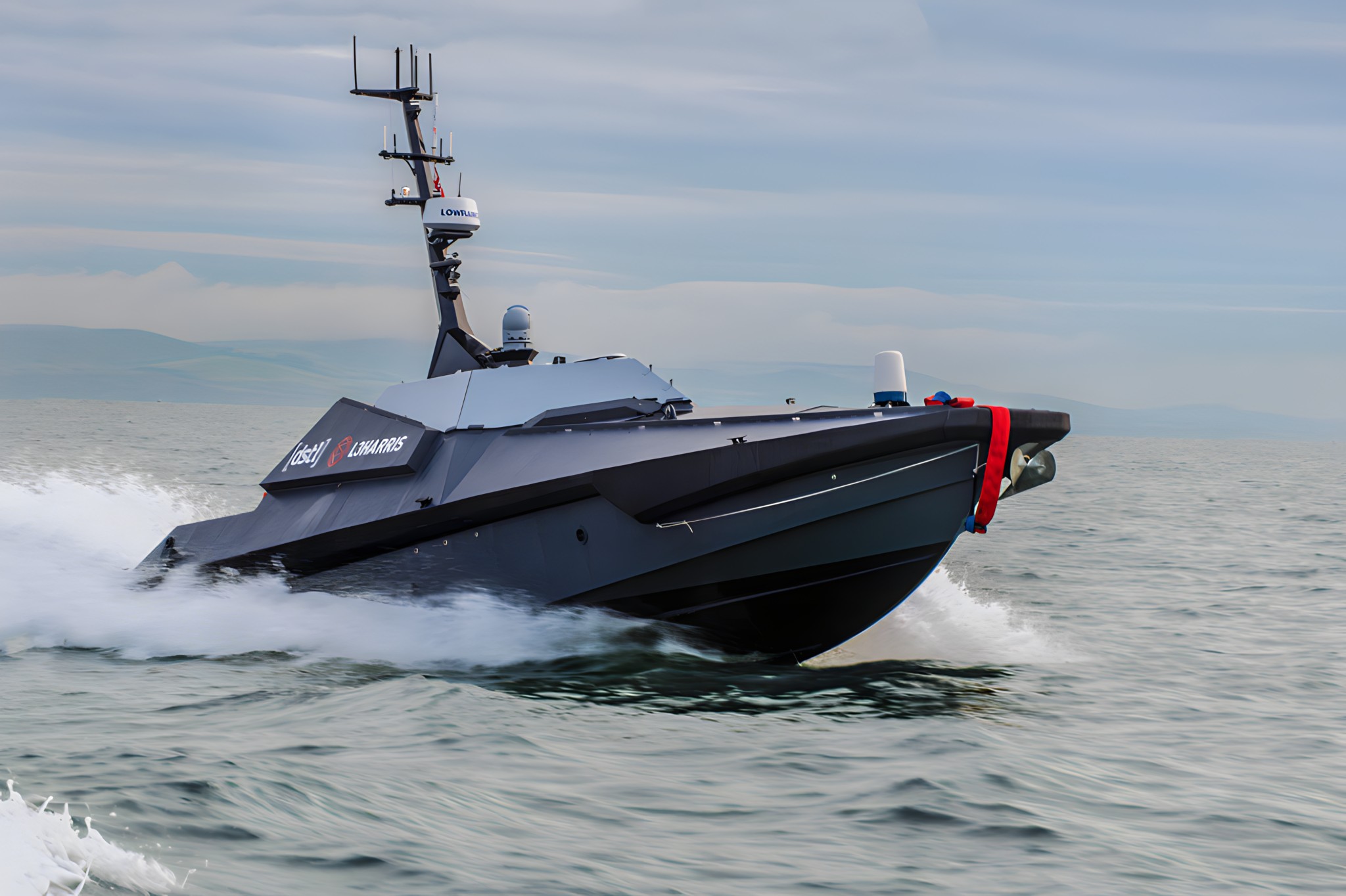
The Defence Science and Technology Laboratory has awarded a follow-on contract to L3 Harris ASV to provide storage, maintenance and repair services for a fleet of government-owned surface vessels, according to a newly published contract details notice.
The contract covers support to a number of unmanned surface vessels used as part of the Maritime Autonomy Surface Testbed, a Defence-owned capability used to trial and evaluate maritime autonomy technologies, the organisation stated. The agreement is valued at £968,625 excluding VAT, rising to £1.16 million including VAT, and was signed on 17 December 2025.
According to the notice, the award relates to “storage, maintenance and repair services for a number of Authority owned surface vessels.” The initial contract period runs from 17 December 2025 until 31 March 2026, with options to extend the arrangement by up to three additional years, potentially taking the contract through to March 2029.
The procurement was conducted as a direct award under the defence and security regime of the Procurement Act 2023. The authority cites technical and intellectual property considerations as the reason for selecting L3 Harris ASV without competition, describing the agreement as “a follow-on contract for the Storage, Maintenance, Operation and Repair of the Maritime Autonomy Surface Testbed (MAST) assets.”
The notice explains that service provision was required immediately and that the supplier holds unique expertise. It states that “L3 Harris has unique SQEP specific to the Dstl-owned systems,” noting that the vessels incorporate both company-owned and government-owned intellectual property. The supplier is also identified as fulfilling the role of “Design Authority” for the systems, including responsibility for vessel modifications, integration of sensors and payloads, and safe operation of the platforms.
Dstl further notes that the MAST capability is “a complex system of systems, which is software intensive,” adding that the software architecture includes elements that are “distributed inextricably throughout” the vessels. As a result, the authority concludes that “no other 3rd party would be able to get access to this due to the systems proprietary nature.”
The contract will be managed without formal key performance indicators, with the authority stating that “KPIs were assessed as offering no proportionate or practical benefit,” and that performance will instead be overseen through contractual terms and operational management. All work under the contract will take place in the United Kingdom.




No KPIs and a contract only one provider can fulfil.. loadsamoney doing up the boats…
Dont’ think they are doing anything up – just storing and maintaining. Perfectly sensible really. I expect the supplier is expecting more business so that will ward off any potential profiteering.
It was a play on the song loadsamoney ( doing up houses)..
😁
A fleet? Assume this is the single examples of assets with the Fleet Experimental Sqn under DCTO?
The old OCTO and Navy X.
So Patrick Blackett, Excalibur the XLUUV, , Firefox, and some autonomous RIBs?