

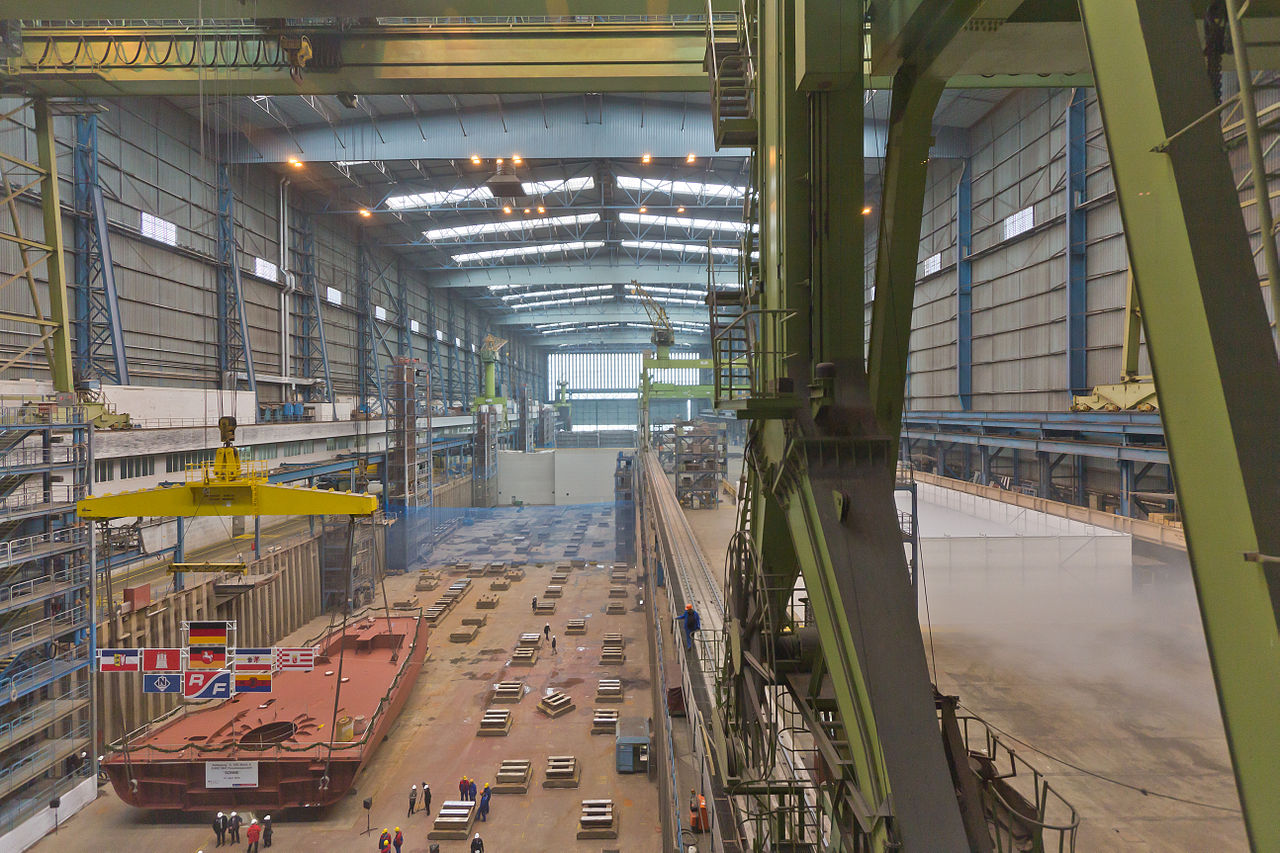
One of Europe’s most successful shipbuilding groups has told a Holyrood cross-party session that Scotland can rebuild maritime strength, but only by focusing on high-value specialisation, sustained investment and credible state support for innovation.
Addressing a joint meeting of the Scottish Parliament’s Cross-Party Group on Germany and Cross-Party Group on Maritime and Shipbuilding, a senior representative of Meyer Werft set out how a 230-year-old German yard navigated industrial decline, global price pressure and the shock of the pandemic to remain globally competitive.
Meyer Werft, founded in 1795 in Papenburg, now accounts for the overwhelming majority of Germany’s gross tonnage output. Yet its speaker was candid about the realities facing European shipbuilders. “We don’t compete with China and South Korea on container vessels anymore,” he said. In some cases, he added, bids from Asian yards appear to come in below European material costs, reflecting financial and structural advantages that make direct competition in commodity shipbuilding unrealistic.
The lesson Germany drew from that experience was not retreat, but concentration. High-complexity, high-specification vessels, particularly in the cruise sector, became the core focus. Today, around 95 per cent of Meyer Werft’s portfolio is cruise ship construction, alongside selected research and specialist vessels. The executive described this positioning as deliberate and necessary. “It is super important to target specialised niche,” he told the session, arguing that European shipbuilders must offer something distinct if they are to survive in a market dominated by scale elsewhere.
Germany’s wider industry has contracted significantly over the past half-century. Direct employment has fallen from roughly 70,000 to around 15,000. Many yards have closed. Even Meyer Werft faced severe strain during Covid-19, when the cruise market effectively halted overnight, compounded by inflationary pressures following Russia’s invasion of Ukraine. In response, the German government stepped in as a shareholder, a move the speaker characterised less as political control and more as financial stabilisation.
Modern cruise ships now cost well in excess of 1 billion to build, with payment structures heavily weighted towards final delivery. “You get 20 per cent at the beginning when you sign the contract, 80 per cent when you deliver,” he explained, meaning yards must finance construction for years before final payment. With the state in the background, banks view the risk differently. “With the government in the back, the financing is not anymore you are a private company with limited guarantee behind it.”
He was clear that Germany does not simply subsidise shipbuilding in the traditional sense. Instead, support flows primarily through research and innovation funding. Early-stage maritime R&D can receive substantial public backing, while installation of mature innovations on vessels can attract partial risk-sharing support. The approach is designed to keep yards technologically competitive while remaining compliant with European rules. “You share the risk of your research,” he said, describing funding levels of between 50 and 70 per cent for research projects, depending on technology readiness.
Investment in facilities has also been decisive, it seems. The yard’s automated laser panel line and highly integrated production halls were cited as transformative. “Without the laser centre, we wouldn’t be there anymore,” he recalled being told when he joined the company. Productivity and modernisation, he suggested, were not optional extras but preconditions for survival. Beyond economics, the executive argued that civilian shipbuilding underpins strategic resilience. Cruise vessels may not be warships, yet the supply chain that sustains them is deeply European. Meyer Werft alone works with around 1,500 registered suppliers, the vast majority based in Europe. If the cruise market were to collapse, the shock would not be confined to tourism.
“If this goes down, it would be super critical for the whole industry,” he said, adding that the impact would inevitably be felt in naval shipbuilding and defence supply chains. The argument was that a healthy civilian maritime sector helps preserve skills, facilities and industrial depth that can support national capability more broadly. When asked directly about efforts to revive merchant shipbuilding in countries that have largely exited the sector, he offered measured caution saying that tebuilding capacity after decades of decline is possible, he acknowledged, but it requires clarity about future positioning.
“If it once lost, you should not look back what you lost. You should look where you want to be,” he said, urging policymakers to define the segments and technologies they wish to lead in rather than attempting to recreate the past.
For Scotland, where naval shipbuilding remains active on the Clyde and at Rosyth but large-scale merchant construction has long faded, the message was pragmatic rather than pessimistic. Competitive advantage, he suggested, lies in advanced manufacturing, high-spec vessels, green propulsion technologies and a strong supply chain, all supported by coherent long-term policy. He pointed to green technology as a defining frontier, from LNG to fuel cells and alternative fuels, and set out Meyer Werft’s ambition to deliver a zero-emission cruise vessel by 2035. Regulatory clarity and sustained public commitment, he argued, are essential to give young engineers and skilled workers confidence that maritime industry has a future.
Image Copyright Raimond Spekking / CC BY-SA 4.0 (via Wikimedia Commons).







Yes the west simply cannot build and compete on container ships and neither should we want to..
Reasons we cannot
Essentially the profit margin on building the merchant ship steel box is almost none existent.. most of the cost of the merchant ships comes from the very specialised precision engineering parts.. essentially the engines, power supply and prop.. then you have the raw material costs.. essentially after you have purchased all that you will have about 10% of the price of the ship left.. from that you have to fund the yard investment, train and pay the staff and make a profit.. essentially it’s not really doable..
Essentially the reason South Korean, Japan and china build all the worlds merchant ships is although they are private companies essentially each is completely state funded.. through ongoing loans and finance and or have been created specifically to service a naval need as well..
If you look at the three nations essentially the governments of china, Korea and Japan lend the money to build each ship.. no shipping company can really afford to finance a new mega ship via standard routes.. it’s just to high risk and high interest.. so essentially the governments give a low interest loan to buy the ship.. Japan did it because it had a massive trade surplus with the US and the Japanese government has simply stacked insane amounts of US dollars it could not get rid of without destabilising the YEN so they came up with the Development Bank of Japan.. essentially a way to use all those surplus dollars.. it used to give essentially low/none interest loans to allow anyone to buy a ship built in Japan.. china has done the same thing.. essentially given way over 10billion dollars in loans for countries to buy its ships it’s also provided 130billion dollars in direct loans to its shipbuilding industry to develop the infrastructure.. that is why China build 60% of the worlds ships 140 billion dollars in low interest development loans just between 2010 and 2018.. that’s before the big spike so who knows what it is now.. that is before that fact china has a know 1,4 trillion dollar military investment plan.. most aimed at naval.
But what has Germany done.. well most of the diesel and props that power these ships build in the far east are built in Germany.. and guess where all the profit is… yep in the specific bits Germany makes.. not bashing out the finished ship.
Good analysis 👌🏾
All good points. Being able to build ships at home i would say is still strategically essential to keep all the skills and logodtics going . Worth the extra cost . Granted not worth building on mass . I would prefer to see uk buy frigates from abroad then fitted out in uk to boost the very low numbers we have for next 20 to 15 years plus . This way the the uk ship yards would not be so boom and bust cycles but a steady 2 frigate / destroyers a year maybe upto 4 if boom export orders
Far too late to order anything else to fill the frigate gap, we just have to wait it out.
Yes whereas even in military shipbuilding we have lost half of those high-end and higher-profit capabilities. All our diesels are now German, all the prop shafts, most of the propellers. The electrical mains I believe also German or Swiss. Literally only the GT’s still British made.
A very coherent argument, commercial supported military by filling the gaps and keeping many common components in production. However it’ll be hard to find a niche for us tbh.
It’s all in the components really, power and propulsion is where the complex engineering and profits are in the commercial end of the market.
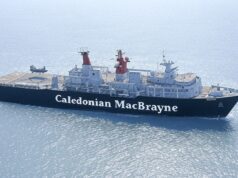
So the Scottish Government ordered 7 new ferries from a shipyard in Poland and then asked a German for advice on how to save Scottish shipbuilding. Sounds about right.
It’s not right, the CPG is cross party.
If only there was a niche ship building capability that Scotland could focus on that had 18 currentship orders for both domestic and export users.
🤔
People may not have noticed what with Rosyth having to bring in 300 guys from the Philippines and BAE having to build Barrow 2.0 but we don’t have much spare labour or industrial capacity left. We have no need for a large commercial ship building industry propped up subsidies trying to compete against third world countries.
We should stick to warships, we are good at that and we can create market.
Moving to other high end ships would be useful.. getting into the luxury cruise market is good.. expensive ships with a good mark up and generally high end power and propulsion requirements.. but cargo ships.. nope.
We could build them at Harland and Wolffee, since they have that massive Dry Dock…. wonder if anyone thought of that before.
Completely outclassed by fully enclosed European facilities.
1 It’s a joke about H&W’s history.
2 Mayer Turko and Chantiers de l’Atlantique aren’t fully enclosed, and yet do good business in Cruise ships.
Warships are completely different, theyre not only niche they are specific to the customer, there isnt a consistent market to rely on for construction.