

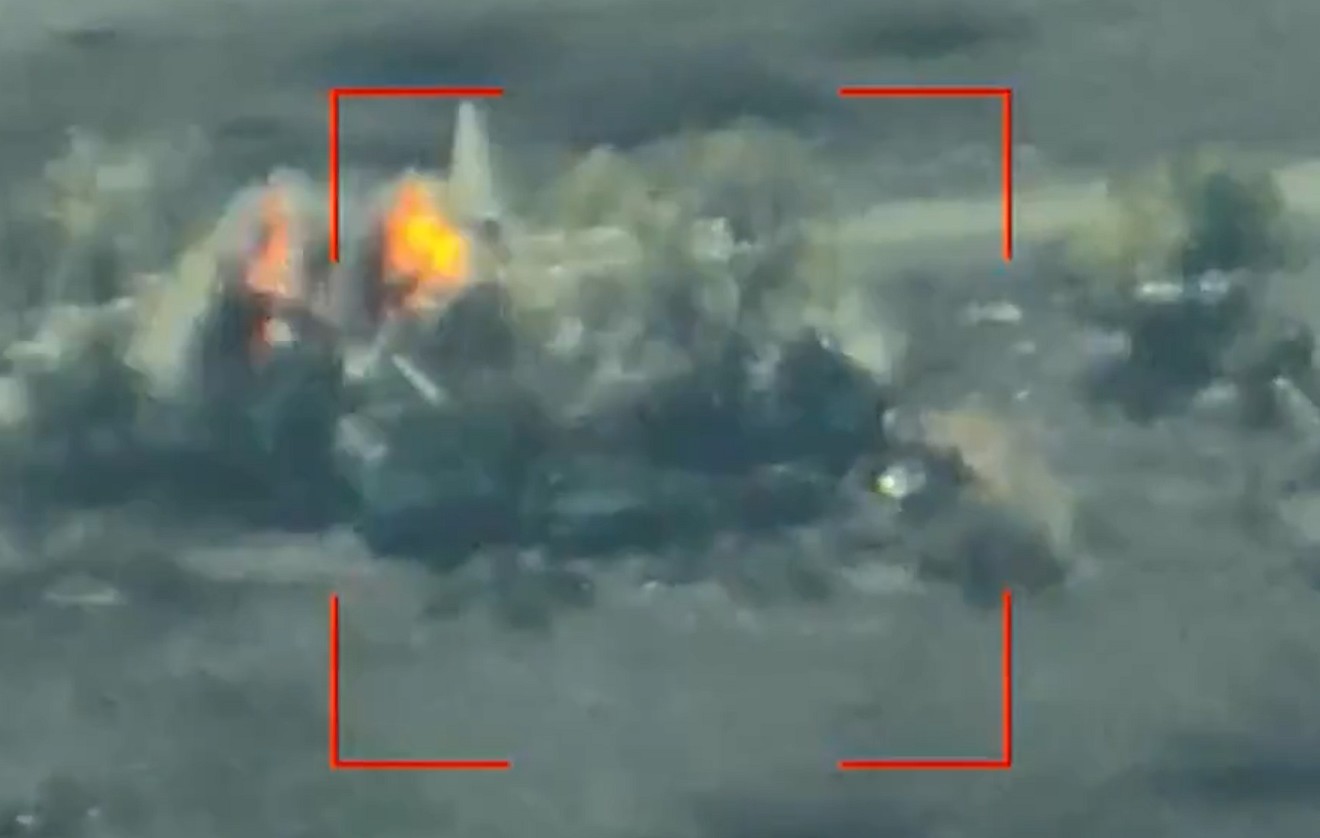
Ukraine’s armed forces spent May driving drones and stand-off weapons deeper into the Russian rear across the occupied south and east, and now say they have brought Moscow’s principal overland supply route to occupied Crimea, together with much of its logistics network in occupied Luhansk, under sustained fire, the Ukrainian Ministry of Defence has said.
The claims were set out in a statement summarising the results of what Kyiv terms its “middle-strike” campaign during the month, an effort to dismantle Russian depots, headquarters, air defences and supply lines in the operational rear rather than along the line of contact itself. The ministry presented the work as part of a deliberate “logistics lockdown” of the Russian army, ordered, it said, on the directive of President Volodymyr Zelensky, and cast it as creating the conditions to end the war from a position of strength within what it called a window of opportunity likely to stay open for only another six to nine months.
To sustain the effort, the ministry said it had joined the General Staff in allocating an additional 5 billion hryvnia directly to the military in the first phase of a programme to buy modern strike systems, while adding that allied support could prove decisive as long as Ukraine holds the initiative.
In occupied Luhansk Oblast and the eastern reaches of Slobozhanshchyna, the ministry said Ukrainian drones had established continuous fire control over the routes feeding Russian forces around Luhansk, Starobilsk, Alchevsk, Brianka and Kadiivka, and claimed to have struck armoured vehicles and depots close to the Izvaryne crossing on the Russian border, a point it placed more than 205 kilometres from the front line. The resulting collapse of road logistics in the region, it argued, was steadily stripping forward Russian units of their ability to mount offensives.
The heaviest emphasis fell on the road the ministry labelled the R-280, which it described as a military logistics corridor running more than 500 kilometres from Rostov-on-Don to Crimea through occupied parts of Donetsk, Zaporizhzhia and Kherson, taking in Mariupol, Berdiansk and Melitopol. Corresponding to the land corridor Russia opened in 2022 to link its own territory to the annexed peninsula, the route is, in the ministry’s account, the primary lateral artery carrying fuel, ammunition and equipment to Moscow’s southern grouping, and it said its drones were now routinely striking cargo trucks, fuel tankers and equipment along the full length of the road, with hits recorded around Chonhar and Sokolohirne and on the roads leading off the peninsula. The ministry added that it was also targeting the supporting network of depots, vehicle parks and repair facilities in occupied cities along the Sea of Azov coast, and argued that, taken together with strikes on railway hubs such as Debaltseve and on bridge crossings, the disruption was denying Russia the ability to move reserves quickly between the Zaporizhzhia and Kherson sectors.
Alongside the assault on logistics, the ministry reported a parallel effort to blind Russian forces, claiming 19 air defence and radar assets struck over the month, comprising ten surface-to-air missile and missile-gun systems and nine radar stations and reconnaissance assets. Among the named targets were three Pantsir-S1 point-defence systems, one of them at Saky airfield, four Tor and Tor-M2 short-range systems, a Buk-M3 medium-range system and a command vehicle from a Buk-M2 battery, alongside a spread of radars reaching across Crimea and the occupied south, among them the Podlyot system at Yevpatoria, a Kasta-2E at Mysove and a coastal reconnaissance set the ministry tied to an FSB post at Mariupol. The same statement claimed eight headquarters and 25 drone command posts destroyed during the month, along with strikes on more than 50 depots and repair facilities.

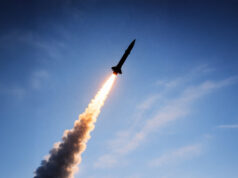
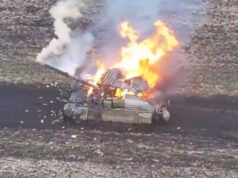

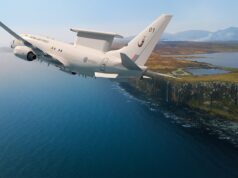



Maybe it’s time we sent a Light Brigade there to help 🤔
We already did in a way. Not that you will read about it on here as it’s a good UK news story but the UK has been instrumental in the targeting ability of many of the drones able to provide these mid distance strikes. Unfortunately the UK government for good reason does not necessarily go around broadcasting this so the media never picks up on it and it doesn’t sell enough clicks on the telegraph website to get any interest.
“Integrated AI Software Modules
Rather than just shipping finished aircraft, a significant portion of the UK’s assistance involves providing standalone AI targeting software that Ukrainian forces flash directly onto standard First-Person View (FPV) strike drones and long-range Unmanned Aerial Vehicles (UAVs).
Automated Terminal Dive: These modules use machine learning models trained on Russian military vehicle profiles (tanks, electronic warfare trucks, artillery). If a pilot is flying an FPV drone and encounters severe signal jamming near the target, the onboard AI takes over the flight controls, visually locks onto the target vehicle, and guides the drone to impact autonomously.”
Agreed. A lot goes on behind the scenes that will not get a lot of publicity.
But our SF and intell community remain top notch, the headlines and the general angst is about the attitude and failure of governments and about cuts to assets, not the professionalism or knowhow of the military.
I’ve gained $17,240 only within four weeks by comfortably working part-time from home. Immediately when I had lost my last business, I was very troubled and thankfully I’ve located this project now in this way I’m in a position to receive thousand USD directly from home. Each individual certainly can do this easy work & make more greenbacks online by visiting
following website—.,.,.,.,.—>>> JobatHome1.Com
1854 wasn’t it ?
I’ll get my Cardigan and Balaclava on…. 👊
The idea it’s the Ukrainians is utterly ridiculous, they are just the EU’s trigger men. The weapons are built in Europe or bought and paid for by EU and UK money, the only way the Ukrainians know what to strike is due to NATO intelligence gathered by NATO aircraft and satellites other methods, the whole operation planned and organised by NATO officers around the world.
The Ukrainians would have been out of this 4 years ago without the massive support from the west. The ukrainian regime supplies the often reluctant meat for the grinder and that’s about it.
How dare the Ukrainians remain in existence for a whole 4 years!
Indeed.
I wonder where “John in Milton Keynes” is?