

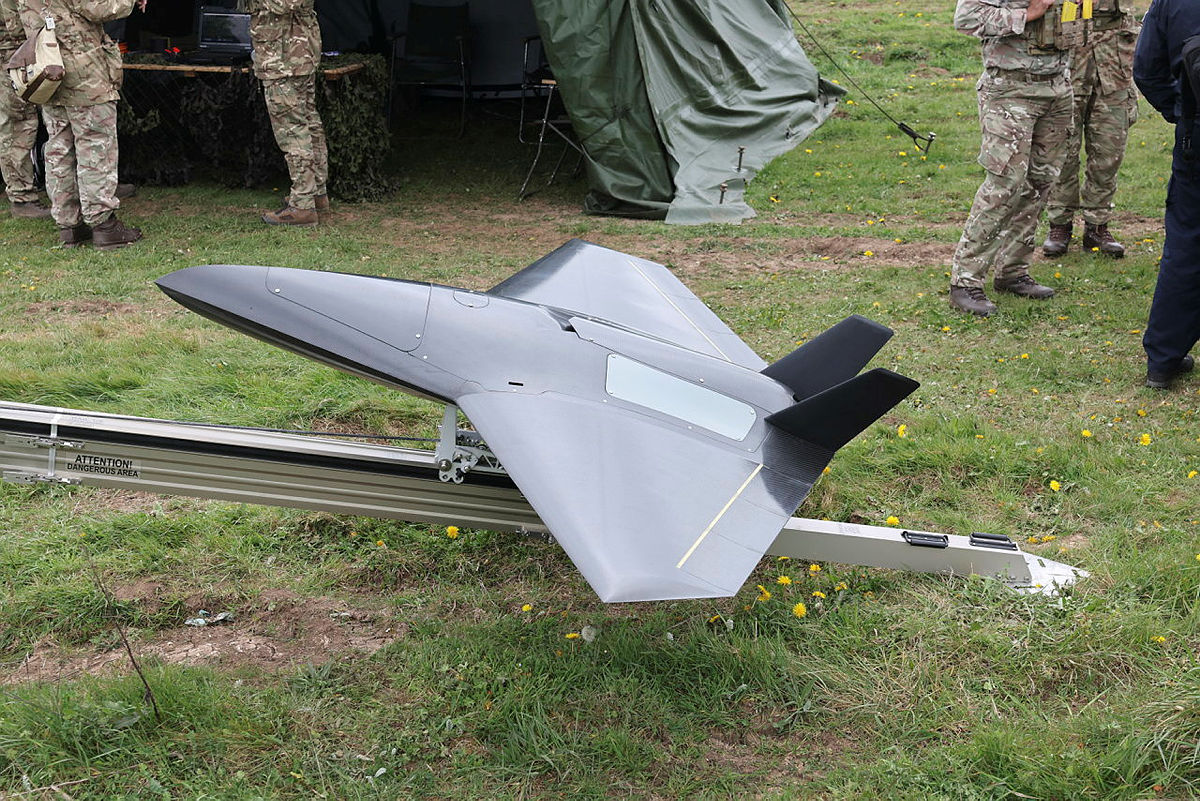
The Russian embassy in London has warned that Britain will pay a price for supplying drones reportedly used by Ukraine to strike targets inside Russia, in a statement accusing the UK of deliberately escalating the war.
The embassy said reports that Ukraine is using British drones for strikes deep inside Russian territory “confirm that London is deliberately opting for an escalation of the Ukraine crisis, while hypocritically professing a desire for peace.”
It said: “In doing so, the United Kingdom is acting as an accomplice and co-perpetrator of the bloody crimes and terrorist attacks committed by Ukrainian neo-Nazis, seeking to contain Russia and inflict maximum damage on it by proxy. London’s actions will inevitably carry consequences for which it will have to answer. The deeper its involvement in the conflict and the greater its support for Kiev’s terrorist machinery, the higher the price it will pay.”
Andy Burnham, the Prime Minister, was asked during a visit to Wolverhampton bus station what his message to Vladimir Putin was. He said: “This is the UK doing what it has long said it would do, which is to support Ukraine 100% against this illegal war led by Vladimir Putin.”
He added: “We are providing support so that Ukraine can defend itself, and that’s been the British position all the way through this conflict by previous prime ministers. It remains the case with me. We are not fair-weather friends. We will be there in Ukraine’s hour of need, and that won’t change.”
The Ministry of Defence had responded the previous evening, saying that Britain stands shoulder to shoulder with Ukraine and is committed to providing the equipment Ukraine needs to defend itself against Putin’s illegal invasion.
The embassy statement followed reporting in the Sunday Times that Ukraine had used drones made by two British companies as part of its deep strike campaign. The embassy’s response was posted on its Telegram channel.
Ukraine has expanded long-range strikes against Russian territory considerably this year, with drones and missiles aimed at military industry, oil refineries and logistics. Data from the conflict monitor Acled indicates Ukraine launched three times as many such strikes in July as it did in January, and the campaign has forced Russia to spread its air defences across a far larger area.
Among the targets have been distribution depots belonging to Wildberries, Russia’s largest online retailer, an approach aimed at cutting revenue funding the war and bringing its effects home to the Russian public. A strike last week hit a Wildberries logistics hub at Koledino in the Podolsk district, around 25 miles south of the Kremlin, during an attack the regional governor described as among the most massive in recent times.
The Russian defence ministry said on Saturday that it had shot down 598 Ukrainian drones over 19 Russian regions, along with the Black and Azov Seas and Crimea.
Warnings of this kind from the Russian embassy in London are routine rather than exceptional, and the mission has issued similar statements on British sanctions, cyber measures and remarks by sports officials in recent weeks. Moscow made comparable accusations in 2022 over alleged British involvement in the drone attack on the Black Sea Fleet at Sevastopol, which Britain rejected at the time.
The two British companies named in the reporting have not commented publicly, and the government does not routinely confirm which specific systems it has supplied to Ukraine.

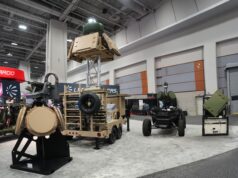
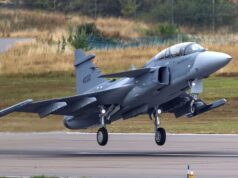


Don’t worry Russia; Drone is only here to visit Moscow and see St Basil’s cathedrals famous 47m spire.
Government down plays threat to the UK while simultaneously not investing anything in GBAD and ABM capabilities for the UK.
I’m just hoping those 14 chinooks can stop ballistic missiles, for £100million each you would expect they could. 😀
I must’ve missed Moscow’s statement expressing their deep regret for helping to arm the IRA during the Troubles😏…
And offering to pay a bounty for anyone killing US and UK soldiers in Afghanistan.
Or dumping a load of nerve agent in a British city and causing death.
It has to be said… that thing looks very cool!
‘We are providing support so that Ukraine can defend itself’
Maybe a good idea for HMG to provide support to Britain’s armed forces so that Britain can defend itself as well, as per SDR 2025?
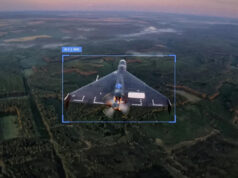
I think that’s the Callen Lenz Nyan OWE?
Yes, that and one other are the british-supplied OWEs that Ukraine have used inside Russia.
Are they going to poison people on UK soil?
Oh, too late they have already gone there…..
I like that they accused us of “seeking to contain Russia”.
Yeah, duh!
The biggest country in the world just needs to get bigger! The Dutch have polders, the Chinese have the nine-dash line, and Russia has delusions of grandeur.
Didn’t Russia buy drones from another country to launch at targets in Ukraine? Didn’t they acquire Shahed drones from Iran and start hitting Ukraine with them. So what’s the difference with Ukraine doing it?
Didn’t Russia also use soldiers from another nation to fight in this war? (hello N.Korea) – yet heaven forbid anyone try to help Ukraine defend itself!
Didn’t Russian say they were looking to remove any nuclear weapons in Ukraine? Yet it’s the Russians that threaten using nuclear weapons several times a year.
Russia is such a hypocrite. Honestly it’s like watching a child bullying his way round the playground at primary school.
I literally cannot believe a single word that comes out of their corrupt little mouths.
Evil regime.
Desperation. 0.4% growth, debts getting higher very quickly
Gold Liquidations: Russia has begun selling its core buffers, offloading roughly 44 tonnes of gold from its official central bank reserves in the first half of 2026.
Sovereign Fund Bleeding: The liquid portion of Russia’s National Wealth Fund has plummeted from 6.5% of GDP at the start of the conflict to just 1.8%.
Beijing Reliance: Russia’s economy has become intensely isolated, relying on China for 35% of its total foreign trade and the vast majority of its critical dual-use and military imports.
Oil Windfalls: A temporary economic cushion has been provided by higher oil prices resulting from the US-Iran conflict, though experts warn this relief remains temporary and vulnerable to proposed Western tariffs.
That’s just skimming the surface of corrupt officials siphoning off funds
Hamish, Putin is said to have personal wealth of up to $200bn.
And he won’t spend a single penny of that personal wealth on either Russia or the war.
Spot on. And let’s not forget Salisbury
IT’S a good thing that we Brits can brush these threats off, however I really wish we had GBAD .Who knows what this bitter and twisted man Putin will do. 🙄
We know exactly what he will do.
‘According to an investigation based on interviews with Moscow-directed operatives, security officials from Moldova, Europe, and the US, and thousands of leaked documents, Russian leader Vladimir Putin intends to capture southern Ukraine to establish a land corridor connecting Russia directly to Moldova.’
Why?
Because then he can seize the Suwalki corridor, Polish territory, and form a new ‘Iron Curtain’ from Kaliningrad to Odessa.
The aim? A new 250 million strong superpower encamped on the EU border.
That means war for NATO and, quite clearly, for Britain.
We are going to need a bigger army…
He is trapped on the wrong side of the Dnieper, most of his amphibious ships are on the bottom of the Black Sea or badly damaged. If he comes anywhere near Odesa, it will be a turkey shot between maritime drones and anti ship missiles. His dream of linking up with Moldova are long gone.,
It is a turkey shoot already. Putin either doesn’t know or doesn’t care; probably both.
He will mobilise more troops and keep going. That is Putin’s clear intention and war is unpredictable; support from China, North Korea, Iran gives Putin continuing military resources and sustains his (over) confidence.
You are entitled to your opinion.
But a government must contingency plan. They have failed to deter Russia twice already. They must not fail again.
.
The British government deters Russia every day as does NATO. If not for both deterring Russia the Baltics would have been taken over by Russia years ago.
Putin hasn’t actually attacked us.
Its hard to deter someone from attacking another country if that other country is not an ally and your under no obligation to defend them.
Deterrence failed in 2014, after both Britain and the U.S.A. ignored breaches of the Chemical Weapons Convention (where Russian forces were engaged) in 2013.
Deterrence failed again in 2022 after the shambolic withdrawal of the U.S. and Britain from Afghanistan.
Russia invaded Crimea in 2014 and Eastern Ukraine in 2022 despite security assurances given to Ukraine regarding its territorial integrity by both the U.S. and Britain (and, indeed, Russia) in 1994.
That verifiably credible conventional deterrent that kept the ‘Long Peace’ in Europe 1945-2014 no longer exists. The results are there for all to see, war once more on Continental Europe.
That conventional deterrent must be rebuilt. SDR 2025 sets out what Britain must do to restore it. Abandoning the now unnecessary and obsolete idea of net zero will permit this country to implement SDR 2025 without increasing either taxes or borrowing. It will also permit the long term sustainment of that deterrent by encouraging economic growth currently constrained by exceptionally high energy costs.
And, of course, in order to deter, Britain must fund SDR 2025 in full.
That is achievable simply by abandoning the aim of net zero, pointless now because of widespread acknowledgement that RCP8.5 is an implausible emissions scenario.
A balanced mix of generation of nuclear, wind, solar and gas will reduce the cost of Britain’s electricity system by over 20% by 2035 and by over 30% by 2050, restoring economic growth.
It will free up over £320 billion over the next couple of decades for increased defence spending.
Don’t take my word for it:
‘Powering Britain: A comparison of policy pathways to 2050’ Transira Energy
Well if that’s is plan buddy that’s the plan.
No arguments from me about needed a bigger Army plus a bigger RN & RAF would be nice. Unfortunately the list of what we need is massive . 👍
Never mind all that, Amazon would do well to beef up their security or some paid low life will be setting fire to their vulnerable warehouses in revenge Wildbollocks or whatever it’s called. We are even more vulnerable to paid trash, just ask Sir Keir Starmer what happened to his car. ( he used to be PM if you had forgotten)
Scared? nah, have you met my ex wife???
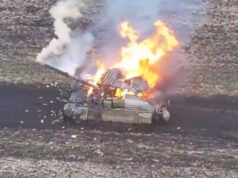
Still like the idea of buying one of these captured T-72s with Z all over it, putting a big blue and yellow flag on whip ariel out the turret and parking it outside the embassy. Do we remember the road being painted 🙂
They should remove the turret and lay it artistically next to the tank at a jaunty angle…
I fought the NLAW and the NLAW won !
All bluster aside, and very likely that is all this is…..but with all sincerity, if Russia were to try anything. We are not in a position to effectively stop them.
The conversation on defence, particularly with the wider public has completely transformed (for the better) over the past few years. But our politicians have only made the smallest of steps to match this genuinely awareness of our weak military position. That scares me a bit honestly. Things must change fast.
Lionel, it depends what Russia might do. They are already conducting cyber warfare. They are unlikely to engage the UK, uniqely, militarily but even if they did we would call Article 5.
So how many people have been killed by an AK-47?
Downplay the threat while failing to provide missile air defence capabilities! The risk might be low but the consequences of failing to fund defence can be immediate and devastating. Perhaps we are at less risk of direct invasion, but the ability to strike and destroy infrastructure from a distance has been significantly enhanced in recent years. Look at Ukraine and Iran! Austerity and misplaced faith in the Peace Dividend are costing us dear and FAR more than if we had been maintaining defences properly for the last twenty years.