

A 62-year-old man has been jailed for four and a half years after National Crime Agency investigators discovered him producing a 3D-printed firearm at his home in Telford, the UK Defence Journal understands.
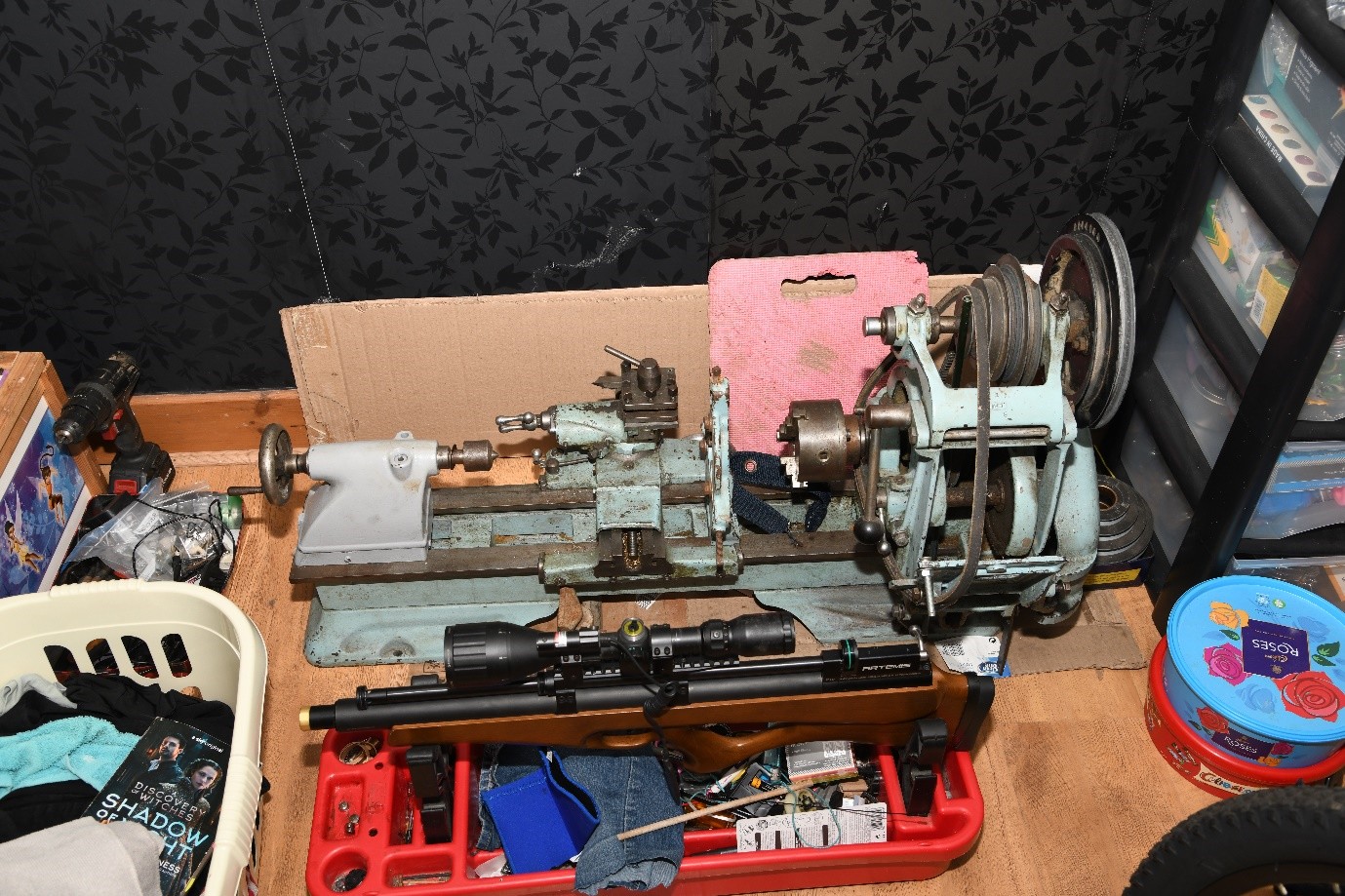
David Boylett was arrested in July 2021 after NCA officers raided his property in Shropshire and recovered a partially completed firearm, firearms components, tools and two 3D printers.
According to a National Crime Agency news update, forensic examination later concluded that Boylett had been approximately 15 minutes away from completing the weapon. Investigators said only excess polymer needed to be removed before the firearm could function.
Officers examining computers and storage devices seized from the property found material relating to firearms conversion, ammunition manufacture and the production of weapons using 3D printers.
One computer folder, titled “naughty stuff”, contained instructional videos relating to the same model of firearm recovered during the search. Investigators also found a video on Boylett’s mobile phone showing one of his 3D printers manufacturing a firearm component of the type subsequently seized.
NCA firearms specialists used files recovered during the investigation to manufacture the remaining components needed to complete the weapon. The resulting firearm was then successfully test-fired by specialists, demonstrating that the design and components recovered from Boylett were capable of producing a functioning weapon.
Officers also recovered a powerful air rifle and ammunition from the property, along with part of a shotgun which had been reported stolen from a vehicle in Herefordshire in April 2012.
Boylett pleaded guilty in January 2026 to attempting to possess a component part of a prohibited firearm, possessing ammunition and possessing an overpowered air rifle without a licence.
He was sentenced at Shrewsbury Crown Court on Monday 10 August to four and a half years in prison.
NCA Senior Investigating Officer Niall Conner said, as quoted in a news update: “Boylett was in the process of creating deadly weapons that could have done untold harm to individuals in our communities.”
He added: “The depth of his research into 3D printed firearms demonstrates his obsession and intent with the tools in his possession.”
Conner continued: “Firearms crime in the UK is among the lowest in the world and we work tirelessly with partners to tackle the threat posed by illegal firearms and to protect the public.”
3D-printed firearms have become an area of growing interest for law enforcement because some components can be produced using commercially available additive-manufacturing equipment and digital design files. The resulting weapons can combine printed parts with conventional metal components, depending on the design being used.
UK firearms legislation applies to prohibited weapons and their component parts regardless of the manufacturing method. The NCA has increasingly treated the online distribution of firearms designs and the domestic manufacture of weapon components as part of its wider work against the supply of illegal firearms.
In Boylett’s case, investigators were able to combine evidence from the physical components recovered at his home with the digital files, instructional material and video stored on his devices. The successful test firing conducted by NCA specialists established that the components and files seized during the investigation could be used to produce an operational firearm, forming part of the evidence that led to Boylett’s eventual guilty pleas and sentence.












He’s been granted bail for the last 5 years as he wasn’t considered a threat. The National Crime Agency “found zero evidence that he intended to use the gun to harm the public or that he was connected to terrorism or organised crime networks”. His bail would have been conditional and pretty strict, and presumably he fulfilled all the conditions.
So is it just me or does the sentence itself seem excessive? Nobody was hurt, he wasn’t considered a threat, he pled guilty and he’d already been held on a short lease for five years. Four and a half years for constructing a firearm component and three months for possessing a firearm? Yet rapists and killers are being set free because there is no room left in our prisons. There is something wrong here.
The statutory minimum sentence for possessing a firearm is 5-years. This was light, no doubt reduced to reflect his mitigation, including time on bail. One of the main reasons why we have so little gun-crime in the UK is because the sentences are so severe. As for no harm done, he was found in possession of shotgun parts from a weapon stolen in 2012 – it would be relatively simple for someone to steal his newly-manufactured firearm and go on to kill. And why print one in the first place if not to use, possess etc. Your comment re rapists and killers is not to the point and is a political issue, and a bit of whataboutery if I may.
“and is a political issue”
and?
The lack of places in prisons is highly germane. If this man goes in, who comes out? Mandatory minima are the problem, not a justification. Even over-tough sentencing guidelines are to be blamed. Judges need to be able to consider cases on their merits.
We’ll have to disagree on that one. Nobody would argue with minimum sentences for murder, Class A third-strikers etc. And to repeat, this is why we have so few firearms incidents in the UK.
The real sentencing problem is that of sending minor offenders (shoplifters, pub fights, fraud etc) to prison. This is why they are so overcrowded. That is why sentencing policy is a political issue not a judicial one.
BTW, I’m not suggesting he shouldn’t be punished, just that four and a half years in prison seems excessive for the fabrication. I acknowledge there might be unknowns that haven’t been reported. If the sentence would have been what I might have thought more appropriate, a judge might have considered suspending it entirely.
The man manufactured an unfinished gun without licence to do so. That was the crime. He was not charged with the reportedly stolen shotgun parts as far as I can tell, so he must be considered innocent of that. As for your hypothetical someone could have stolen it “relatively simply” and used it to commit a different crime… you sentence a person for the crime they committed if they actually commit the crime. You don’t imprison someone for four and a half years because their car was parked on London streets without a current MOT, arguing their car could be stolen “relatively simply” and used to mow people down at a local bus stop.
Fair point about stealing it. But I still think that the (highly successful) public policy on keeping firearms off the streets justifies these tough sentences.
And of course, he will serve half inside and the rest on parole. He may even benefit from the current early-release scheme.
“Naughty Stuff” … lol, cheeky lil’ devil.
Employ him at DSTL… and this is how we do it re printing 3D field parts… catch me if you can…
He needs to be employed by the forces – training troops to repair eqipment on the front line. The world has already embraced 3D printing but not at my grandchildrens schools. NCA should stick to crime committed and think outside the box, not lock someone up who clearly has a good brain. Use him, not lose him.