

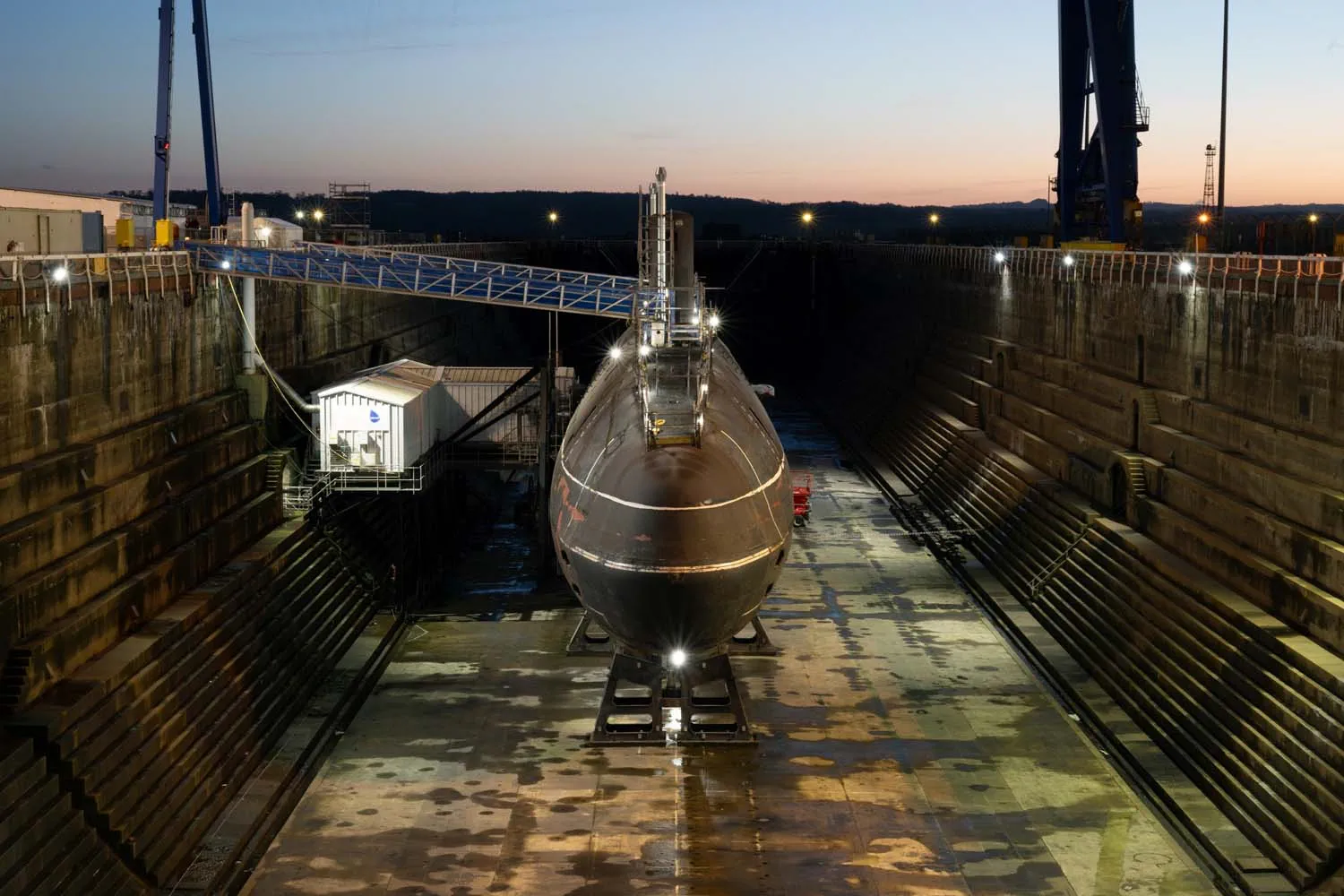
The Ministry of Defence remains committed to dismantling the former submarine Swiftsure by the end of 2026 despite the challenges recorded against the Submarine Dismantling Project in the latest major projects report, according to a written answer published on Monday.
Luke Pollard, Minister of State for Defence Readiness and Industry, was responding to Ben Obese-Jecty, the Conservative MP for Huntingdon, who had asked about the nature of the unforeseen challenges associated with the project as recorded in the National Infrastructure and Service Transformation Authority Major Projects Annual Report for 2025 to 2026.
Mr Pollard said: “The matters identified in the National Infrastructure and Service Transformation Authority (NISTA) Major Projects Annual Report relate to the complexities inherent in delivering a first-of-class submarine recycling project including the technical, planning, regulatory and commercial challenges.”
He said: “The Department continues to work constructively with its prime supplier and wider delivery partners to address these issues, improve programme planning and controls, strengthen delivery assurance and explore Fingleton Nuclear Regulatory Review opportunities where possible.”
On the timetable, he said: “Progress continues to be made, and the Department remains committed to dismantling Swiftsure by the end of 2026 safely, effectively and in accordance with regulatory requirements.”
Addressing the figures in the report, he said: “The increase in the project’s Whole Life Cost is primarily due to the maturation of infrastructure (alongside other costs), while the end date extended to October 2028 represents the formal closure of the project and is separate from the milestone to complete the recycling of Swiftsure by 2026.”
Swiftsure is the demonstrator for a programme that has to deal with a substantial number of boats. Decommissioned submarines are held afloat at Devonport and at Rosyth, where seven laid-up vessels are stored and where work under the Submarine Dismantling Project began in 2016.
Defuelling of decommissioned submarines at Devonport stopped in 2004, and the recommissioning of 14 Dock there is intended to allow legacy defuelling operations to resume, work Mr Pollard confirmed last week forms part of the £7.1 billion being invested in the naval base and dockyard over the next decade under Project Royal Oak. He said the department is exploring opportunities to accelerate work on 10 and 14 Dock following the nuclear regulatory review.
Graeme Downie, the Member of Parliament whose constituency covers Rosyth, has been pressing the department for news on submarine recycling at the yard alongside other work, saying last month that he hoped to hear good news soon.






Often one of the over looked aspects of how apparently amazing our forces use to be compared to today. The British military establishment spent 50 years building nuclear submarines with little if any idea about how to dismantle them then spent two decades ignoring the problem which we now having to pick up the tab for.
Sad to see my old boats alongside in various states of disposal. 🙁
It is called age.
Agree, two S and a T – Splendid, Sovereign and Trenchant 😟
I’ve never understood the business case for nuclear.
I hear the military cite unlimited endurance and yet manning costs are ignored. Diesel AIP could protect our shores and infrastructure and yet two types of sub is bad…
Although we operate F35s and tiffies and are bringing in a 6th gen plane. Oh right, I understand.
Actually. I don’t. Nuclear is the gift that keeps giving, to the industry. Every piece has to be recycled and everything involved in recycling becomes contaminated m, and needs recycling creating an enourmous indudtry where cleaning staff at Sellafield receive salaries that would make merevmortals weep.
Until we can drastically reduce decon costs, the industry is unaffordable and we should move away.
A purpose built facility next to Rosyth would release more building Room..?
Two types of submarine is bad, because it is expensive, damaging and broadly less flexible.
It cuts the support to the nuclear industry. Lack of orders directly impacts the future of the fleet and the industry.
Industry: This is fairly straightforward. Fewer boats are built, and therefore each individual boats becomes more expensive, and more delayed. Eventually, production ends, and jobs are lost. SSK production cannot fill the gaps in skills or in workload, and therefore, the industry atrophies. This increases costs all around. Seven SSN is not enough to sustain the industry; the governments of the 2000s were aware of that problem, and never intended to the Astute-class to be the RN’s only SSN class. Unfortunately, the second SSN class was cancelled in the 2010s, leaving the force to be sustained on just seven boats. The results have been clear.
Fleet: This is more complex. Fewer boats are built, which slows the construction of each individual boat. Each boat now becomes unique, complicating maintenance. This is currently contributing to the issues with the Astute-class submarines. The complexity of each boat, and their individual differences (Astute herself is essentially a different class internally) makes repairs difficult and complicates maintenance.
A mixed SSN/SSK fleet exasperates both problems. Industry shrinks and complicates, whilst the fleet fractures and complicates.
If a solution is desired, I think we need to look more broadly at the threat picture.
The Russian submarine threat to the UK is centred on about 10 active SSN. Of these, maybe half could be considered ‘modern’. The remainder are relics of the Cold War, and a less of a problem (but not neutered by age).
Now, to combat that, the UK needs rough numerical parity. A fleet of 10 SSN would be capable of fending off the Northern Fleet. The government has pledged for 12 boats, which would probably be overkill for the Atlantic mission.
Assuming 50% availability (once the upgrade programmes to infrastructure are complete), the RN could task three submarines to the North Atlantic, one submarine to the carrier strike group, and one submarine to Australia and the Indo-Pacific. If 12 are procured, you can now task a second submarine to Australia.
That’d be rough parity to a wartime Northern Fleet SSN capability (the carrier-tasked submarine would likely be diverted to the North Atlantic alongside the carrier herself), produced by the RN alone. In reality, there’d be a number of Canadian, Norwegian, German and Dutch SSKs operating alongside British SSNs.
10 boats is about the minimum needed to sustain a production drumbeat. SSN-AUKUS must fill a gap between 2027 and 2055 (Dreadnought’s replacement will take about 8 years to construct), and therefore, assuming a decade for the first SSN-A, delivery begins in 2038, with one boat delivered every two years. Any longer, and you run the risk of losing the drumbeat. Go faster, and you need to order more submarines.
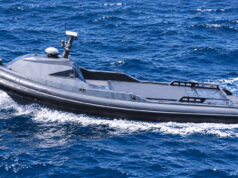
Meanwhile, coastal anti-submarine warfare, and infrastructure security work, could be conducted by a uncrewed submarines. These are cheaper, lighter, wouldn’t infringe upon the manned submarine production industry, but are well-suited to local patrol and delousing.
SSN’s are expensive, but unless you cut all your nuclear submarine capability (not viable for the UK), mixed fleets will continue to present weird challenges. I don’t think any established or upcoming nuclear submarine power of comparable size to the UK currently operates a mixed fleet. France produces SSKs, but does not operate them themselves. Australia intendeds to switch to an entirely nuclear fleet. Brazil will likely phase out its SSKs once it has an SSN production line.
South Korea may retain their SSKs, but things may have changed by 2035.
Only Russia and China operate mixed fleets (India has no domestic nuclear attack submarines). Those three nations are on a different scale to the UK.
Leh, you are to be commended for such an expansive and thoughtful comment, however, we can’t afford the decommissioning and that is the nub of the issue; dial back the unattainable Global Prescence bollards of Bluffer J, and we have to cut our cloth to our finances and NDE is taking 25 – 30% of the budget and the military is bereft of capability because there is no money in the coffers and I’ll add, the Astutes are becoming the King Tigers of WW2 renown – difficult to build, even more difficult to maintain and rarely in service.
I agree the nuclear boats cost a fortune and seemingly need more maintenance and require very specific and expensive decommissioning. Do we currently have any nuclear boats sea except for the continuous deterrent?
Rumour Control has said that we may have missed some deployments with the SSBN fleet – last heard, the Astutes are all tied up – it is a disgrace standing alone, when coupled to the surface fleet, it is a joke, that is simply not funny. Deplorable state of our Armed Forces at the moment and Russia must know that Britain can not pull its weight when it comes to Defence.
However, it reminds me of the Peninsular Wars where we funded and armed allies but fielded a limited force – is the future strategy for UK Armed Forces?
I like the recycling part of this article.
I hope some of this can be used in the pre/served range of products sold by the RNRMC shop.