

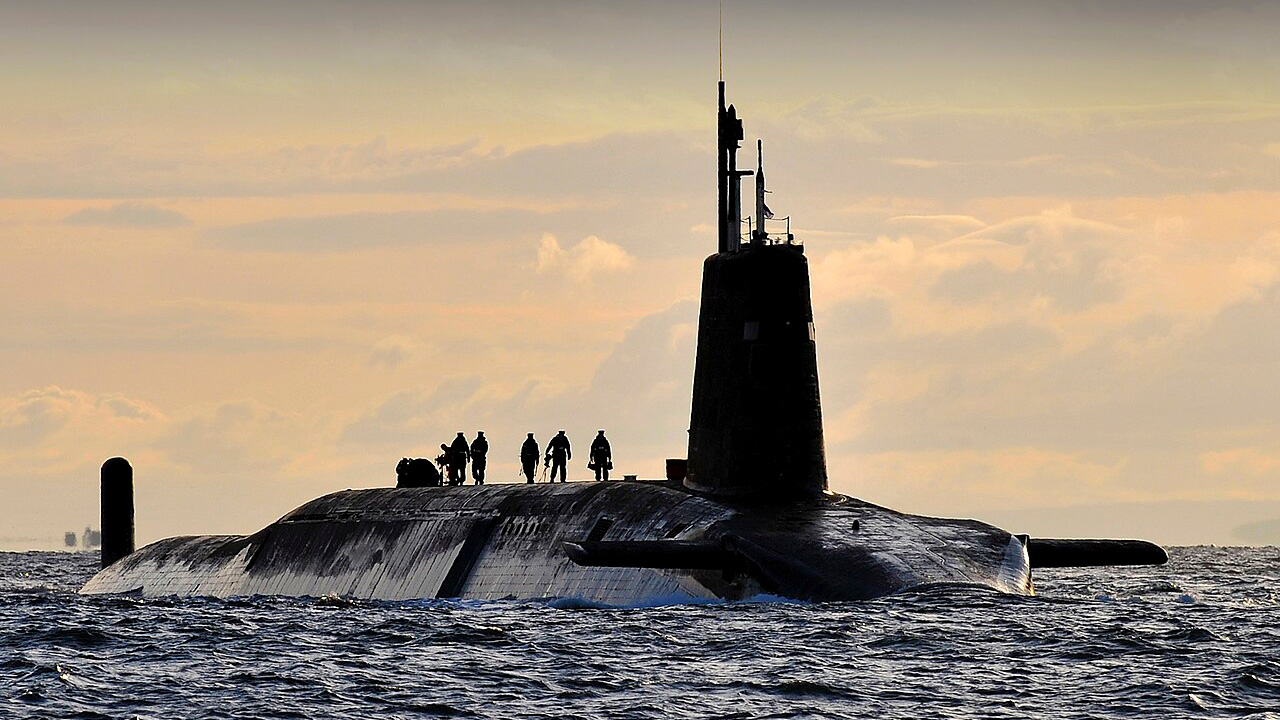
The government has reiterated that investment in the UK’s nuclear deterrent and warhead programmes is progressing as planned, while also stressing the importance of personnel welfare within the submarine service.
During a House of Lords exchange, Baroness Stuart of Edgbaston asked about progress on the sovereign warhead programme, following the 2025 Strategic Defence and Security Review commitment to £15 billion of investment by the end of the current Parliament.
Responding, Defence Minister Lord Coaker said he was unable to go into precise figures but reassured peers that delivery remained on track. “I need to be careful about the monetary figures, but I can reassure the noble Baroness that the programme is going ahead according to schedule and will deliver what we need for our deterrent programme,” he said.
Lord Spellar raised concerns about the impact of earlier pauses in the nuclear programme, referring to the period between 2010 and 2016. Lord Coaker acknowledged that the programme has faced challenges over time but emphasised continued investment.
“There have been challenges for the programme over a number of years,” he said, adding that the current Vanguard-class submarines would be replaced by the Dreadnought programme, “backed by £41 billion, including £31 billion for the actual build and a £10 billion reserve.” He stated that the first Dreadnought submarines are expected to enter service in the early 2030s.
Personnel welfare was also raised during the exchange. Lord Lancaster of Kimbolton, declaring his interest as a serving member of the Armed Forces, highlighted the demands placed on submarine crews and their families, asking whether harmony guidelines governing time at sea and time at home were being met.
Lord Coaker said those guidelines remain a priority, noting that they cover both onboard culture and family support. “We certainly take seriously the harmony guidelines, which look at the welfare not only of the serving crew but of their families,” he said.
The discussion concluded with a question from Lord Watts on defence spending commitments. Lord Coaker responded by pointing to current levels of investment. “I am pleased to celebrate that this Government are investing record amounts of money in the Ministry of Defence and our defence industry and capabilities,” he told the House.


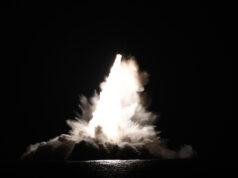


It’s one of the overlooked points of the last few years is that the new trident warheads have a yield of up to 500kt vs the current warheads that are likely 100kt each. Thats a five fold increase in the power of the UK’s nuclear deterrent.
Most amusing.
The W88 version I guess ?
We have also reduced the number of Launch Tubes at the same time.
Hard to see the “Ten Times Lethality” in this but hell, It’s all very scary.
Astrea is a new shared design with the US W93. It’s listed in US and UK sources as being a shared design with common part manufacturing.
The new warheads have a dial-able yield. As far as we know previous US warheads W76 did not have a dial-able yield but Holbrook that’s said to be based on w76 did have a dial-able yield.
It certainly seems the UK is heavily involved in the design and manufacturing of both warheads. The £15 billion price tag further backs this up.
100kt vs 500kt is really just clouds in the sky.
a government statement which says nothing
Most of them are.
It doesn’t help that the questioners themselves are usually utterly clueless so cannot pin HMG down on key points.
I’d say with confidence many here would do a better job of that.
I’ve just re-read the excellent article posted here on the 9th March 2025 on the operational independence of the system. Well worth revisiting.
We should take this opportunity to build our own SLBMs instead of relying on the US to continue to collectively pool its SLBMs with us. Credible deterrent relies on us not being reliant on another country to build and maintain our own missile inventory.
blah, blah, same old re hashed stuff the MOD doing nothing but still trying to look busy.
A sovereign warhead is good. A sovereign missile would be excellent.
Completely agree.. it needs to be a core sovereign capability.
Exactly..or diversify with air launch cruise systems co developed with France. With current VP Vance questioning the wisdom of the UK having nukes ( on basis UK is becoming an Islamic state) then the dependence exclusively on a US shared system could be disastrous…aa much a weakness as a strength.
Not an expert but believe that sub launched is the only really credible strategic deterrent. F-35A + B61 will be an improvement on Tornado + WE177 for tactical interdiction once a land assault has started but I think we need a fully sovereign capability. Agree we should consider Typhoon ( then longer range Tempest) + French ASMP or similar.
A waste of money, there are no circumstances Starmer would ever use it and Putin knows that. He would never even threaten to use it first and intellectually he would see MAD as pointless murder. (not totally unjustified)
Key principles of our nuclear doctrine:
Deliberate Ambiguity: Not revealing precisely when, how, or at what scale they would be used.
No “No First Use”: The UK does not rule out using nuclear weapons in response to a conventional attack.
Putin cannot know for sure we would not use them. Our doctrine is kept deliberately ambiguous for good reason and no public comment is made, apart from reaffirming this doctrine.
It is a heck of a lot of money, but I would rather have it than not. For me the key issue is whether we need to develop our own SLBMs, not whether we scrap the whole thing or not.
O/T but in other news I think there has been a naming ceremony for HMS Glasgow and RFA Mounts Bay is out of dry dock.
How about considering an alternative missile supplier, now that the US are unreliable. A Euro-Nuke missile?
Maybe China can now help ?
Living up to your name
“Smallpiece”.
It figures ! 😁
Another humourless “Member” I guess.