

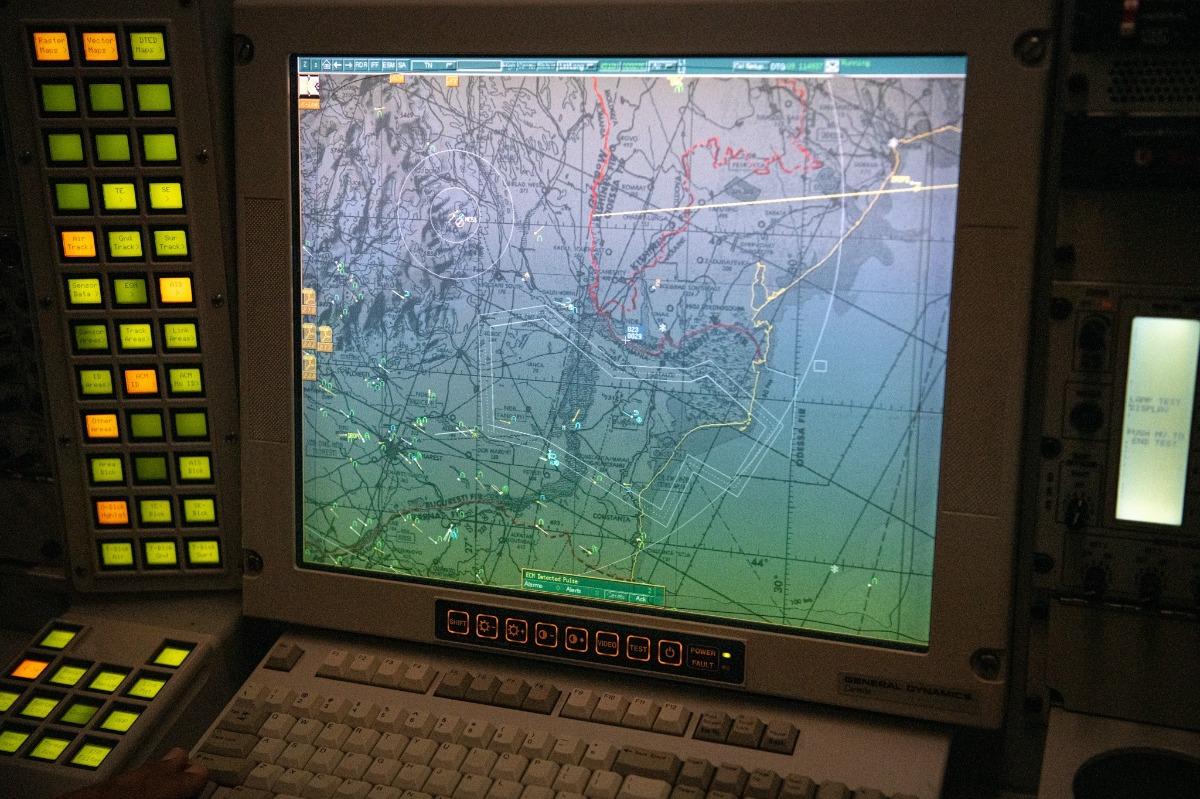
NATO has carried out a multinational air and missile defence exercise over Romania as the Alliance shifts from traditional air policing towards a broader system designed to counter aircraft, drones and cruise and ballistic missiles, according to Allied Air Command.
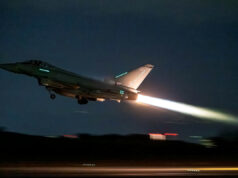
The Flexible Deterrent Option training on 9 September brought together fighter and tanker aircraft from France, Greece, Romania, Spain and Türkiye, alongside NATO Airborne Warning and Control System aircraft and a tanker from the Multinational MRTT Unit.
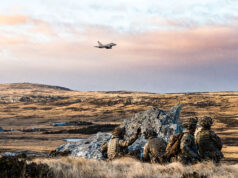
The main focus was Integrated Air and Missile Defence, with the participating forces also conducting Close Air Support training with Romanian ground forces. Aircraft taking part included French Rafales, Romanian and Greek F-16 Fighting Falcons, Spanish F/A-18 Hornets and Turkish F-16s. Spain also deployed an A400M Atlas tanker, while Turkey contributed a KC-135 Stratotanker.
NATO said the activity formed part of a wider move away from an Air Policing framework primarily concerned with safeguarding Alliance airspace against aircraft and uncrewed systems, towards a multi-layered air defence posture capable of dealing with a wider range of threats.
The new framework is intended to cover threats including conventional aircraft, uncrewed aerial systems, cruise missiles and ballistic missiles, using sensors, command-and-control systems, fighters and other capabilities as parts of a single integrated network.
Spanish Lieutenant Colonel Alberto B. Calvo López, commander of the Spanish detachment conducting NATO Air Defence duties at Mihail Kogălniceanu Air Base, said: “The evolving threat also reminds us of the importance of collective, layered air defence, in which sensors, command and control systems, fighters and other Allied capabilities must be able to operate as a single, integrated system.”
The exercise used a “Red” versus “Blue” scenario focused on Integrated Air and Missile Defence.
NATO AWACS aircraft acted as the principal command-and-control element for the “Red” force, directing tanker aircraft and coordinating with Romanian forces on the ground. The training was designed to test how airborne and ground-based systems could be brought together in real time, with information shared between participants and command procedures rehearsed against a simulated air threat.
NATO’s Combined Air Operations Centre at Torrejón in Spain oversaw the activity, providing operational-level command and control while coordinating aircraft and supporting capabilities across the exercise. AIRCOM said the new Air Defence framework brings the Alliance’s air and missile defence activities under common rules, guidelines and command procedures regardless of the type of threat being faced.
The intention is to give NATO commanders greater flexibility to move and combine forces supplied by different member states, synchronising sensors, aircraft and other assets across several domains. The Romanian exercise was also intended to test how quickly allied forces could be assembled and integrated under a Flexible Deterrent Option, with those activities used to rehearse collective defence arrangements before they might be required during a crisis.



We really need the E7 fleet up and running, it’s the best (only) asset the UK can provide for air and missile defence.
It amazes me how obsessed some people can be with minor capability gaps in two UK divisions while we have a gapping capability hole right infront of us with missile defence and we don’t even have a plan.
Your amazement is likely because you are looking at things from a rather insular viewpoint.
Until now, GBAD of the UK has not been a high priority, because anything aimed at the UK would have to first get past the significant air defence and anti-missile screen across NATO Europe. Our vulnerable point would be missile attack from the north, over the Atlantic or Norway, though so far it has been envisaged that the RN would do this with its T45s. But given that there will only ever be two at sea at any one time, and not necessarily in the North Atlantic, we need to be looking at plugging that gap Albeit that the likelihood of a Russian attack on the UK is rather remote just now,.as Russia and its missiles are all tied up with the Ukraine war.
GBAD is not the only thing, or even the most important thing, that the UK needs to be worried about. Russia cannot be too adventurous while NATO has command of the air. Our contribution to that air superiority has declined considerably and we are rather sharply, leaving it to others to do the job. We have slipped from first in number of fast combat air in ENATO to fifth, behind Germany, France, Italy and even Spain. We make a lot of ‘leading’ JEF, but actually have very little to spare to the air picture in the North.
We are equally adrift at fulfilling our promised provision of a strategic reserve corps to strengthen NATO land forces in Northern Europe. If we throw everything we have at it, we can only offer 4 of the 6 combat brigades we are committed to. There is an uninformed school of thought that we can just leave this landfighting stuff to Poland and Germany, without sppreciating how small the land foces of these countries are next to a re-armed, re-organised Russian army. Meaning that we, Netherlands, Belgium and Denmark would all have to pitch up just to hold the line.
It would be awfully nice if we could just look the other way and talk about the Atlantic, ships and the navy, but alas, we won’t stop Russian adventurism in the Baltic republics or high North with warships, they tend not to be too useful in land warfare.
Any serious threat from Russia will inevitably be resolved in a peer AirLand contest. The role of the RN will be a lesser one, that of contributing, with RAF support, to allied control of the Atlantic.
When you grumble about people being ‘obsessed with minor capability gaps in our two army divisions’, two things jump out: one is that the capability gaps are actually of the large battle-losing variety and the other is that, putting it bluntly, you clearly know very little about either armies or land warfare.